


South African electricity consumers may soon face a far steeper tariff increase than originally anticipated, following a court-mandated recalculation that could add R76 billion to Eskom’s recoverable costs.
If approved, the adjustment could push the 2026 electricity price hike to as much as 10.5%, almost double the increase initially projected.
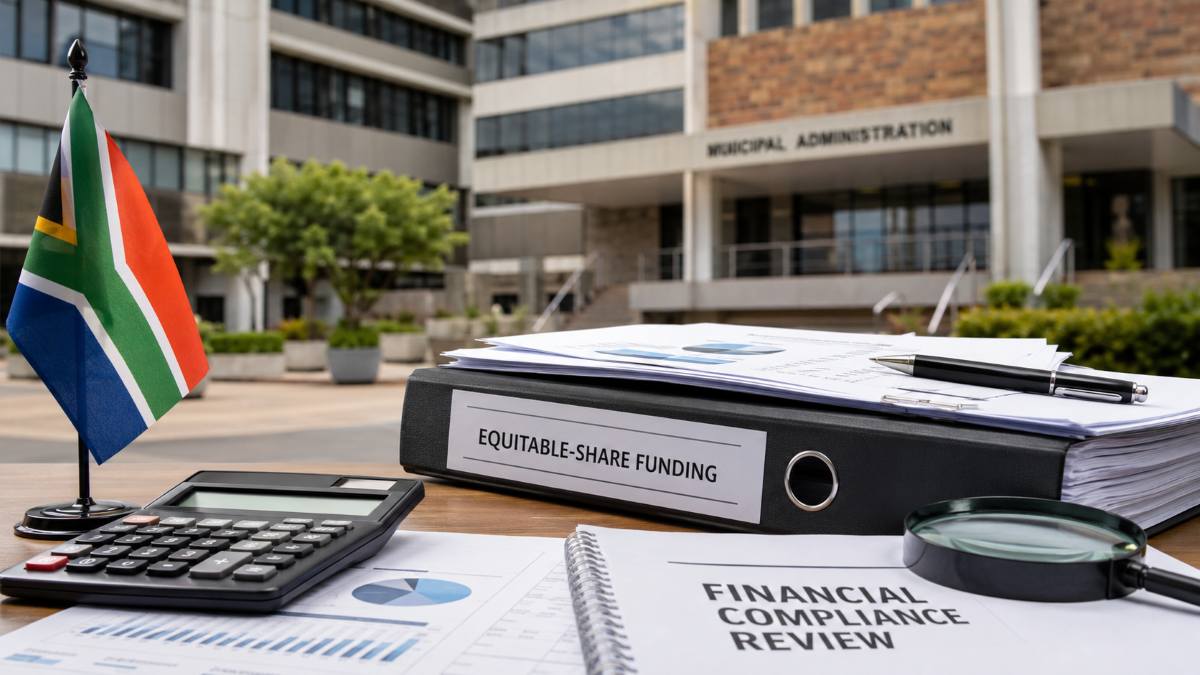
At the centre of the issue is the National Energy Regulator of South Africa (NERSA), which has released a public consultation paper after being ordered by the Pretoria High Court to revisit its earlier revenue determination under Eskom’s Sixth Multi-Year Price Determination (MYPD6).

In the document, NERSA concedes that its original calculations were flawed, particularly in relation to Eskom’s Regulated Asset Base (RAB) and depreciation values.
The consultation paper—formally titled Consultation Paper on the Redetermination of Eskom’s Sixth Multi-Year Price Determination (MYPD6) Regulated Asset Base (RAB) for the Generation Business—acknowledges that material errors resulted in a significant understatement of Eskom’s allowable revenue for the 2025/26 to 2027/28 period.
Initially, NERSA approved tariff increases of 12.7% for 2025, 5.4% for 2026, and 6.2% for 2027.
However, an internal review later revealed that key financial components had been miscalculated, particularly depreciation and asset values tied to Eskom’s generation fleet.
These errors, NERSA now admits, distorted the revenue determination process.
The dispute emerged after Eskom challenged the regulator’s methodology, claiming that more than R100 billion in asset and depreciation values had been excluded. While NERSA initially placed the shortfall closer to R44 billion, closed-door settlement discussions followed. These talks resulted in a provisional agreement allowing Eskom to recover an additional R54 billion through tariffs—an agreement that was never subjected to public consultation.
Because the 2025 increase had already been implemented, the additional recovery would have been loaded into 2026 and 2027, pushing tariff increases close to 9% in both years. The confidential nature of the settlement, however, triggered legal challenges from civil society organisations and industry bodies, including AfriForum.
In its judgment dated 21 December 2025, the Pretoria High Court rejected the settlement, ruling that NERSA had acted unlawfully by excluding the public from a decision with direct financial consequences.
The court ordered the regulator to reopen the process and undertake a full public consultation, specifically instructing NERSA to reconsider the RAB values and allowable revenues.
NERSA’s newly released consultation paper now proposes an even larger adjustment. The regulator suggests that Eskom’s generation division be permitted to recover R76 billion over the MYPD6 period, comprising more than R62 billion in depreciation costs and over R14 billion in returns.
Independent energy analysts warn that if this proposal is approved, electricity tariffs could rise by approximately 10.5% in 2026 alone, compared to the 5.4% previously projected. This would further entrench a long-term trend of steep price escalation, with average annual increases approaching 15% over the past five years.
What is deeply concerning is that between 2014 and 2024, the typical Eskom customer experienced electricity price increases of nearly 180%. This, while the SOE failed to keep the power consistently on for most those years.
Beyond regulatory miscalculations, the redetermination exposes deeper structural problems in South Africa’s energy sector. A major driver of rising costs remains the construction of large coal-fired power stations, particularly Medupi and Kusile, whose budgets ballooned dramatically and whose financing costs are now being recovered from consumers.
NERSA’s paper explicitly includes Works Under Construction and transfers to commercial operation within the revised RAB—an approach critics argue shifts the financial burden of inefficiency onto the public.
Business organisations and energy economists caution that continued reliance on consumers to absorb these escalating costs undermines competitiveness, discourages investment, threatens employment, and pushes up the cost of goods and services across the economy.
While NERSA maintains that it is required by the Electricity Regulation Act to balance Eskom’s financial sustainability with consumer protection, critics argue that this balance has already tipped decisively against households and businesses.
Moreover, the consultation process remains open until 21 January 2026, giving South Africans a narrow window to submit comments. Submissions must address the RAB valuation, depreciation calculations, and related financial components, and can be lodged via NERSA’s official channels or through platforms such as Dear South Africa, which facilitate direct submissions to decision-makers.
Responding to the revised determination, Bennie van Zyl, General Manager of TLU SA, delivered a sharp rebuke, warning that ordinary South Africans were once again being forced to pay for state failure.
Van Zyl said NERSA’s revised proposal confirmed that the underlying problem remained unresolved.
“The state is still trying to force Eskom’s failures onto the public,” he said, arguing that decades of mismanagement, corruption, poor planning, and cost overruns were now being repackaged as recoverable regulatory assets.
He further warned that NERSA’s willingness to include unfinished projects, Works Under Construction, and even Eskom’s cash-flow pressures in tariff calculations was deeply concerning. “This is an open admission that the state can no longer carry its own entity financially and is therefore using the public as its last lifeline,” he said.

For the agricultural sector, Van Zyl stressed that the implications were immediate and severe. Electricity remains a core input cost for irrigation, cooling, processing, and security.
“Every further increase feeds directly into food prices, margins, and jobs,” he warned, describing the situation as a vicious cycle in which rising living costs are then used to justify further state intervention.
Therefore, TLU SA has urged farmers, employers, and the broader public to participate actively in the consultation process and formally object to NERSA’s proposals. “Silence means consent,” Van Zyl cautioned.
As the consultation on Eskom’s MYPD6 RAB redetermination closes on 21 January 2026, the stakes remain high. With a final regulatory decision expected around 30 January 2026, and tariff implementation scheduled for 1 April 2026 for Eskom direct customers and 1 July 2026 for municipal customers, the outcome will shape electricity pricing—and economic pressure—for years to come.
The consultation closes on 21 January 2026 (as of 14 January 2026, time is short). Submit written comments on RAB, depreciation, and revenues to NERSA at Tel: +27 (0)12 401 4600, Fax: +27 (0)12 401 4700, or www.nersa.org.za. Platforms like Dear South Africa direct objections to decision-makers. NERSA may finalise around 30 January 2026 for parliamentary tabling by 15 March 2026, enabling tariff implementation.
The High Court ruled exclusion of public input unlawful, as consumers bear tariff costs, emphasising transparency under the ERA, NERA, and PAJA. Submissions must address RAB uncertainties, depreciation, allowable revenue, and generation elements in the paper’s tables (e.g., Tables 3–11), helping balance Eskom’s financial sustainability with consumer safeguards, efficiency, universal access, and fair stakeholder interests amid ongoing sector challenges.
Approval could nearly double the original 5.4% tariff increase to around 10.5% in 2026, with similar pressures in 2027, adding to recent annual averages of ~15%. This follows a nearly 180% bill rise for typical customers from 2014–2024, driven by Medupi/Kusile overruns now in RAB. Tariffs would apply from 1 April 2026 for non-municipal customers and 1 July 2026 for municipal ones, per MYPD4 methodology.
The December 2025 consultation paper proposes R76 billion additional allowable revenue over MYPD6 (2025/26–2027/28), including over R62 billion in depreciation and over R14 billion in returns. Adjustments target depreciated replacement cost, transfers to commercial operation, works under construction (WUC), net working capital, and asset purchases to correct understatements, aligning with prudent cost recovery and a reasonable return per the ERA.
A Pretoria High Court judgment on 21 December 2025 reviewed and set aside NERSA’s 9 June 2025 MYPD6 decision due to errors in Eskom’s Regulated Asset Base (RAB), depreciation, working capital, depreciated replacement cost, and asset transfers for the generation business. Eskom claimed a shortfall over R100 billion; NERSA estimated R44 billion initially, leading to a confidential R54 billion settlement rejected by the court for lacking public consultation. The court remitted the matter for redetermination under the Electricity Regulation Act 2006 (as amended), requiring submissions by 21 January 2026.
What are your thoughts on this? Let us know below and do not forget to submit your comments.
Be sure to read, South Africa Minimum Wage Increase Expected in 2026, if you missed it.