


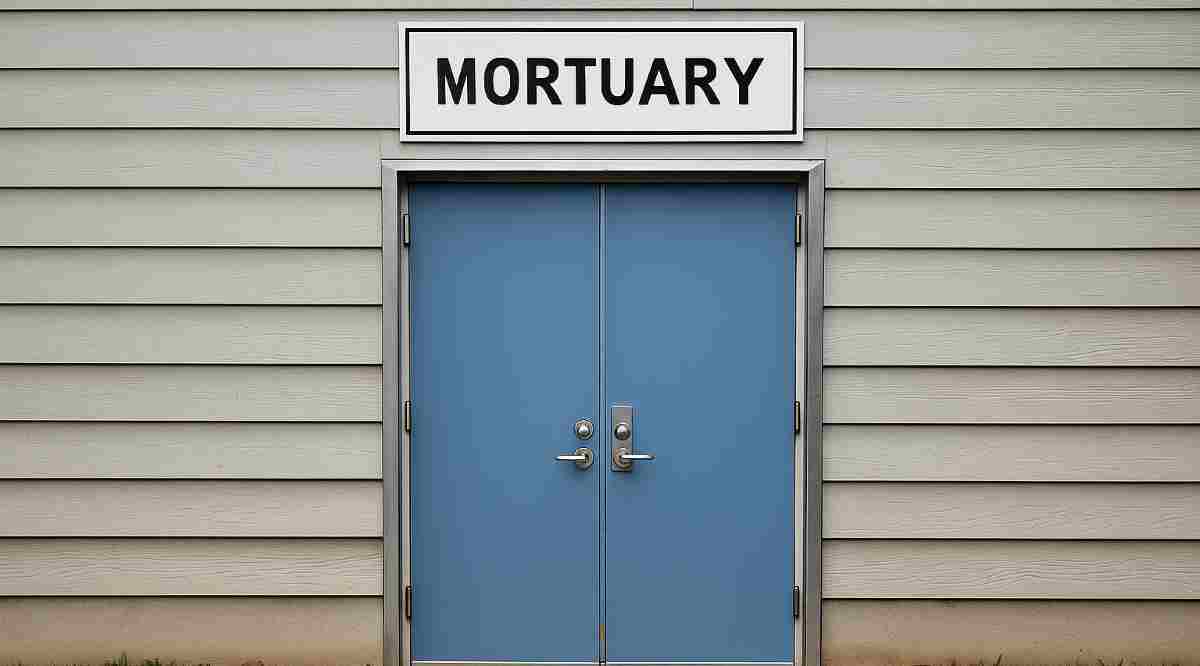
Mortuaries across KwaZulu-Natal are grappling with an alarming backlog of unclaimed bodies—some dating as far back as 2017—exposing a deepening crisis within the province’s health and forensic systems. Among the remains are victims of the July 2021 insurrection and the devastating floods of 2022, many of whom are still awaiting burial despite advanced decomposition.
This troubling situation was revealed by Dr Imran Keeka, Chairperson of the KwaZulu-Natal Health Portfolio Committee, following a series of oversight inspections.
He said the committee’s findings point to a systemic collapse involving the KwaZulu-Natal Department of Health, the South African Police Service (SAPS), and several municipalities—an issue that, he warned, requires urgent and coordinated intervention.

“Oversight inspections at several KwaZulu-Natal (KZN) state mortuaries – over time – by the province’s Health Portfolio Committee – have established a backlog of almost 900 unidentified and/or unclaimed bodies from as far back as 2017. The situation is exacerbated by a lack of space which is now placing immense strain on certain mortuary services,” stated Dr Keeka.
Delving further into the findings, Dr Keeka revealed that the situation is even more severe than initially thought. He noted that bodies stored in freezers at the Kokstad, Ixopo, and Bulwer mortuaries date back to 2012 and 2013. “This is the sad reality of KwaZulu-Natal’s (KZN’s) mortuaries,” he said. Moreover, Dr Keeka added that a parliamentary reply from Health MEC Nomagugu Simelane on 28 May 2025 showed 980 bodies were being stored across the province at that time, although the figure is not constant and fluctuates regularly.
“Media reports, after the matter was raised during a KZN Health Portfolio Committee, also suggested that the National Health Department’s Dr Takadu Mamashela believes this figure has since dropped to around 600. While not implausible, this claim appears unlikely and will need to be verified with KZN’s Department of Health at the next portfolio committee meeting,” said Dr Keeka.
He further emphasised the importance of verification, referring to MEC Simelane’s written response confirming: “Statistics regarding new admissions per facility, and the cumulative number of unclaimed bodies, is captured each month.”
A parliamentary response on 15 November 2024 disclosed an even more concerning figure—1 197 unclaimed bodies stored across the province’s five largest mortuaries, excluding smaller facilities. However, Dr Keeka cautioned that while the numbers are alarming, the real issue lies in understanding why this severe accumulation has occurred in the first place.
He explained that although SAPS collaborates with state mortuaries to identify deceased individuals, the absence of missing persons reports from families continues to impede progress. “Meanwhile, existing policies allow for burials within 21 days – depending on the availability of burial sites and funding from municipalities,” he said.
Nevertheless, Dr Keeka clarified that there were no backlogs for bodies requiring post-mortems. “In other words, KZN’s Department of Health (DoH) had completed its medico-legal and forensic processes,” he added.
Nevertheless, this growing problem paints a bleak picture of an overburdened system struggling to preserve dignity for the deceased while providing closure for grieving families.
As mortuaries across KwaZulu-Natal reach capacity, the calls for accountability and swift intervention continue to mount—underscoring an issue that can no longer be ignored.
Following the committee’s findings, families have been encouraged to visit their nearest mortuary to search for missing loved ones.
Yet, another critical question has emerged: how much are taxpayers paying to store these unclaimed bodies? Addressing this concern, Dr Keeka clarified, “This does not cost taxpayers anything, as local municipalities are meant to give pauper burials, as they are receiving funding for this. So the question now stands, where is this money now going?”
While questioning the use of where the funds meant for pauper burials is going to, it should be explained that, contrary to assumptions of dedicated funding, no specific national or provincial grants are allocated to South African municipalities for pauper (indigent or destitute) burials, as confirmed in the latest available data up to October 2025.
As outlined in the National Health Act (No. 61 of 2003), Section 62(2), municipalities bear full legal responsibility for burying or cremating unclaimed or indigent bodies within their jurisdiction, but this is funded entirely from their own operational budgets under community services or social development departments, without any direct subsidies or reimbursements from national treasury allocations.
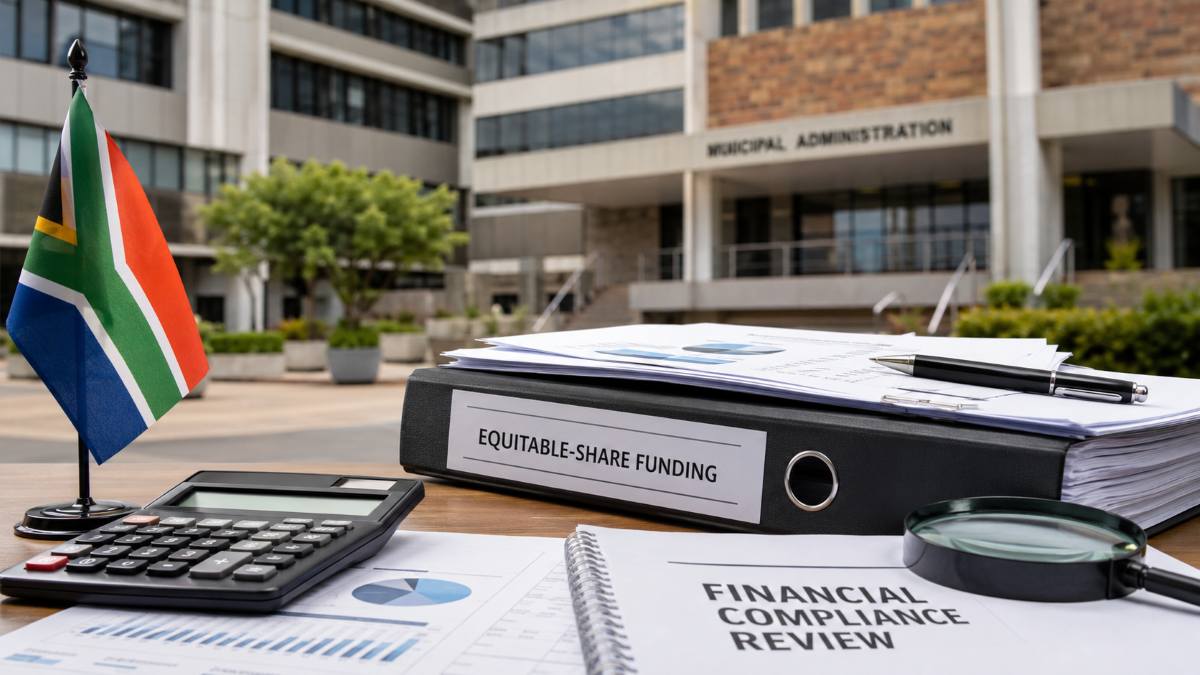
This position is reinforced by the National Treasury’s Section 71 Local Government Revenue and Expenditure Report for the second quarter of the 2024/25 financial year (released in 2025), which details R44.1 billion in conditional grants for infrastructure and services, but excludes any category for pauper burials; instead, municipalities rely on general equitable shares or internal revenue, with costs typically capped at R3,500–R6,000 per burial.
Recent municipal policies, such as those from uMngeni Local Municipality (updated policy effective 2025), and Nelson Mandela Bay Metropolitan Municipality (revised May 2023, with no changes noted in 2025 audits), explicitly state that expenses for coffins, transport, and graves are covered locally, with potential recovery from families only if means are later identified—no external grants are referenced.
Furthermore, in a June 2025 parliamentary briefing by Health Minister Aaron Motsoaledi (reported via the Department of Health), nationwide statistics showed 3,819 pauper burials from April 2024 to April 2025, managed by municipalities without mention of funding relief, emphasising efficiency improvements through provincial forums rather than financial support.
This service is legally mandated for municipalities to provide free of charge to qualifying applicants, ensuring dignity for the deceased even in cases of financial hardship. This is supported by the latest municipal policy guidelines confirmed up to October 2025.
Eligibility applies where the deceased has no estate, funeral policy, or insurance to cover burial costs; no family members, NGOs, religious organisations, or other parties willing or able to contribute; and where the applicant—typically a family member—can demonstrate financial hardship, such as being listed on the municipality’s indigent household register. These requirements are detailed in the uMngeni Local Municipality Pauper and Indigent Burial Policy (effective 2025) and echoed in national overviews, including Meerkat Funeral Cover’s updated guidance (December 2024, unchanged in 2025).
To apply, families must follow a standardised process reflected across KwaZulu-Natal municipalities and supported by national procedural frameworks:
Gather Required Documents:
Prepare the following: the deceased’s South African green barcoded ID, smart ID card, or birth certificate (if available); your own ID; a sworn affidavit from a family member (obtainable at any SAPS station) declaring financial inability to cover burial costs; proof of indigent status if registered with the municipality (for example, via the indigents register); a death certificate or medical report from the attending doctor or hospital (if issued); and a supporting letter from your local ward councillor confirming eligibility and community need.
Obtain the Application Form:
Visit your nearest municipal office, ward councillor, or subcouncil manager to collect the official pauper or indigent burial application form. Many KwaZulu-Natal municipalities—such as uMngeni—provide these forms free of charge at community services desks or via their official websites. In cases involving unidentified unclaimed bodies (as seen in the current KZN backlog), SAPS or the mortuary automatically processes the case after 30 days of unsuccessful identification attempts, including fingerprint and DNA checks, as per Health Minister Joe Phaahla’s policy clarification in April 2024 (reaffirmed in 2025 reports).
Submit the Application:
Once completed, submit the form and all supporting documents to the municipal health, environmental health, or indigent support office. For example, in the eThekwini and uMgungundlovu districts, applications are handled by the community services department. Processing is generally prioritised due to the sensitive nature of the matter, with approvals often finalised within days. Once approved, the municipality coordinates directly with a contracted undertaker to arrange the burial, including the release of the body from the mortuary.
Follow Up and Attend the Burial:
The municipality will notify the applicant of the scheduled burial date—typically midweek to minimise operational costs, in line with municipal policies such as uMngeni’s 2025 framework. The municipality handles all logistics, including grave preparation and transport. Families may attend the burial, though additional ceremonial services are not covered.
While nationwide pauper burials totalled 3,819 between April 2024 and April 2025, as reported in Health Minister Aaron Motsoaledi’s June 2025 briefing, municipalities like uMngeni have allocated R300,000 for the 2025/26 financial year to sustain this service despite severe budget constraints.
This underscores growing pressure from the Provincial Health Portfolio Committee for improved accountability and compliance across KZN.
If an application is denied or delayed, escalate the matter to the KwaZulu-Natal Department of Cooperative Governance and Traditional Affairs (COGTA KZN), which oversees municipal adherence to statutory burial obligations.
Get your brand in front of thousands of readers with Newcastillian News visibility packages. Email [email protected] for placement options and rates.
As KwaZulu-Natal’s mortuaries overflow, the Health Portfolio Committee’s plea for public cooperation and municipal accountability has never been more urgent. By bridging the gap between unreported missing persons and the province’s unclaimed deceased, families can help restore dignity and closure, while strict enforcement of pauper burial laws could ease the province’s mounting forensic burden.
With all of this mind, what are your thoughts? Be sure to let us know below.
Remember to read, “Steer Clear of Sexting”—SAPS Warns After 18-Year-Old’s 8-Year Sentence for Teen Video, if you missed it.
FAQs:
Under existing policies, burials must occur within 21 days, subject to burial site availability and municipal funding, as confirmed by Dr Imran Keeka. Processing typically takes days once documents are submitted.
SAPS and mortuaries automatically initiate pauper burials after 30 days of failed identification via fingerprints and DNA, per Health Minister Joe Phaahla’s April 2024 clarification, reaffirmed in 2025 reports.
Yes, municipalities like uMngeni and Nelson Mandela Bay may seek reimbursement only if family assets are later identified, according to their 2025 and 2023 policies respectively.
Visit your nearest SAPS station immediately with details and photos; this enables matching against the 900+ unclaimed bodies, as urged by the Health Portfolio Committee on 28 September 2025.
Escalate to the provincial Department of Cooperative Governance and Traditional Affairs (COGTA KZN) at kzncogta.gov.za for mandatory compliance intervention, as required by the National Health Act.








One Response
I hope they find a way to clear these mortuary soon this not healthy either