


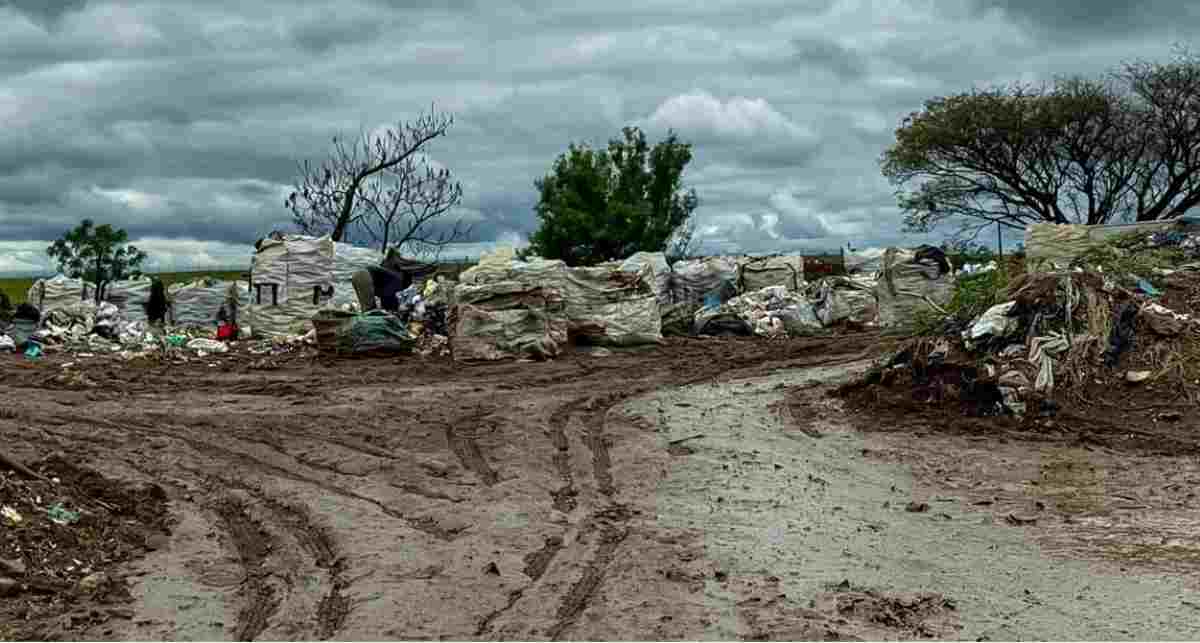
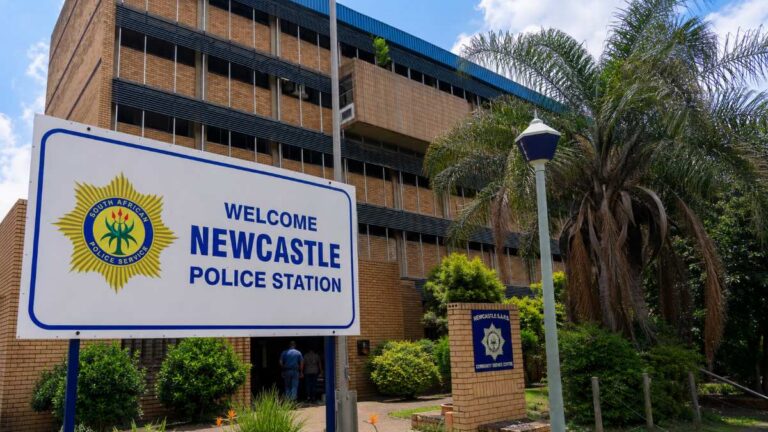
Is Newcastle’s landfill now posing a direct threat to public health and the environment? Findings from an oversight visit by the KwaZulu-Natal Legislature’s Conservation Portfolio Committee suggest exactly that—a facility edging towards collapse, where sustained underinvestment continues to fuel environmental and health risks.
During the site inspection on Wednesday, 1 October 2025, committee members were met with the aftermath of a week-long fire, still smouldering in sections. The blaze, which broke out in September, had escalated to the point of requiring aerial firefighting support from Melmoth to contain.
Hannah Winkler, KZN Legislature member and Conservation Portfolio Committee participant, listed compliance breaches observed.

“There was a visible gap in the perimeter fencing as you entered, although we did observe security posted at the front gate. I also witnessed leachate present across large areas of the site and it was made clear that there was not a system to funnel this waste. We were taken to sections where refuse had recently burned; the waste was still smouldering with a strong chemical odour, and crucially, it had not been covered. Failing to smother and cover hot spots allows fires to persist deeper in the waste mass, creating a significant health and safety risk. We also noted large volumes of tins and glass mixed into general refuse, which points to a broader failure of separation at source and missed opportunities for diversion and recycling,” Winkler began.
Furthermore, the Newcastle Municipality has made repeated promises for a new landfill since 2020, when it committed to submitting the Environmental Impact Assessment Report by June 2021. Similar commitments appeared in May 2024 during the Municipality’s Integrated Development Programme (IDP) Roadshows, addressing a site that had exceeded its life by a decade.
Winkler also highlighted operational limits from an outdated fleet.
She stated: “The municipality lacks reliable equipment: steel-wheel compactors have been out of service for nearly five years, and municipal plant equipment is largely broken. Although two compactor trucks were purchased for the 2025/26 period, that is a drop in the ocean given the scale of the backlog; as of 18 September there were only two reliably functioning machines on site, with the rest of the operation dependent on leased plant (excavator, bulldozer and TLB). At minimum, four compactor trucks are required to stabilise collection and disposal.”
The site has lacked daily cover ( this entails covering the bottom layer of rubbish with sand and/or other debris) since mid-2024—a legal requirement for landfills—which has led to fires in August and September. One fire, reported on 4 September, continued until 18 September.
This resulted in numerous calls to Newcastillan News regarding the hazardous smell across Newcastle, rasing various health concerns.
Nevertheless, Winkler had the following to say; “The resource picture explains much of the decay. Roughly R123 million is budgeted for waste-related services, yet almost R55 million goes to salaries, and only about R180,000 is allocated to day-to-day landfill operations—vastly insufficient for safe running, let alone remediation. While waste billing brings in approximately R11.3 million per month, too little is ring-fenced for core service delivery, and that under-investment shows on the ground. On 17 September 2025, EDTEA issued a notice to cease operations within 24 hours, citing inadequate action to extinguish the fire. The municipality argued that such an instruction was impractical given there is no alternative disposal site,” Winkler stressed.
When zooming out and looking at Newcastle’s landfill, the site fails national and KZN landfill standards in daily cover, leachate management, fire prevention, access control, and equipment availability.
“The most concerning findings were the ongoing smouldering fires and unmanaged leachate with chemical odours, the absence of daily cover, and the near-total reliance on leased equipment due to prolonged breakdowns of municipal plants. All of this is happening at a facility that has been in operation for nearly 55 years—well beyond typical design life. Earlier studies found the site at or past capacity as far back as 2004, and while some waste-diversion efforts could stretch the remaining life by an estimated three years, this is a narrow and diminishing runway,” Winkler emphasised.
A replacement site in eMadlangeni (Utrecht) has been identified, with eight specialist studies completed by the Environmental Assessment Practitioner; a decision is expected between late 2025 and early 2026.
Winkler stated: “Until then, without urgent investment in equipment, daily cover material, leachate control, and a ring-fenced operational budget, both sites will remain below standard and continue to pose unacceptable environmental and public-health risks.”
Moreover, the committee will convene to adopt resolutions from the visit. “I will recommend to the committee that the municipality submit quarterly reports on the landfill sites so that we receive regular updates on compliance and the fixing of issues identified. We have instructed the municipality to urgently adhere to EDTEA’s directives—especially the immediate covering of waste, with priority given to areas where smouldering persists. In addition, we have emphasised far more vigorous separation at source. This is not only essential for compliance and reducing landfill pressure; it also presents a revenue opportunity through recycling at a time when the municipality is under severe financial strain,” said Winkler.
Newcastillian News submitted a formal enquiry to Newcastle Municipality on 23 September 2025—prior to the oversight visit—seeking clarity on landfill remediation efforts and progress at the proposed Utrecht replacement site. Despite follow-ups, including after the committee’s visit, no response was received.
This lack of transparency is deeply concerning, particularly given the public health implications and the municipality’s legal responsibility for the landfill site.
Nonetheless, the Municipality later issued a statement confirming it had hosted the KwaZulu-Natal Legislature’s oversight visit, during which operations at the landfill were assessed. According to the statement, the inspection reviewed progress on previously identified issues and outlined areas requiring improvement to comply with environmental and health regulations.
“The inspection revealed that while some progress has been made in addressing non-compliance issues, persistent challenges such as uncovered waste, machinery breakdowns, and the need for specialised landfill firefighting equipment remain. The KwaZulu-Natal Legislature concluded the visit by outlining priority areas for improvement and underscoring the need for the municipality to implement sustainable measures that will ensure long-term compliance with environmental and health regulations,” noted the Newcastle Local Municipality.
The oversight visit to Newcastle’s landfill has highlighted a facility teetering on the edge of critical failure, where operational shortcomings and chronic underfunding continue to exacerbate environmental and health hazards.
While a replacement site in eMadlangeni (Utrecht) offers hope for a long-term solution, immediate interventions—particularly in waste covering, leachate management, and reliable equipment—are essential to prevent further degradation and risk to the public.

Looking ahead, the municipality faces a crucial window to implement sustainable and accountable measures, including improved source separation, ring-fenced budgets, and consistent reporting. Without these steps, both the current and future landfill sites will remain vulnerable, perpetuating risks that extend beyond Newcastle’s borders and challenging the integrity of regional waste management practices.
The site is plagued by ongoing fires, leachate leaks with chemical odours, lack of daily waste cover, and insufficient equipment—all of which pose environmental and health dangers.
The committee identified multiple compliance breaches and has recommended quarterly reporting, urgent fire containment, leachate control, and improved recycling practices.
Despite a formal enquiry from Newcastillian News, the municipality did not respond. It later issued a generic statement confirming the visit and noting areas for improvement.
Yes, a replacement site in eMadlangeni (Utrecht) has been identified, with studies completed. A final decision is expected between late 2025 and early 2026.







3 Responses
Newcastillian further problems the newcastle municipality is adding on, last week corporate services issued a notice to staff working six days and work Sundays that their Sunday pay will be cut from 1.5 Sunday pay that is covered by the basic conditions of employment act to 0.5 of which it’s far below what should be paid and this was done without talking or negotiating with employees. This will be in enforced from this month and they don’t care if they comply or not, please contact the municipality for further comments on this issue if possible maybe get legal to explain this action and they are forcing employees to accept this change to their contracts through intimidation.
Who is going to drive all the way to utrecht 30km away to dispose their rubbish, building watste etc. Does the municipality have a budget for extra fuel to drive all the way there and extra hours to cover travelling? This does not make sense at all…
There is such concern about the mines when this is a much bigger hazard hanging over newcastle at least the mines will offer job to the community no wonder everyone has sinus and hayfever lately