


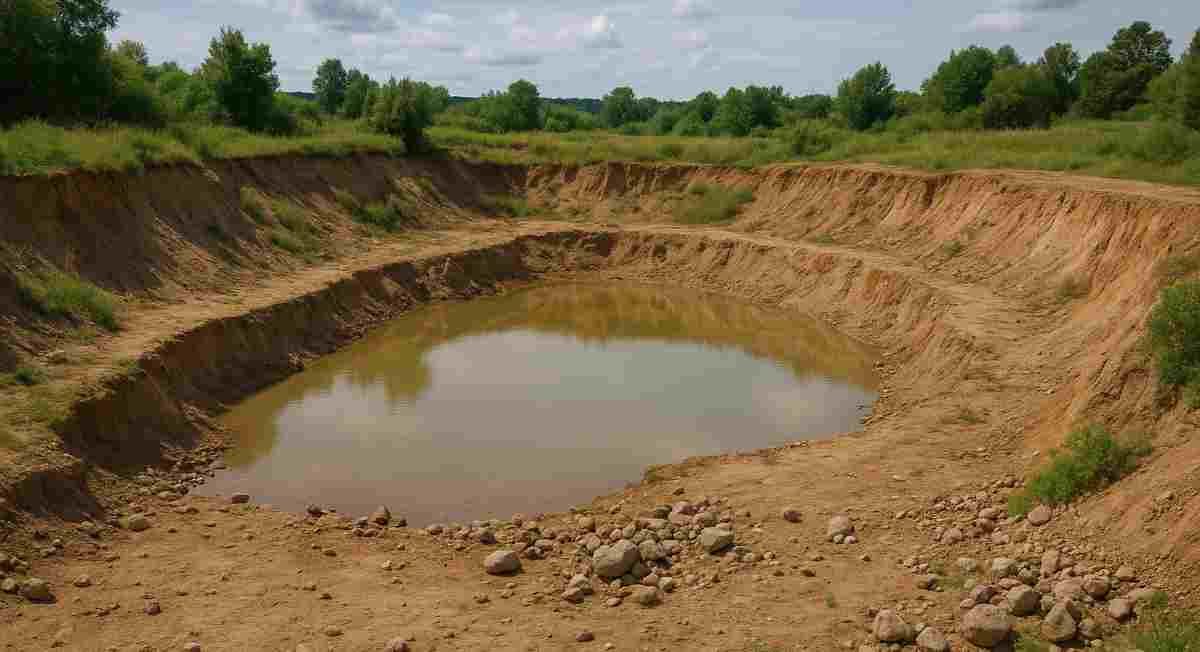
Following various enquiries from residents claiming the municipality is trying to obtain mining rights, Newcastillian News approached the Newcastle Municipality to esablish if the claims were true? This query has sparked intense discussion, prompted by a notice displayed along the D96 road, announcing the Municipality’s application for a mining permit.
The notice, issued by environmental consultants Opint Group (Pty) Ltd, confirms that the Municipality is seeking both a mining permit and environmental authorisation to develop a borrowing pit along the D96 road.

A resident, preferring anonymity, expressed frustration over the lack of transparency.
“This is totally unacceptable, as the notices of the Municipality’s intent were posted in a way that hardly anyone noticed unless they saw them along the D96. The fact that this land was meant for housing projects and is located near Amiel Park, Lennoxton, Paradise, and the Taxi Rank makes the matter even more concerning,” the resident said. This concern is heightened by the presence of several mining companies seeking to exploit Newcastle’s natural resources.
In response, Cllr Bertie Meiring, chairperson of the Development Planning and Human Settlement portfolio committee, sought to clarify the situation.
He emphasised that the application pertains not to a mine but to a borrowing pit designed to meet infrastructure demands. As explained by the Department of Mineral Resources and Energy (DMRE), a borrowing pit is a site used to extract materials, such as gravel, for construction purposes, typically for specific civil engineering or infrastructure projects like road repairs.
“A recent presentation discussed the potential for the Newcastle Municipality to establish its own borrowing pit. This would allow us to source gravel for necessary road repairs in Newcastle. However, South African law requires a mining permit for a borrowing pit,” Meiring explained.
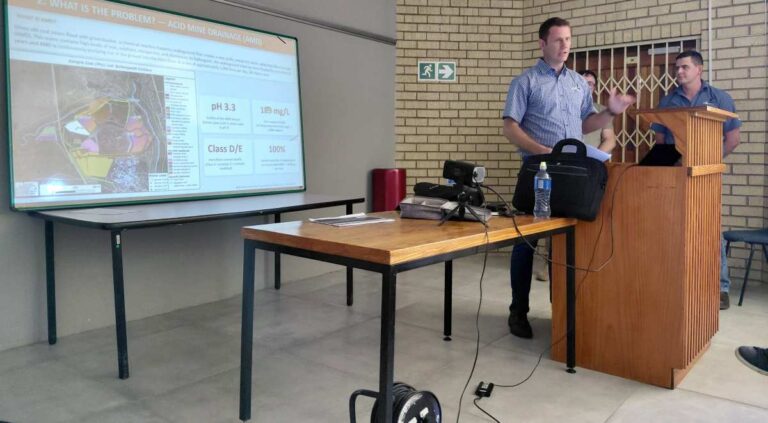
Furthermore, he noted that feasibility studies are ongoing, and residents will be engaged through public participation meetings. “Nothing is confirmed yet, but a borrowing pit would mean the Municipality no longer needs to purchase gravel or have it transported from far away,” he added.
As detailed on the South African Government services portal’s page on applying for a mining permit, establishing a borrowing pit requires a mining permit from the DMRE for small-scale operations covering up to 5 hectares and lasting no longer than two years.
This process, further elaborated in the DMRE’s mining titles section, involves submitting plans via the South African Mineral Resources Administration System (SAMRAD), including geological assessments and environmental management programmes, in compliance with the Mineral and Petroleum Resources Development Act (MPRDA) of 2002. Additionally, the Mine Health and Safety Act of 1996 mandates health and safety measures to protect workers.
Post-extraction, operators must rehabilitate the site through measures like backfilling and revegetation to prevent environmental degradation.
Furthermore, to address local apprehensions about the borrowing pit’s potential impact on housing projects, Municipal Manager Zamani Mcinecka addressed concerns, reassuring residents that any housing projects earmarked for Newcastle would remain unaffected. He underscored that development in Newcastle continues to be a priority, supported by provincial, district, and local authorities.
Additionally, Cllr Meiring highlighted the constraints imposed by national legislation. “No municipality is allowed to own a mine. If we could run a business like that, we would have considered purchasing ArcelorMittal South Africa, as it would have been more beneficial. Once the plans progress, we will involve the community, as their input is pivotal,” he stated.
It should be noted, the Newcastle Municipality’s pursuit of a borrowing pit aligns with efforts by other South African municipalities to bolster infrastructure efficiency.
For instance, the Amathole District Municipality in the Eastern Cape and the Knysna Local Municipality in the Western Cape have operated borrowing pits, achieving cost savings of up to 30-50% for road maintenance, as noted in a 2014 Rhodes University thesis.
Recent data from the DMRE’s mid-year report for 2024/2025 confirms ongoing municipal engagement, with 1093 mining permits processed for small-scale operations like borrowing pits.

Moving forward, the success of this initiative will depend on transparent public consultations to address community concerns and ensure alignment with local priorities.
Through open dialogue and adhering to regulatory standards, the Newcastle Municipality can build trust and demonstrate the borrowing pit’s potential to enhance service delivery without compromising housing or environmental goals.
What are your thoughts on this? Let us know below.
Be sure to read, South African Ambassador Nathi Mthethwa Found Dead in Paris Amid Mkhwanazi Case, if you missed it.
FAQs for the Newcastle Municipality borrowing pit:
A borrowing pit is a small-scale excavation site used to extract materials like gravel or sand for specific infrastructure projects, such as road repairs, as outlined by the Department of Mineral Resources and Energy (DMRE). Unlike a commercial mine, it is temporary, covers up to 5 hectares, and focuses on non-commercial use, requiring a mining permit under the MPRDA of 2002.
The Newcastle Municipality aims to source gravel locally for road maintenance, reducing costs and reliance on external suppliers. This initiative, as explained by municipal officials, seeks to improve infrastructure efficiency while adhering to regulatory requirements.
Municipal Manager Zamani Mcinecka has assured residents that housing projects will remain unaffected, with development remaining a priority supported by provincial, district, and local authorities.
The Municipality has committed to public participation meetings to gather resident input, as stated by Cllr Bertie Meiring. These consultations, mandated by the DMRE, will shape the project’s progression and address transparency concerns.
The project requires environmental authorisation and compliance with the Mine Health and Safety Act of 1996, including site rehabilitation through backfilling and revegetation, as detailed in the DMRE’s mining titles section, to prevent environmental harm.









2 Responses
I told you bertie is someone to watch out for…
These okes do not want to pay for materials , they want to take it for free.
Who care about creating a mine dump for a town ? Right?
This is completely un acceptable , seems we need to look at selling up and leaving this town as well.
You have no idea what you are talking about, Bertie is as dangerous as a warm hug in winter….have you ever met this sweet old man? Anyway, multiple municipalities are looking at ways to mitigate costs and this is a good idea. Low impact, cost savings, infrastructure supplies….how terrible…come on man. How do you not understand what is discussed in the article? But, yes, it is a good idea that you pack up and leave. This town cannot deal with more negativity. It needs purpose and actionable plans, not whining and conspiracies. From all of us in Newcastle, toodaloo.