


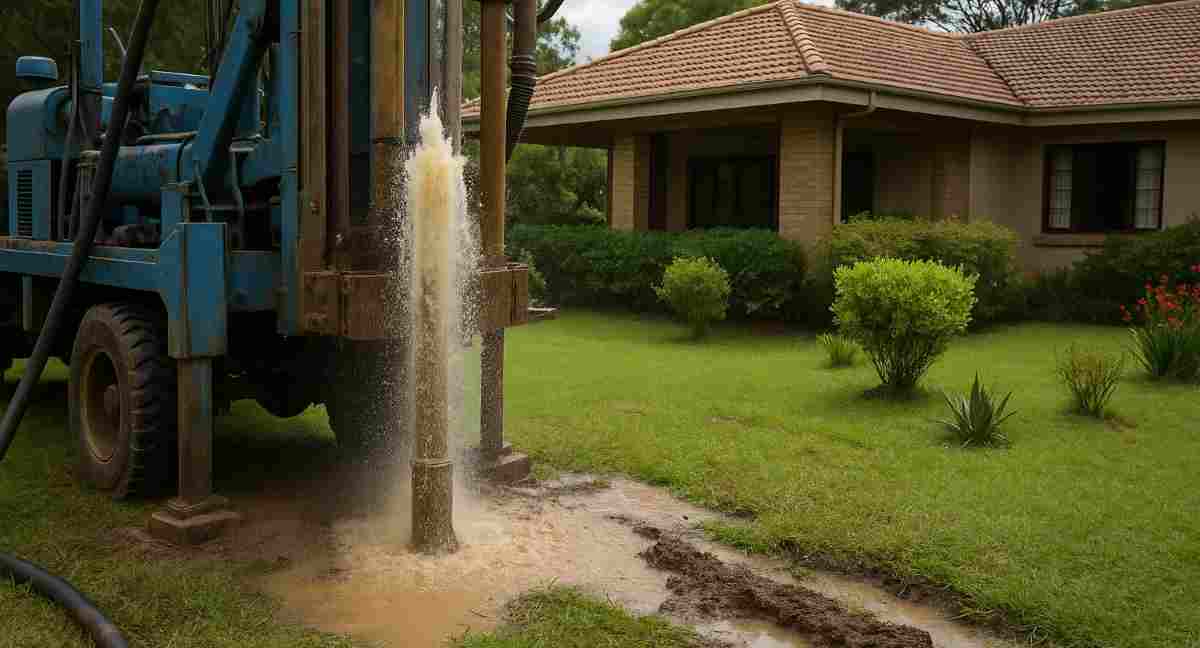
Vryheid residents have been left stunned after discovering a new “borehole tariff” on their municipal accounts — in some cases for boreholes that don’t even exist on their properties. The Abaqulusi Local Municipality introduced the charge without public consultation, sparking legal and procedural questions from civil rights organisation AfriForum.

AfriForum’s Vryheid branch says it has formally requested clarity from the municipality, questioning the legal and financial framework behind the tariff.
According to the organisation, residents received no prior notification or opportunity to object, raising serious concerns about the tariff’s legitimacy.
The Complaint, the Issues, and the Demand for Action
In its correspondence, AfriForum outlined three key concerns:
- No public consultation: The borehole tariff was never presented in public meetings or advertised for public comment.
- Incorrect billing: Some residents were charged for boreholes they do not have.
- Electricity price hikes: Residents also reported sharp increases in electricity tariffs, with no clear explanation.
In light of this, AfriForum has requested:
- A full explanation of how the borehole tariff was calculated.
- A breakdown of electricity tariff structures across different areas, accounts, and seasons.
- Documentation of the legal basis for the charges, including the bylaw and council resolution authorising them.
Furthermore, AfriForum’s Vryheid chairperson, André van der Walt, expressed the community’s frustration, saying: “The residents of Vryheid were caught off guard by this so-called borehole tariff. It was never even discussed in public meetings.”
To which, KwaZulu-Natal provincial coordinator, Eugene van Aswegen, added: “Municipalities should rather focus on implementing effective management practices than burdening residents with further financial demands.”
The organisation has warned it will pursue all available legal and administrative options if the municipality fails to respond satisfactorily.
So why does this matters beyond Vryheid?
This dispute highlights critical legal and governance issues that affect all South Africans. Under the National Water Act, 1998 (administered by the Department of Water and Sanitation) and the Local Government: Municipal Systems Act, 2000 (enforced by the Department of Cooperative Governance and Traditional Affairs), there are specific rules municipalities must follow before introducing new tariffs.
To empower our readers in understanding their rights, Newcastillian News has compiled this practical, step-by-step guide based on expert sources, including the DWS and the Borehole Water Association (BWA).

Your Guide to Navigating Borehole Tariffs and Municipal Overreach
1. Check local bylaw requirements before drilling
- Contact your municipality to confirm borehole regulations — requirements differ by region.
- Example: Johannesburg requires written consent under its Land Use Scheme and 14 days’ prior notice under public health bylaws.
- In high-risk geological areas, such as Tshwane’s dolomite zones, drilling may be prohibited unless declared safe by a professional.
- Failure to comply can lead to fines, borehole closures, or unexpected tariffs.
2. Know the legal process for tariff implementation
- The Municipal Systems Act requires municipalities to:
- Publish proposed tariffs in local media or on their website.
- Hold public consultations (meetings or written submissions).
- Provide a clear rationale, such as groundwater management or cost recovery.
- Residents must be notified in advance and given a reasonable opportunity to object.
3. Demand documentation for any charges
- Request the specific bylaw authorising the tariff.
- Ask for the council resolution approving it.
- Obtain proof of public consultation (e.g., meeting minutes, public notices).
- Verify if your property has a registered borehole — charges for non-existent installations are likely invalid.
- According to the DWS, domestic borehole use under Schedule 1 of the National Water Act usually requires no registration unless bylaws state otherwise.
4. Challenge unlawful tariffs through formal channels
- Submit a written complaint to the municipal manager citing procedural irregularities.
- If unresolved, escalate to:
- The Public Protector
- The South African Human Rights Commission
- For serious disputes, seek High Court relief, such as an interdict to halt tariff enforcement.
- Consider joining community groups like AfriForum to strengthen collective action.
5. Use boreholes sustainably to ensure compliance
- Avoid over-abstraction, which can deplete aquifers and harm ecosystems.
- Engage a qualified geohydrologist to conduct a six-hour step test to determine sustainable pumping rates.
- Test water quality regularly according to SANS 241-1:2015.
- Install flow meters and monitor usage.
- Cap unused boreholes to prevent contamination.
- Ensure drilling meets SANS 10299 standards to reduce environmental damage.
With all of this in mind, what are your thoughts? Let us know in the comment section below.
Be sure to read the following article, Four Sentenced to Life for Murder of Ladysmith Municipal Official, if you missed it.










6 Responses
Woolworths, ,Checkers P & P etc will.litigate because you are planting your oewn vegetables
We getting overcharged, no explanation, pay and get nothing back for whats has been paid for, one group is overcharged, onother group/area either not charged or very little
WHY ON EARTH ARE WE PAYING RATES , i have paid all legal costs to get my property paid en transfered now i kept getting charged for something already been paid for, like it NEVER BECOMES MY SOLE PROPERTY!!!!!!!etc
Simply refuse to pay these taxes……this is what we did to e tolls
As a borehole driller let me state that if you own a property and you wish to drill a borehole on it you can do so with no permissions required if you are going to use the water for”normal reasonable own consumption “ according to the water act. You need to register the hole with DWAF who will issue a National number to the hole. If you want to sell or use the water for any other use you need to apply for a water use license WULA. This process requires a 9 hr pump test with results to submit with the WULA as well as quality of water results. Do this through a registered Geohydrolgist as it requires their input as to how much water they recommend can be drawn annually.
Thanks for the information on borehole
All involved shoud be criminally charged, this is what would have happened in the private sector should you steal — its the same as billing without permission, but as normal nothing will happen, the same rules does not apply.