


As paramedics in KwaZulu-Natal grapple with serious challenges due to deep budget constraints, resulting in a critical shortage of Emergency Medical Services (EMS) vehicles and staff, the province is stepping up its efforts to ease pressure on the private sector. Northern KZN is also expected to benefit from essential public health investments—particularly in maternal and child health—as the provincial government tackles alarmingly high childbirth-related deaths.
In her 2025/2026 budget address on Tuesday, 29 July 2025, KwaZulu-Natal MEC for Health, Nomagugu Simelane, emphasised the urgent need to strengthen the EMS system by increasing paramedic capacity and upgrading the vehicle fleet.
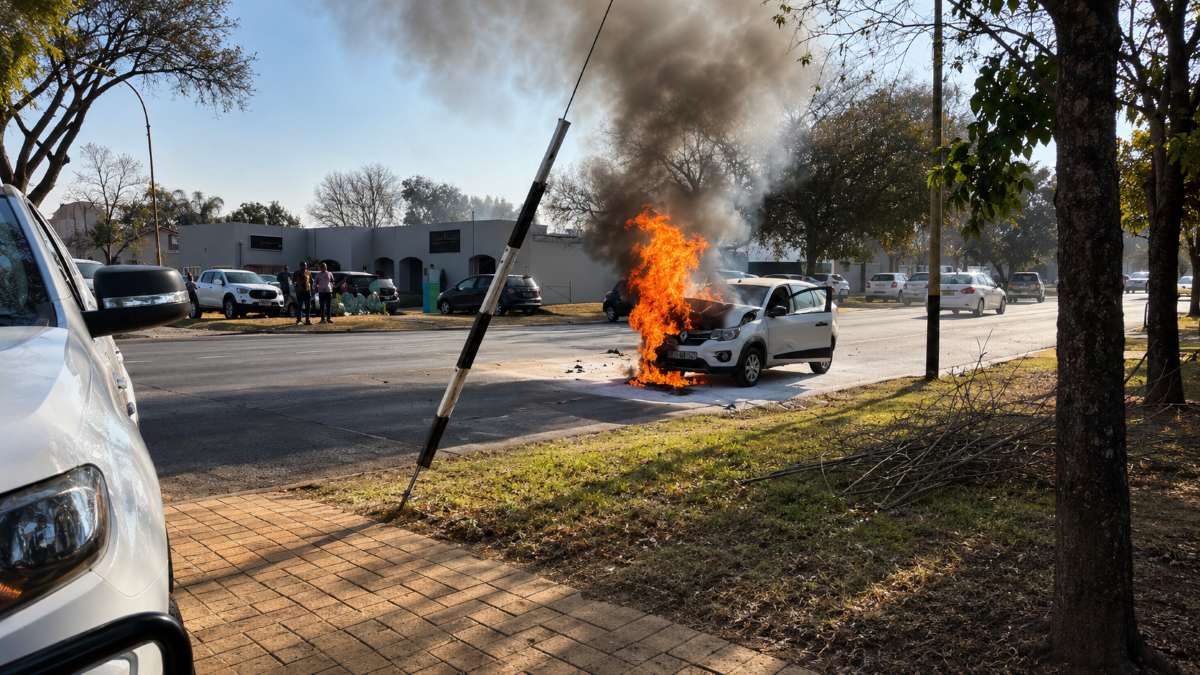
KZN Health has long struggled to maintain EMS coverage due to funding shortfalls and an ageing fleet.
According to Simelane, the province’s expansive and rugged terrain, coupled with limited resources, has slowed fleet expansion and caused longer emergency response times. To address this, the department has allocated R81 million for the acquisition of 50 new ambulances and 10 35-seater planned patient transport buses.
It will also outsource services to over 300 licensed private ambulances and procure a total of 200 vehicles, including mobile clinics. A roadside assistance programme, involving 12 artisan mechanics and 11 support vehicles, will support faster vehicle repairs and reduce downtime.
Furthermore, during a budget debate, Dr Imran Keeka, MPL and Chairperson of the KZN Health Portfolio Committee (Democratic Alliance), highlighted the worsening EMS response times—dropping from 51.7% in 2020/21 to 45.1% in 2022/23. He cited inadequate inter-facility transport capacity and poor vehicle availability as key factors, despite rising demand.
Dr Keeka supported the planned vehicle acquisitions but stressed that achieving the national benchmark of one EMS vehicle per 10,000 people remains out of reach without increased investment.
The Public Servants Association (PSA) also raised alarms about EMS staffing shortages. In a recent submission to the Portfolio Committee on Public Service and Administration, the PSA advocated for the hiring of qualified, unemployed paramedics to relieve pressure on overstretched teams. This aligns with Simelane’s announcement that KZN will benefit from a national allocation to employ 800 post-community service doctors, some of whom are expected to be deployed within the province to strengthen primary care and EMS.
Andile Biyela of the Inkatha Freedom Party (IFP) praised the department’s transparency but urged stricter fiscal discipline to ensure funds are not lost to inefficiency. He emphasised that political agendas should never hinder life-saving reforms like EMS and maternal care upgrades.
Despite a R56.2 billion budget for 2025/26, the department operates under pressure from over R8 billion in cumulative cuts over the past six years.
The health portfolio committee flagged further concerns, particularly a drop in the employee compensation budget—from R37.735 billion in 2024/25 to R35.227 billion in 2025/26—which could hamper staff recruitment even as the department expands its vehicle fleet. The loss of external funding, such as USAID and PEPFAR, has further complicated improvements to EMS and public health services.
Staff morale and affordability are also in the spotlight. In a letter to the Portfolio Committee, NEHAWU pointed to the rising cost of medical aid schemes for paramedics and public servants, which risks eroding retention and performance.
Beyond EMS, a major development in maternal health is unfolding across the province. With high rates of maternal mortality, particularly in rural areas, KZN Health is intensifying efforts to reduce childbirth-related deaths.
At the forefront of this initiative is the ‘Materna-Well‘ Tray, a simple but life-saving innovation that allows healthcare providers to accurately measure postpartum blood loss. MEC Simelane explained, “To reduce maternal deaths caused by excessive bleeding after childbirth, we’ve introduced the ‘Materna-Well’ Tray, which enables early intervention.” The tray was piloted at Vryheid, Osindisweni, Northdale, and Benedictine hospitals as part of an international trial. Following promising results, 1,000 trays have already been distributed to facilities across all 11 districts in KZN.
The Materna-Well Tray consists of a calibrated drape placed under the mother during delivery, offering accurate measurement of blood loss. This facilitates early detection of postpartum haemorrhage (PPH)—a leading cause of maternal deaths in South Africa—allowing for rapid responses such as oxytocin administration or blood transfusion. In under-resourced rural clinics, where delays often prove fatal, this tool empowers midwives and clinicians to act swiftly.
Data from the KwaZulu-Natal Department of Health’s District Health Information System indicates maternal mortality rates in the province have ranged from 800 to 1,780 per 100,000 live births between 2009 and 2019—far above the national average.
The National Department of Health’s Saving Mothers 2011–2013 report identified haemorrhage as responsible for 14% of maternal deaths, with the WHO estimating a 70% reduction in such deaths with early PPH detection.
Adding to this, KZN Health is also scaling up Midwife-led Birth Units (OMBUs) at hospitals such as Prince Mshiyeni and Newcastle, which are successfully managing low-risk deliveries and freeing up tertiary services. More OMBUs are planned, subject to resource availability.
In closing, while the acquisition of new ambulances and rollout of maternal health tools signals meaningful progress, the continued success of these initiatives will depend on sustained investment, improved staffing, and strict oversight. With budget pressures and system weaknesses still at play, delivering quality healthcare to KZN’s most vulnerable populations remains a formidable task, but one that cannot be delayed.
What are your thoughts on this all? Let us know in the comment section below.
Be sure to read, Illegal Factories and Shops Targeted in Riverside Industrial Clampdown, if you missed it.