


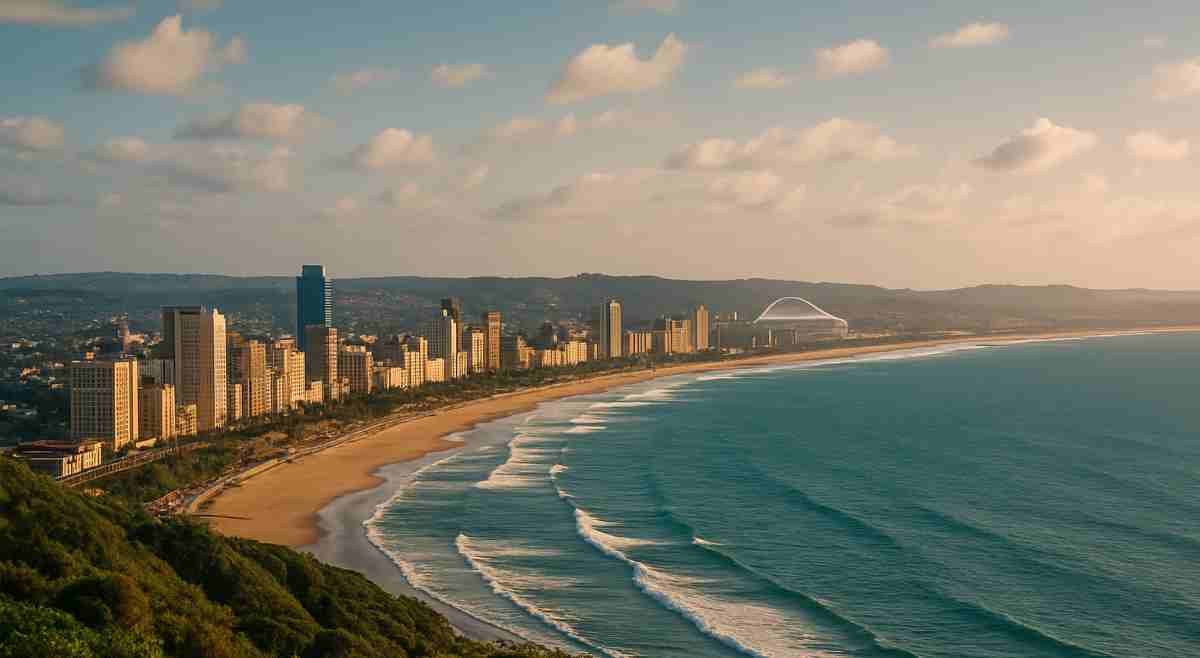
KwaZulu-Natal (KZN) is drawing growing numbers of South Africans in search of a better quality of life. With its golden coastlines, developing cities, and a blend of urban energy and cultural warmth, the province offers a compelling alternative to the fast-paced grind of places like Gauteng. In 2022 alone, Stats SA recorded that 15.6% of internal migrants relocated to KZN, and it’s not hard to see why.

Home to over 12.3 million people, KwaZulu-Natal combines natural beauty with expanding economic hubs.
But a successful move requires careful planning, particularly around housing, employment, and safety. This article breaks down the essentials for families and individuals earning between R10,000 and R40,000 per month.
Where to Live: Buying or Renting in KwaZulu-Natal
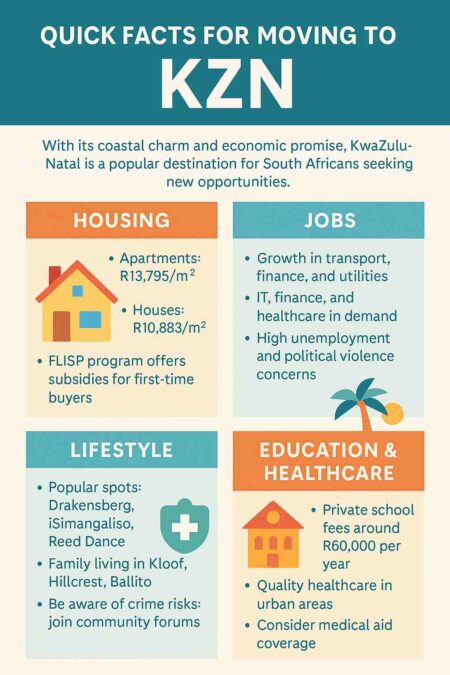
Finding a place to stay is usually the first hurdle. Thankfully, the province offers a range of options across budgets. Government support is available too. The First Home Finance Subsidy Programme (FLISP) is geared toward first-time buyers earning between R3,501 and R22,000 a month. It can assist with a deposit or reduce your home loan.
In addition, developments like the Cornubia Community Residential Unit and the Nkanku Road Housing Project in eThekwini offer subsidised rental or ownership schemes. Private buyers, on the other hand, can expect average property prices around R13,795/m² for flats and R10,883/m² for houses, according to Private Property.
Four-room and five-room homes—more suited to families, cost slightly less per square metre.
Suburbs like Westville, Umhlanga, and Ballito are popular among professionals due to their proximity to business districts, schools, and healthcare facilities.
However, housing supply remains under pressure. KwaDukuza alone saw a 37% population increase in recent years, and South Africa still faces a national shortage of 2.3 million housing units. Infrastructure backlogs in municipalities like eThekwini can also delay developments, so planning early is critical. Working with local property experts such as Seeff or RE/MAX can help you secure a home that fits your financial plan.
Work and Income: Understanding KZN’s Job Market
KZN’s economy offers potential, but also challenges. While Durban leads in logistics and automotive sectors and Pietermaritzburg supports retail and government roles, the provincial unemployment rate stood at 32.9% in early 2025. That said, some industries are growing. Between Q1 2024 and Q1 2025, the province added:
- 67,000 jobs in transport,
- 60,000 in finance,
- and 35,000 in utilities.
High-demand roles include IT, finance, and healthcare. According to PNet, salaries in these areas often range from R30,000 to R60,000 per month. Public service roles are regularly listed on the South African Government Jobs Portal, while networking through business bodies like the Durban Chamber of Commerce can open doors.
Job seekers without a university degree can explore manufacturing, tourism, and logistics. But be aware: political instability, corruption, and service issues in rural areas often limit career options. Urban centres like Durban and Richards Bay are usually safer bets.
Daily Life: Culture, Cost of Living, and Safety
KwaZulu-Natal is a province of contrasts — from the tranquil Drakensberg mountains to the lively streets of Durban. Popular attractions include iSimangaliso Wetland Park, the Durban International Film Festival, and cultural traditions like the Reed Dance.
Suburban areas like Kloof, Hillcrest, and Ballito are popular among families for their perceived safety, good schools, and medical access. While salaries might be slightly lower than in Gauteng, rent and transport costs are often more affordable. A two-bedroom flat in Westville, for example, ranges from R5,500 to R8,500 a month.
However, safety remains a concern. While Q4 2024 saw a 12.2% drop in murders, the province still accounts for over 21% of national murder cases. Areas like Inanda and uMlazi are crime hotspots. The SAHRC has also highlighted water shortages, gender-based violence, and inadequate policing in certain areas.
Families should:
- Research neighbourhood crime stats.
- Use trusted transport providers.
- Join local safety groups like the KZN Community Forum on Facebook.
- Avoid high-risk areas after dark.
Initiatives like the Council Against Crime, backed by Premier Thami Ntuli, are working to improve safety through community-police collaboration.
Education and Healthcare: Planning for Your Family’s Needs
Education options vary widely. While private schools like Durban High School charge around R60,000 annually, public schools in urban suburbs often deliver solid teaching at lower costs. Apply early — demand is high.
Urban healthcare is world-class. Facilities such as Netcare Umhlanga Hospital cater to medical aid patients, while public clinics offer basic care. For rural families, services may be limited, although the Department of Health is working to improve access.
Medical aid is essential. Plans range from R3,000 to R7,000 per month for families. Without cover, private healthcare costs can be prohibitive.
Relocating to KwaZulu-Natal can open the door to a more fulfilling life — but only with careful planning. Securing affordable housing, identifying the right job market, choosing safe neighbourhoods, and budgeting for healthcare are all critical steps.
With its natural beauty, economic potential, and diverse communities, KZN holds immense promise. But it’s a province best approached with open eyes and smart preparation.

Are you planning to move to KwaZulu-Natal? Share your story or ask questions in the comment section below.
Be sure to read, Should You Move to Cape Town or KwaZulu-Natal? A Gauteng Resident’s Guide, if you missed it.
Below are some Frequently Asked Questions (FAQs)
While KZN’s salaries may be slightly lower than in Gauteng, the overall cost of living is often more affordable, particularly for housing. For instance, renting a two-bedroom apartment in a sought-after Durban suburb like Westville can range from R5,500 to R8,500 per month, which is often less expensive than comparable areas in Johannesburg or Cape Town. Essential groceries and utilities are generally on par with other major cities, but transport costs can be lower if you live and work in the same urban hub.
While the article highlights demand for professionals, KZN’s economy also provides opportunities for individuals without university degrees. Key sectors for these roles include manufacturing, logistics, and tourism. The province’s strong automotive and port industries in Durban, as well as the vibrant retail sector, offer a range of positions from skilled trades to service roles. Consulting the KwaZulu-Natal Department of Economic Development can provide more specific insights into these opportunities.
The KwaZulu-Natal Department of Education manages the province’s public school system. While the quality of education can vary, particularly between urban and rural areas as noted by the SAHRC, many public schools in established suburbs offer a good standard of education at a more affordable cost than private institutions. It is advisable for parents to research specific schools in their chosen residential area and apply well in advance due to high demand.
To ensure a smooth transition, it is important to plan ahead. Essential administrative steps include:
Updating Your Address: Inform relevant government agencies like SARS and your bank of your new address.
Utilities: Arrange for the transfer of electricity, water, and other utility accounts to your new property.
Drivers’ Licence and Vehicle Registration: Update your address with the licensing department.
Healthcare: Register with a local clinic or hospital and update your medical aid details.








2 Responses
Hi, planning on buying on the south coast kzn..what are the pros and cons that side even though I heard alot of good
Hi Lee. Awesome question! Will get the team to dive into this. Have a great day!