

Political tensions in KwaZulu-Natal (KZN) are escalating rapidly, as legal disputes and violent incidents, including targeted murders, continue to strain relations between political parties. Consequently, government departments are issuing urgent pleas to halt the killings of municipal workers and restore calm in municipalities, underscoring a pressing need for resolution to stabilise governance and rebuild public confidence.

This volatile climate has significantly intensified friction within municipal structures, where disputes over leadership appointments and procurement processes have fuelled ongoing controversy.
As a result, legal battles are increasingly becoming the mechanism through which alleged irregularities in council decisions and tender awards are challenged.
Several municipalities—including Amajuba District, Msunduzi, and eThekwini—are now entangled in high-profile court cases, each underscoring deeper and systemic governance issues across the province.
In the Amajuba District Municipality, the African National Congress (ANC) has approached the Pietermaritzburg High Court seeking to remove District Mayor Cllr Thembelihle Mthembu and Deputy Mayor Cllr Shaka Sithole from office. As per the ANC’s Mbuso Kubheka Region, on 23 July 2025, senior leadership including Regional Convener Cde Jabu MaMkhwanazi and other Regional Task Team members confirmed their attendance at court proceedings scheduled for 24 July 2025.
The ANC maintains that the appointment of Cllr Mthembu and Cllr Sithole at a May 2025 council meeting was both unlawful and illegitimate.
In contrast, the Inkatha Freedom Party (IFP) reported that Cllr Mthembu was elected unopposed and sworn in at a special council sitting following the resignation of the former District Mayor. The IFP has firmly defended the legitimacy of the meeting, stating it complied fully with the Standing Rules of Council and relevant legislation.
The IFP further accused the ANC of employing violence and intimidation, referencing an attack on the Speaker of Council and threats made against councillors.
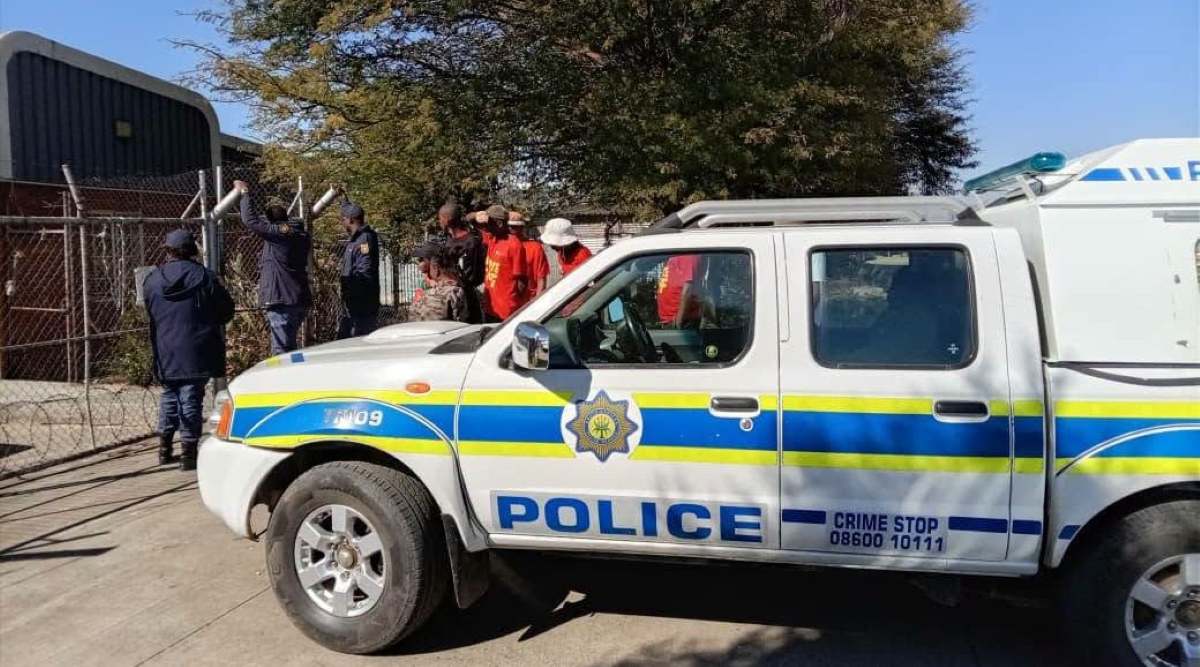
These threats forced the relocation of the meeting to a more secure venue. As tensions escalated, the South African Police Service (SAPS) was called in but reportedly struggled to manage the volatile scene. Additionally, the IFP claims that the meeting’s minutes and attendance register confirm it was quorate and procedurally sound.
While facing legal action over leadership appointments, Amajuba District Municipality is also dealing with a second legal challenge concerning a R89-million tender for wastewater and sanitation infrastructure at Goedehoop, awarded on 21 July 2025.
According to a statement from the KwaZulu-Natal Department of Cooperative Governance and Traditional Affairs (KZNCoGTA), the tender was allegedly finalised during an open objection period—potentially in violation of procurement rules. Umpisi Construction and Plant Hire, whose lower R71-million bid was rejected, is threatening legal action. The company has demanded the bid adjudication committee’s minutes, arguing the process lacked transparency and contravened the municipality’s Supply Chain Management Policy.
Elsewhere, similar governance concerns are emerging. In the eThekwini Municipality, the Democratic Alliance (DA) is taking legal action over the prolonged sewage crisis. As per a statement from the DA, on 23 July 2025, the party confirmed its court action would proceed on 24 and 25 July 2025, citing persistent mismanagement of the city’s sewage infrastructure and the resulting environmental and public health consequences.
ActionSA has also joined the legal battle, naming the eThekwini Municipality, the KZN Provincial Government, and the Government of National Unity (GNU) in its litigation.
Despite the instability that forced SAPS to intervene at the Amajuba council meeting, the ANC insists on pursuing its legal challenge. Spokesperson Lucky Ndlovu emphasised, “This attendance underscores the leadership’s commitment to the rule of law, transparency, and accountability. The presence of our leaders is not only in support of the legal process but also to demonstrate solidarity with all parties involved. We reaffirm our respect for the independence of the judiciary and the importance of allowing legal processes to unfold without interference.”
He further noted that reversing the May 2025 decisions could safeguard services for Amajuba’s residents—particularly those in remote areas reliant on basic municipal functions like clean water and sanitation.
Meanwhile, KZNCoGTA has raised serious concern about the rising number of murders targeting municipal workers, which further undermine governance stability. As per KZNCoGTA, Khalesakhe Mchunu from uMsinga Local Municipality was gunned down on 22 July 2025 in oFabeni, uMsinga.
“This incident is one of several that have occurred in just the past 30 days. On 27 June, 32-year-old Nokulunga Mashabane was found with a gunshot wound in KwaDukuza. Just days later, on 3 July, an official from the eThekwini Metro was tragically killed, and others injured, when unknown gunmen opened fire on their vehicle,” the department stated.
KZNCoGTA MEC Reverend Thulasizwe Buthelezi described these attacks as an assault on the foundations of public service. “These attacks on public servants who are dedicated to serving our communities are unacceptable and undermine the very fabric of local governance,” he said. Calling for urgent investigations, he stressed, “No stone should be left unturned in bringing those responsible to account,” while also urging stronger protection measures for municipal workers.
This surge in violence appears to be part of a broader trend of politically motivated killings in KZN, a pattern that continues to erode public trust and governmental effectiveness.
According to the South African Human Rights Commission (SAHRC), KZN has recorded approximately 50 political killings over the past five years—most involving councillors and municipal staff. A key case includes the July 2025 life sentence handed to Phathisakhe Thuthukani Ngiba for the 2022 murder of ANC councillor Zakhele Shezi Khuzwayo in KwaMaphumulo Municipality. Ngiba was also linked to the 2021 killings of ANC ward candidate Siyabonga Mkhize and party member Mzukisi Nyanga in Cato Crest.
As per SAPS, two suspects were also arrested in June 2025 for the murder of IFP deputy chief whip Khethamabala Sithole in uMhlathuze Municipality—another case that underscores the risks faced by political figures across party lines.
It should be highlighted that the SAPS Political Killings Task Team, prior to its disbandment in January 2025, had investigated 321 cases since 2018—155 of which were murders. These investigations led to 348 arrests and 62 convictions, as per SAPS. The ANC was the hardest hit, losing 31 councillors, followed by the IFP (14) and the NFP (4), along with 103 municipal officials.
The Inter-Ministerial Committee (IMC) on political killings has since advocated for the establishment of dedicated courts to fast-track such cases. KZNCoGTA has echoed this sentiment, commending SAPS efforts but stressing the urgent need for improved protective measures—such as routine risk assessments and increased patrols in high-risk zones.
Additionally, as per SAHRC, on 8 July 2025, the commission called for a full Commission of Inquiry into allegations of political interference in SAPS investigations, particularly regarding the task team’s disbandment. These concerns stem from fears that the state’s investigative capabilities have been compromised.
In response, as per KZNCoGTA, the department is working closely with SAPS to implement improved security measures. These include individual risk assessments for frontline municipal workers and increased police deployment in identified danger zones. Likewise, as per the IMC, the national government has labelled the crisis a “grave national security concern.”
President Cyril Ramaphosa has stressed the importance of safeguarding security forces and upholding the rule of law to protect municipal workers and political leadership.
The mounting political discord and violence across KZN—paired with ongoing court battles—carry significant implications for the public. Trust in local government continues to decline, while access to essential services like water, sanitation, and housing infrastructure hangs in the balance.
For residents—especially those in underserved communities—this instability is more than political; it’s a direct threat to daily life.
For the province, the unchecked violence and governance failures demand urgent and systemic reform. While efforts by KZNCoGTA, SAPS, and SAHRC mark essential progress, they must be matched with deeper accountability and long-term strategies to dismantle the roots of political rivalry, procurement manipulation, and institutional decay.

Until then, KwaZulu-Natal’s municipal landscape remains at a crossroads—caught between the promise of democratic progress and the threat of internal collapse.
With all of this in mind, what are your thoughts and how does this make your feel? Let us know in the comment section below.
Be sure to read Disaster Management Overhaul Finally Underway for Newcastle, Utrecht and Dannhauser, if you missed it.