


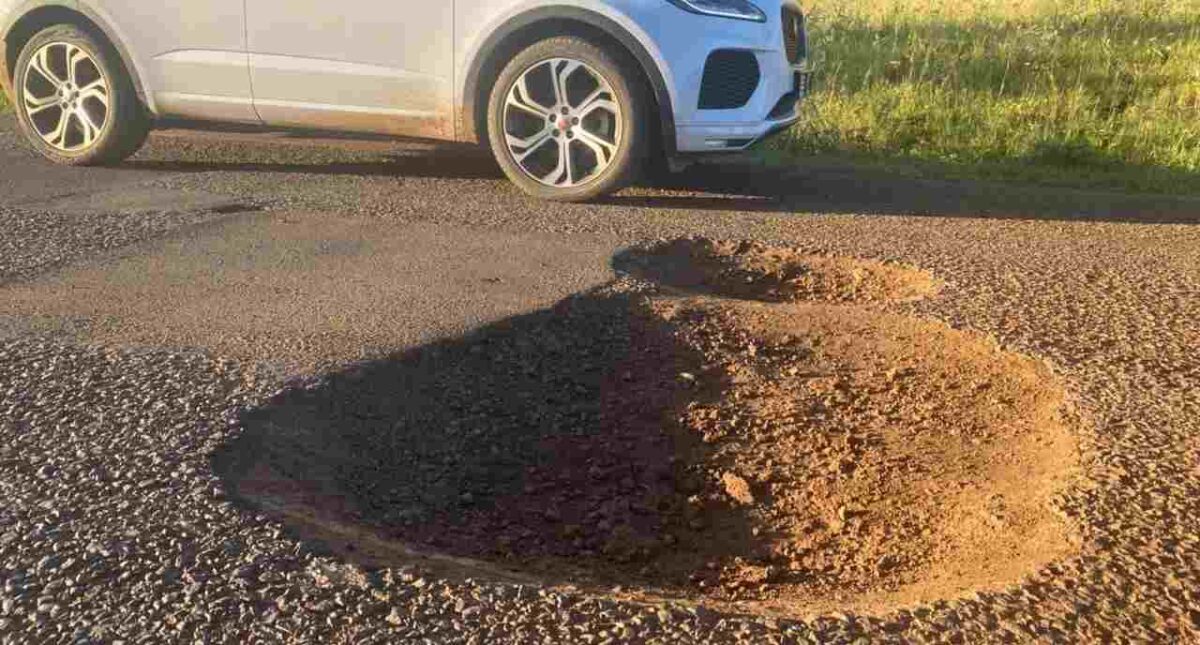
The R69 route, a critical artery connecting Vryheid, Louwsburg, and Pongola in KwaZulu-Natal (KZN), has deteriorated to a perilous state, endangering lives and disrupting economic activity across the region. This vital corridor, essential for regional connectivity, has become a daily hazard due to its appalling condition, with urgent calls for comprehensive rehabilitation to address the public safety emergency it now represents.

The journey between Vryheid, Louwsburg, and Pongola, which should typically take just over an hour, now stretches to approximately two hours due to the dire state of the road.
Local residents report that some stretches contain more than 500 potholes in a single kilometre, rendering the route virtually impassable. This is no longer a mere inconvenience but a critical threat to public safety.
Riona Gokool, the Democratic Alliance (DA) KZN spokesperson on Transport, stated, “Drivers regularly face severe vehicle damage, including broken chassis and punctured tyres, while overturned vehicles and head-on collisions have become alarmingly common occurrences. In the misty conditions typical of the Louwsburg area, the dangers are significantly amplified, effectively transforming the R69 into a death trap. Numerous serious injuries have been reported as a direct consequence of the road’s appalling conditions.”
Gookool further said, “This disastrous road reflects more than poor maintenance. It is a complete failure of foresight, critical thinking and basic governance.” She further criticised the KZN Department of Transport (DoT) for its persistent inaction, noting that “KZN’s DoT has repeatedly demonstrated its inability to plan proactively, execute timeously or appoint competent contractors based on merit rather than political connections.”
She further stated that for two years, community members have submitted monthly complaints to the DoT in Vryheid, only to be met with silence, protracted delays, and unfulfilled promises, leaving residents frustrated and incensed under the constant financial burden and emotional distress caused by the road’s hazardous condition.
When looking at the parliamentary response from the Department of Transport, when questioned on when the R69 from Pongola to Vryheid via Louwsburg was due for upgrade, the department explained, “The Upgrade of this route forms part of the rehabilitation project for Provincial Road P46-2, specifically from kilometre markers 16.00 to 45.00. A contract for this rehabilitation work has already been awarded, and the appointed contractor is currently in the process of fulling pre-construction contractual obligations. Site establishment is expected to commence once these preparatory activities are concluded.”
The Department of Transport further emphasised in its response that while full-scale construction has not yet begun, interim maintenance activities are being implemented. As per the DoT, a “Zbak” contract covering the Vryheid area Office has been awarded, which includes the maintenance of roads through blacktop patching.
Moreover, the DoT explained that it was also in the process of procuring blacktop materials to enable internal maintenance teams to conduct accelerated pothole repair operations along the P46. “These efforts are aimed at preserving the condition of the road and minimising hazards while preparations for full rehabilitation continue,” the Department said in its response to the DA.
When questioned by the DA on what it was doing to address the damage to vehicles and the multiple collisions on the pothole-ridden road, the DoT claimed it had plans in place. “To mitigate the effects of the road’s deteriorated condition and reduce the risk of accidents, the Department has activated both contracted and internal maintenance interventions.”
In parallel, the DoT said internal maintenance teams are being supported with additional procurement of blacktop materials to fast-track pothole repairs.
“These short-term interventions are part of the Department’s broader commitment to maintaining road safety and usability along P46 until the rehabilitation contractor becomes fully operational on sight,” the department concluded.
Looking at the response to written parliamentary questions, Gookol stated that while a contract for rehabilitation work has indeed been awarded, the contractor is still fulfilling pre-construction obligations, and full-scale construction has yet to commence. She said that in the interim, the DoT has announced patchwork maintenance activities, including blacktop patching and material procurement. However, these temporary measures have proven woefully ineffective, poorly implemented, and, in many cases, more damaging than beneficial. However, it was further noted that temporary patches have crumbled within days, further destabilising the road and introducing new risks for unsuspecting road users.
Gokool highlighted the systemic issues plaguing the DoT, stating, “The practice of awarding contracts to politically connected but under qualified entities has also eroded public trust and led to substandard work that compounds rather than solves the problem.”
She meticulously outlined the imperative actions the DoT should have undertaken upon receiving numerous complaints and accident reports: “On receipt of the numerous R69 complaints – and the number of accidents logged – the DoT should have conducted an urgent and comprehensive assessment, immediately allocated funding for critical repairs and long-term rehabilitation, provided a transparent public report outlining the way forward, and ensured ongoing and accountable maintenance with timelines and community oversight.”
Furthermore, the ongoing neglect of the R69 has left surrounding communities to fend for themselves, grappling with the profound financial and emotional toll of navigating a crumbling road. In response to this escalating problem, there is a pressing demand for the KZN Transport portfolio committee to conduct an immediate oversight inspection of the R69 and table a comprehensive report at its next meeting, detailing the road’s current status, allocated budgets, and definitive timelines for its full rehabilitation.
Additionally, there is a stringent call for a moratorium on awarding contracts to underqualified, politically connected entities to ensure all future works meet the required professional standards.

Gokool also emphasised the critical urgency, stating, “Fixing the R69 is not a luxury, it is a lifesaving necessity. Residents can no longer risk their lives on a road that has been allowed to crumble to ruin.”
As part of KZN’s Government of Provincial Unity, concerted efforts are underway to advocate for robust and resilient road networks across the entire province. The R69 serves as a stark and urgent reminder of the critical need for accountable governance, transparent planning, and competent execution to restore safety and reliability to KZN’s vital infrastructure.
What are your thoughts on the above? Share your views in the comment section below.








2 Responses
The Road from Pongola yo Vryheid is a death trap. One of our friends had a head on collision dodging a pothole. The drivers of the 2 bakkies were critically injured. After a year still ongoing surgery. The parents from Pongola and Vryheid often drive to and fro for School Sports Days. I was horrified when we drove to Vryheid a year ago. There is literally no tar left!! Massive potholes!! No tree maintenance the overgrowth hangs over the road!! Is disorganized Caos while apparently 3 world countries prefer!!
That road from Pongola to Vryheid is finished, there are some other places where there is no tar at all , and there are also trees along the side of the road, it is very difficult to drive on that road, especially when it gets dark and mist,
SANRAL must intervene in that road condition .