


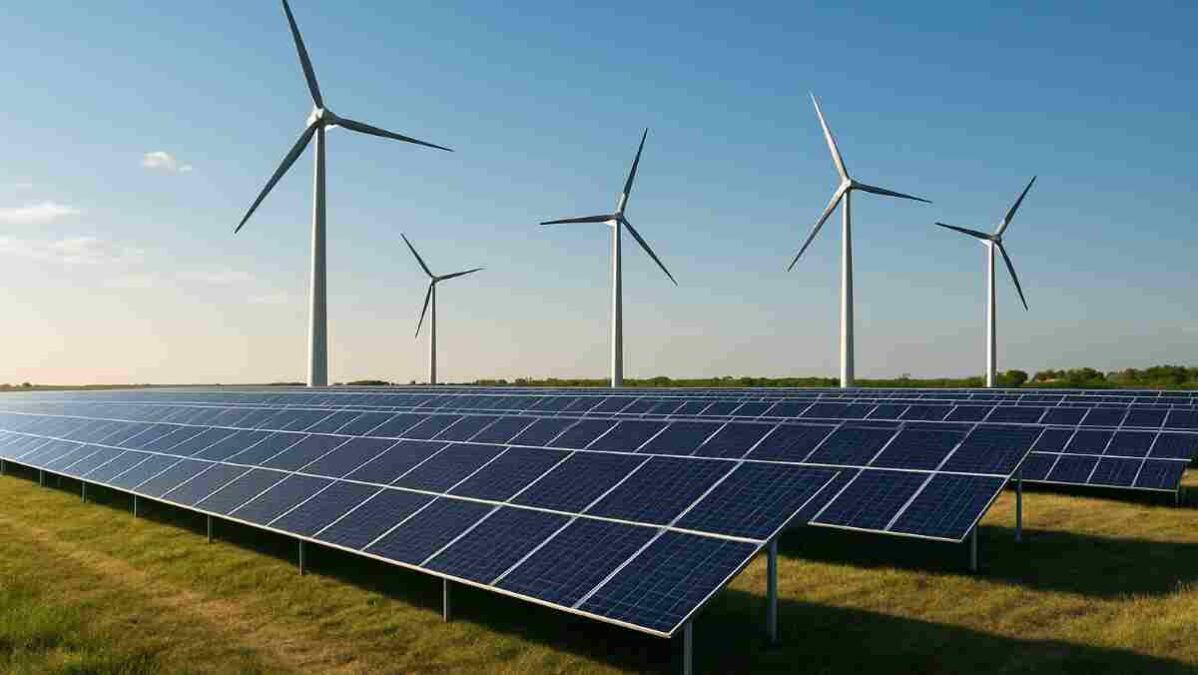
Renewable energy development is gaining traction in Northern KwaZulu-Natal (NKZN), with four solar grid connection applications approved in Newcastle and Ladysmith, and a wind project expected to begin construction in August.

This was according to Andile Buthelezi, Project Manager: Investment Promotion at Trade and Investment KwaZulu-Natal (TIKZN), who spoke at a recent mining breakfast hosted by Forvis Mazars and Women of Africa Fuels and Oils in Melrose Arch.
Buthelezi’s address underscored the province’s burgeoning economic potential as a critical emerging centre for investment.
It should be highlighted that the approval of four solar grid connection applications in Newcastle and Ladysmith signifies a critical step towards increased energy independence and sustainability for these municipalities. While specific details for each of these four approved projects are not fully public, the Newcastle Local Municipality stated that it had been actively pursuing large-scale solar initiatives.
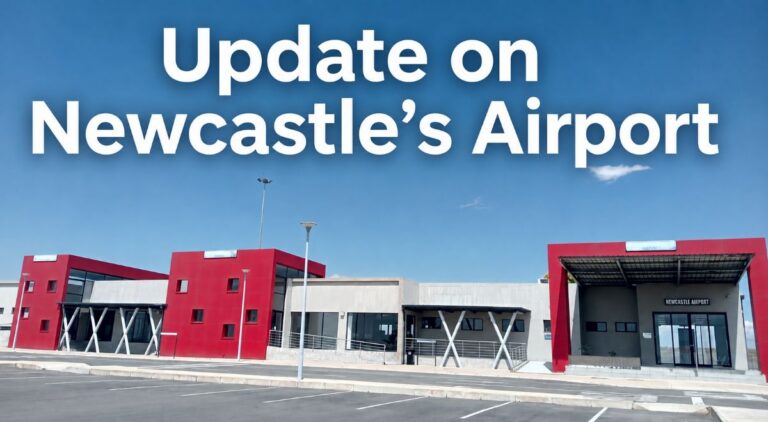
Currently, the municipality is collaborating with Vutomi Energy (PTY) LTD, in partnership with New Phoenix Power, on a significant solar plant development near the Newcastle Airport.
This project aims to generate a minimum of 100 megawatts of electricity, potentially transforming the town’s energy landscape.
Approximately 128 hectares of land are reportedly earmarked for this development, with the municipality planning to lease the land to the power producer, securing substantial monthly revenue without requiring its own capital expenditure. This project is projected to create over 1,000 jobs during its estimated 24-month construction phase and is anticipated to effectively mitigate loadshedding in Newcastle, potentially leading to more affordable electricity tariffs for consumers. The ambition extends to allowing Newcastle to sell surplus electricity to neighbouring municipalities.
In Ladysmith, the interest in solar power is also evident. Beyond the four approved grid connections, existing commercial installations demonstrate the town’s embrace of solar technology. A notable example includes a 1.3 MW grid-tied rooftop system at Sumitomo Rubber’s state-of-the-art facility. This showcases a successful large-scale commercial application of solar energy in the town, contributing to significant cost savings and a reduced carbon footprint. Furthermore, local solar companies actively provide a range of solar solutions, from residential installations to larger commercial setups, indicating a growing demand and local capacity for solar energy integration in Ladysmith.
The upcoming wind project, expected to begin construction in August in Northern KwaZulu-Natal, further diversifies the region’s renewable energy portfolio.
While precise details regarding the location and capacity of this specific project were not explicitly detailed by Buthelezi, other significant wind energy developments are being explored within the broader Northern KZN region.
For instance, the proposed Igolide Wind Energy Facility, with a potential capacity of up to 100MW, has undergone scoping phases in the area. This project, if it proceeds, would involve the installation of wind turbine generators, a Battery Energy Storage System (BESS) of up to 100MW/400 MWh, and associated infrastructure to feed electricity into the national grid. Such projects represent substantial investments and are anticipated to contribute significantly to regional job creation and energy security.
On the mining front, KwaZulu-Natal holds a range of underutilised resources. “KZN is not known for mining but the northern parts of the province have some of the best coal in South Africa,” explained Buthelezi. While acknowledging the challenge of high sulphur content in this coal, Buthelezi highlighted that it is currently mined in KZN, transported to Mpumalanga, blended, and subsequently exported to foreign markets.
“There are ongoing opportunities in that sector,” he affirmed, indicating continued potential for growth and investment. Beyond coal, the province’s mining landscape is diverse. Furthermore, Buthelezi revealed that lithium is being mined near Port Shepstone in southern KwaZulu-Natal and processed at the Dube TradePort. Furthermore, sand extracted in Richards Bay is a vital component in titanium dioxide production, underscoring the variety of mineral resources available.
Investment in logistics infrastructure is also gaining momentum, crucial for facilitating trade and addressing existing supply chain challenges.
Buthelezi referenced a recent partnership between Green Road and a local Black Economic Empowerment (BEE) company. This collaboration aims to develop a comprehensive logistics ecosystem in Richards Bay, which will include a container terminal, a substantial truck stop, and a cold storage facility. “These developments address current supply chain congestion and create seamless commodity trade routes, and are the types of partnerships we are looking for,” Buthelezi affirmed.
Complementing the region’s renewable energy advancements, the mining sector in Northern KZN, particularly in areas like Newcastle, Amajuba, Zululand, and Richards Bay, is navigating a complex landscape of economic potential and significant challenges. According to the KwaZulu-Natal Department of Economic Development, Tourism and Environmental Affairs (EDTEA), Northern KZN’s mineral wealth, including anthracite coal, titanium, zircon, and rutile, positions it as a key economic driver.
However, the sector faces a crisis, with closures such as Assmang Manganese Cato Ridge (threatening 600 jobs) and ArcelorMittal Steel in Newcastle (potentially affecting 3,000 jobs), alongside other operations leading to 1,000–1,300 job losses.
As per EDTEA, the entity is collaborating with the Department of Mineral Resources and Energy (DMRE) to assess mining’s socio-economic impact and explore investment opportunities to revitalise dormant mines, particularly in Amajuba, to curb youth migration and prevent economic decline. Richards Bay Minerals remains a cornerstone, producing half of KZN’s mining output and meeting global demand for heavy minerals, as noted in official provincial economic reports.
Additionally, the Minerals Council South Africa emphasised the need for a modern mining cadastre to streamline licensing and attract investment, a priority highlighted at the 2025 Mining Indaba. While coal remains vital for South Africa’s energy needs, producing 90% of electricity, Northern KZN’s high-sulphur coal requires blending for export, limiting local value addition.
Nevertheless, mining contributes approximately R5.8 billion annually to KZN’s GDP, the smallest sectoral contribution, underscoring the need for strategic interventions to unlock growth.
Yet, when looking at the numbers, civil society organisations, such as ActionAid South Africa and Women Affected by Mining United in Action (WAMUA), highlight significant social and environmental concerns. Social audits in KZN communities reveal that 73% of women report no benefits from mining operations, 40% indicate jobs are accessible only through sexual favors, and 85% link increased violence to mining activities.
These audits stress the need for community-led verification of mining companies’ social commitments, demanding meaningful engagement, prior informed consent, and continuous development plans to mitigate environmental degradation and health risks near residential areas.

Looking forward, Northern KZN’s mining sector is poised for cautious growth, driven by government efforts to attract investment and modernise regulations, but tempered by job losses and community resistance.
What are your thoughts on the above? Share your views in the comment section.








One Response
That is great news