


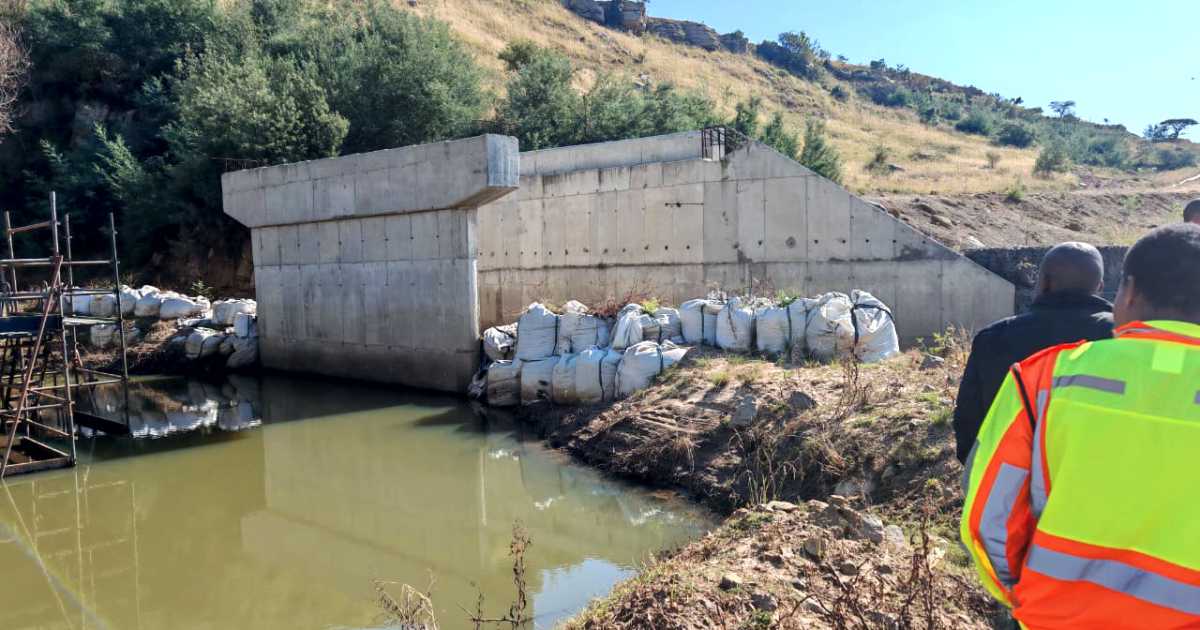
KwaZulu-Natal’s infrastructure projects—crucial for delivering essential services—continue to be undermined by mismanagement, contractor failures, and poor oversight. This was once again brought to the fore during recent inspections by the KZN Legislature, with delays at the Klein Boesmans River Bridge in Wembezi, Estcourt, exposing deep-rooted systemic issues. These failures are not just technical setbacks—they leave communities without vital connectivity and stifle local economic growth.

In response to these concerns, the Transport Portfolio Committee conducted an oversight visit to the long-stalled Klein Boesmans River Bridge project.
According to the KwaZulu-Natal Legislature, construction began in 2020, with a contract stipulating completion within 15 months—by 2021. Yet, years later, the bridge remains unfinished, standing at only 65% complete, despite 97% of the R29,986,918 budget being spent.
The project was designed to connect rural Wembezi communities to schools, healthcare, and markets, and its delay has now restricted access and development. As explained by the KZN Legislature, such delays block critical services, isolating communities further.
Unfortunately, the site has since been deserted.
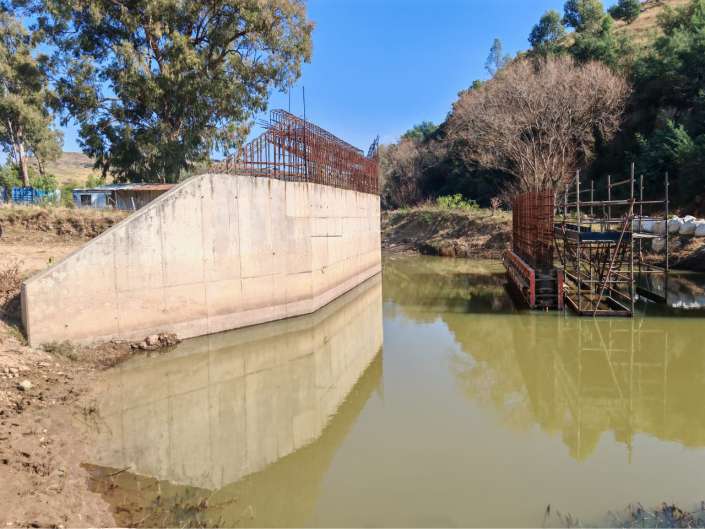
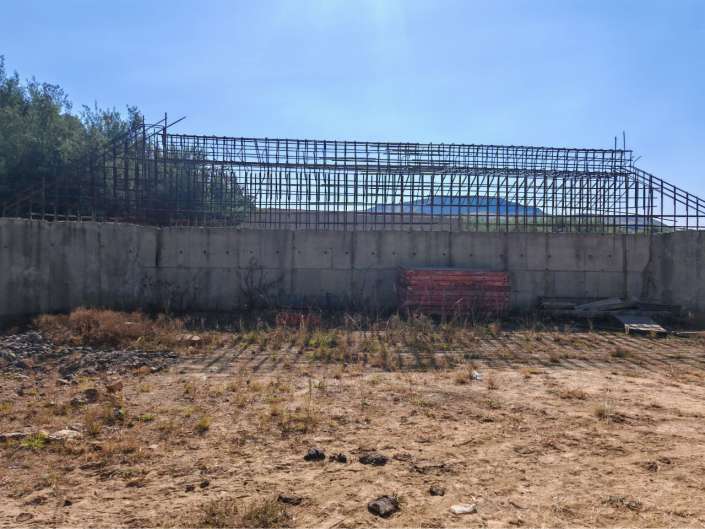
According to KZN Legislature, the committee deems these delays unacceptable, arguing they obstruct essential service delivery. “The first meeting was conducted at the Department of Transport’s Cost Centre in Estcourt, followed by a physical assessment in Wembezi to investigate the reasons behind the project’s prolonged delay and to clarify the Department’s plans to complete it,” explained KZN Legislature.
Riona Gokool, the DA KZN Spokesperson on Transport had the following to say on the matter. “This infrastructure project – begun in February 2020 and due for completion in May 2021 – is currently only 65% complete, despite almost 97% of the allocated budget already spent.”
Moreover, she added that the Department of Transport’s internal report highlights systemic failures. “A contractor plagued by issues, construction delays compounded by avoidable mistakes and an apparent breakdown in contract management and supervision. Excuses such as COVID-19 and weather conditions do not justify years of stagnation, nor do they absolve the department from its failure to take decisive action sooner,” stated Gokool. The contractor’s abandonment in early 2023, after performance warnings in 2022, has halted progress, per Department of Transport records.
According to a 2023 report, the Auditor-General noted that KZN infrastructure projects, including roads and bridges under the Welisizwe Rural Bridges Programme, often face delays, budget overruns, or poor quality, with 25 municipalities facing suspended conditional grants worth nearly R900 million.
These issues, as explained by the KZN Legislature result in hazardous travel conditions, limited access to education and healthcare, and stifled economic growth.

As explained by KZN Public Works and Infrastructure MEC Martin Meyer earlier in 2025, “Almost all projects of the Department of Public Works and Infrastructure were already behind schedule when I assumed office,” citing poor contractor performance and “construction mafia” interference. The department plans to blacklist unreliable contractors. These delays, as per the KZN Legislature, leave communities facing unsafe infrastructure and reduced access to services, underscoring the need for urgent oversight.
What are your thoughts on the above? Share your views in the comment section below








11 Responses
As long as Mickey Mouse contractors are appointed, this will never get better. Huge companies with skill and experience are closing down because of tendepreneurs.
Agree 100%
This company will run under a new name and get awarded another contract just to steal the money. That’s the fancy car with an Ai driver
This discussing of a specific issue with the Zwelisha bridge, also known as Craig A, which has been in a state of disrepair for three years. Despite meetings, there’s been no progress, and the lack of action to poor oversight by the department responsible for the project.
Sharing the similar sentiments as above, moreover the issue of Business Forums that turns to dictate who or which companies should be given such critical and crucial assignments, irrespective of credentials play a big role in these backlogs. Experienced companies must be given work irrespective of locations.
Why did the local Municipality not do anything?
Sounds like ANC project management.
What future has South Africa as this is the norm. A Tragedy !
This does not surprise me at all!
This is the fruit of the ANC’s BBEE policies, experienced capable contractors cannot win these contracts. Inexperienced and under resourced contractor cannot perform and claim funds not due to them due to lack of oversight by the client and the emerging Consulting Engineers.
According to the KwaZulu-Natal Legislature, construction began in 2020, with a contract stipulating completion within 15 months—by 2021. Yet, years later, the bridge remains unfinished, standing at only 65% complete, despite 97% of the R29 986 918 budget being spent.
Let’s break down the Earned Value Management (EVM) for this project:
Given: 65% complete, 97% of budget spent.
EV (Earned Value) = 65% of R29 986 918 = R19 491 496.7
AC (Actual Cost) = 97% of R29 986 918 = R29 087 310.46
Cost Variance (CV):
Formula: ( CV = EV – AC )
CV = R19 491 496.7 – R29 087 310.46 = -R9 595 813.76
Schedule Variance (SV):
Formula: ( SV = EV – PV )
Assuming PV (Planned Value) = 100% of R29 986 918 (since the project was supposed to be completed by 2021)
SV = R19 491 496.7 – R29 986 918 = -R10 495 421.3
Cost Performance Index (CPI):
Formula: (CPI = EV/AC)
CPI = R19 491 496.7 / R29 087 310.46 = 0.67
Schedule Performance Index (SPI):
Formula: (SPI = EV/PV)
SPI = R19 491 496.7 / R29 986 918 = 0.65
Estimate to Complete (ETC):
Formula: (ETC = (BAC – EV/CPI)
BAC (Budget at Completion) = R29,986,918
ETC = (R29 986 918 – R19 491 496.7) / 0.67 = R15 651 576.27
In summary, the project is experiencing significant cost and schedule variances, indicating that it is over budget and behind schedule. The CPI and SPI values are both less than 1, which suggests inefficiencies in cost and schedule performance. The ETC calculation shows the estimated additional cost required to complete the project, given the current performance trends.