


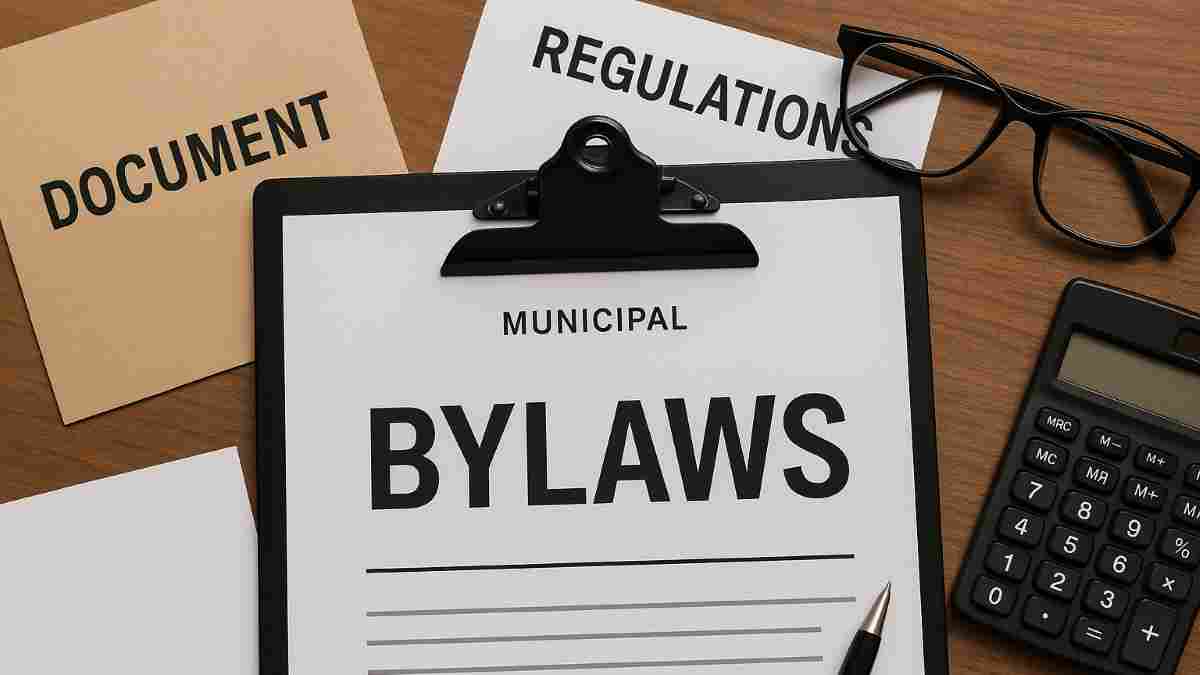
The efficacy of local governance in South Africa hinges on the consistent and robust enforcement of municipal bylaws. However, the widespread failure of municipalities to uphold these critical regulations presents a formidable challenge, resulting in urban decay, public health crises, and a significant erosion of public confidence in local authorities.

In response to residents’ mounting frustration with municipalities’ lax approach to bylaw enforcement, Newcastillian News provides this comprehensive guide.
It aims to empower citizens with the knowledge and tools to foster accountability and ensure bylaws are not merely documented but actively and effectively enforced.
Municipalities are legally obliged to administer bylaws to ensure effective governance. To this end, Chapter 7, Section 156(2) of the Constitution of the Republic of South Africa, 1996, stipulates, “A municipality may make and administer by-laws for the effective administration of the matters which it has the right to administer.”
To read the full constitutional text, click here.
Complementing this, the Local Government: Municipal Systems Act, 2000 (Act No. 32 of 2000), clearly delineates the administrative responsibilities of municipalities.
Specifically, this Act underscores bylaws as essential instruments for promoting local sustainability and clarifies the rights and duties of municipalities, their service providers, and residents.
Information on this Act is provided by the Department of Cooperative Governance and Traditional Affairs (CoGTA). To view the act, click here.
When a South African municipality fails to enforce its bylaws, the repercussions profoundly affect service delivery, governance, and residents’ well-being. Far from being abstract, these consequences manifest as tangible deterioration in public services and heightened public health risks.
This non-enforcement of bylaws can trigger a cascade of adverse effects:
Deterioration of Service Delivery and Public Infrastructure: Bylaws regulate critical areas such as waste management, public space maintenance, and building standards. Consequently, a lack of enforcement may lead to:
- Increased Illegal Dumping and Filth: This contributes to environmental degradation and health hazards, as evidenced by prevalent municipal challenges.
- Run-down Public Spaces: Parks, pavements, and communal areas deteriorate due to unchecked vandalism or neglected maintenance bylaws.
- Uncontrolled Development and Land Use: This results in urban sprawl, informal settlements in unsuitable areas, and strain on existing infrastructure, as outlined in municipal planning and zoning regulations.
Public Health and Safety Risks:
Bylaws governing health, hygiene, noise control, and food safety are vital for public welfare. Therefore, their non-enforcement may result in:
- Health Crises: Unsanitary conditions, unchecked pollution, and unregulated food vendors can precipitate disease outbreaks.
- Safety Hazards: Unsafe buildings, uncontrolled traffic, and poorly maintained infrastructure pose direct risks to residents.
Financial Mismanagement and Irregular Expenditure:
Although not directly tied to bylaw enforcement, lapses in enforcement often reflect broader governance failures. According to the Auditor-General of South Africa (AGSA), financial mismanagement and non-compliance with legislation, including the Municipal Finance Management Act (MFMA), are widespread in local government. As such, non-enforcement of bylaws may signal a broader lack of internal controls and accountability, potentially leading to irregular, unauthorised, or fruitless and wasteful expenditure. To read more on AGSA’s findings regarding material irregularities and non-compliance, click here.
In line with this, the MFMA Treasury’s “Consequence Management and Accountability Framework” highlights that Chapter 15 of the MFMA provides a framework for consequence management for political office bearers and municipal officials who fail to adhere to MFMA prescripts. While focused on financial misconduct, the principle of accountability extends to broader municipal duties, including the enforcement of bylaws.
Erosion of Public Trust and Legitimacy:
When citizens perceive that bylaws are not enforced, their confidence in local government’s ability to govern effectively and deliver essential services diminishes. This loss of trust can lead to reduced compliance by citizens, further exacerbating governance and service delivery challenges.
Current Official Statistics on Municipal Performance
Although no single statistic directly quantifies the number of South African municipalities failing to implement bylaws comprehensively, reports from oversight bodies provide compelling evidence of widespread non-compliance, poor governance, and service delivery failures, which inherently encompass bylaw non-implementation.
For instance, according to the Auditor-General of South Africa (AGSA)’s 2022-23 Consolidated General Report on Local Government Audit Outcomes (tabled in August 2024, reflecting audits up to 31 March 2024):
- Only 38 out of 257 municipalities received clean audits in 2022-23, indicating that over 85% failed to achieve a clean audit.
- Compliance with legislation remained a significant challenge, with 86% of municipalities receiving material compliance findings, a slight regression from 85% the previous year, directly pointing to widespread failure to meet legal obligations.
- The most common audit outcome (43% of municipalities) was an unqualified audit opinion on financial statements with findings on performance reporting and/or compliance with key legislation.
- Non-compliance with legislation on strategic planning and performance management was identified in 45% of all municipalities and 91% of those with disclaimed audit opinions.
- Deficiencies were noted in 72% of the 75 infrastructure projects inspected by the AGSA, reflecting poor execution and quality of work that bylaws are intended to regulate.
These statistics underscore a systemic challenge in governance and compliance across the majority of South African municipalities.
With this in mind, Newcastillian News now provides a Step-by-Step Guide: Ensuring Bylaw Implementation
- Document the Non-Implementation
Thorough and meticulous documentation forms the cornerstone of any successful complaint or legal challenge. To begin, identify the specific municipal bylaw not being enforced with precision. Next, gather robust evidence, including dated and time-stamped photographs and videos, precise dates, times, and locations of incidents, witness statements, and records of prior informal attempts to report the issue. Then, concisely articulate how the non-implementation adversely affects you or the community (e.g., health hazards, safety risks, environmental damage, or nuisance). Most municipalities publish their bylaws on their official websites, or they can be requested from municipal offices.
- Lodge a Formal Complaint with the Municipality
This critical first step demonstrates a good-faith attempt at internal resolution. To proceed, direct your complaint to the relevant municipal department responsible for the bylaw’s enforcement (e.g., Public Safety, Environmental Health, Waste Management, Planning, Law Enforcement). If uncertain, use the general customer service or complaints department.
Subsequently, submit a detailed written complaint via email or registered mail to ensure a verifiable paper trail, or use online portals/apps if available. If submitting in person, obtain a stamped copy. Ensure your complaint includes your full name, contact details, address, the specific bylaw violated (cite the section if possible), a clear and factual description of the issue, attached evidence, and a concise statement of the desired outcome (e.g., “requesting the municipality to enforce bylaw X by taking action against Y”). Crucially, always insist on and record a reference number for your complaint and follow up regularly, documenting all communications, including dates, names of officials contacted, and summaries of discussions to maintain a clear record.
- Escalate within the Municipal Structure
If your initial complaint yields no results, systematically escalate the matter. First, provide your Ward Councillor with all complaint details and reference numbers. As per their duties, Ward Councillors are expected to represent their ward’s interests and advocate for residents. If necessary, further escalation can be made in writing to the Head of the relevant Department, the Municipal Manager (the administrative head), or the Speaker of the Municipal Council (responsible for council’s legislative processes), clearly referencing all prior complaints and the lack of action to underscore the urgency.
- Engage with External Oversight and Advocacy Bodies
When internal municipal channels prove ineffective, independent bodies offer critical recourse. Consider the following options:- The Public Protector of South Africa: This independent institution investigates alleged or suspected improper conduct in state affairs or public administration, including municipal failures to enforce bylaws. Per the Public Protector’s official complaint process, internal resolution attempts should generally precede complaints. Details on how to complain are here.
- South African Human Rights Commission (SAHRC): Issues arising from bylaw non-enforcement that impact human rights (e.g., lack of sanitation leading to health risks or environmental pollution affecting the right to a healthy environment) fall under the SAHRC’s mandate. As evidenced by the SAHRC’s inquiry into service delivery in the Free State Province, they investigate such failures and issue recommendations. More about their work and reports: here.
- Provincial Department of Cooperative Governance and Traditional Affairs (CoGTA): Provincial CoGTA departments oversee and support municipalities. While not a direct complaint body for individual bylaw non-enforcement, they can be informed of systemic failures indicating broader governance issues. Per their mandate, they work to enhance municipal capacity. Information about CoGTA: here.
- Civil Society Organisations (CSOs) / Non-Governmental Organisations (NGOs): Organisations such as Organisation Undoing Tax Abuse (OUTA) or Corruption Watch address systemic maladministration and service delivery failures, potentially linked to bylaw non-enforcement, particularly if tied to corruption or misuse of public funds. They can provide legal advice or advocacy. According to Corruption Watch, they rely on public reports to combat corruption: here. OUTA focuses on exposing government corruption: here. The Legal Resources Centre (LRC), a non-profit public interest law centre, uses law to promote justice for the vulnerable and may take on cases where bylaw non-enforcement significantly impacts human rights or community well-being. Learn more about the LRC here.
Enforcing Consequences: When Other Steps Are Not Enough
If the above steps fail to yield results, higher-level interventions and legal avenues remain available to enforce consequences for municipal non-compliance.
- Provincial Executive Intervention (Section 139 of the Constitution)
This represents the most direct and impactful intervention at a higher government level. According to Section 139(1) of the Constitution of the Republic of South Africa, 1996, “When a municipality cannot or does not fulfil an executive obligation in terms of legislation, the relevant provincial executive may intervene by taking any appropriate steps to ensure fulfilment of that obligation.” This expressly includes the obligation to enforce bylaws. You can access the Constitution here. - Types of Interventions: As clarified by the Dullah Omar Institute, Section 139 interventions can range from issuing a directive to assuming responsibility for municipal functions or, in exceptional cases, dissolving the municipal council. The provincial executive must notify the Minister responsible for local government and the National Council of Provinces (NCOP) of such interventions. More details on Section 139 interventions are available here.
- How to Trigger it: To initiate this, compile all documented evidence of the municipality’s failure to enforce bylaws, along with records of previous resolution attempts (including Public Protector reports, if any). Then, submit a formal request to your Provincial Department of Cooperative Governance and Traditional Affairs (CoGTA), urging a Section 139 intervention due to the municipality’s persistent failure to fulfil its executive obligations regarding bylaw enforcement. Additionally, engaging your Provincial Legislature (especially the Portfolio Committee responsible for Local Government) can further elevate the issue with the Provincial Executive. Auditor-General Reports, while not directly enforcing bylaws, frequently highlight non-compliance with legislation and poor governance. These publicly available reports can bolster advocacy for provincial intervention. As per the AGSA’s approach to material irregularities, they identify non-compliance resulting in financial loss or significant harm, and their notifications can “jolt accounting officers into action.” Refer to their reports on municipal audit outcomes for evidence of systemic failures: here.
- Direct Legal Action in the High Court
If provincial intervention is not forthcoming or proves ineffective, legal action remains a potent tool. Consider the following legal avenues:- Mandamus Application: This court order compels a public body (the municipality) to perform a public or statutory duty it has neglected or refused. How it applies: If the municipality has a clear legal obligation to enforce a specific bylaw, and you can demonstrate its consistent failure despite your efforts, a court can order compliance. Legal Standing: You must demonstrate a direct and substantial interest in the matter or act in the public interest. Per Constitutional jurisprudence, courts have the authority to enforce the Constitution and ensure organs of state fulfil their constitutional and statutory obligations.
- Declaratory Order: A court may issue a declaratory order stating that the municipality is breaching its constitutional or statutory duties by failing to enforce bylaws. While not directly enforcing action, it provides a legal basis for further steps and can exert pressure on the municipality.
- Judicial Review: You could seek to review the municipality’s inaction or decision not to enforce a bylaw, on grounds of unlawfulness, unreasonableness, or procedural unfairness, as per the Promotion of Administrative Justice Act (PAJA), 2000. PAJA gives effect to the constitutional right to administrative action that is lawful, reasonable, and procedurally fair. You can find the PAJA here.
- Seeking Legal Counsel: Litigation is complex and costly. Therefore, it is imperative to consult an attorney specialising in administrative or constitutional law to evaluate your case’s merits and guide you through the process. Organisations like the Legal Resources Centre (LRC) or ProBono.Org may offer assistance for cases with strong public interest or human rights implications.
- Financial Penalties and Accountability for Officials (Indirect)
While not directly enforced by citizens, the failure to implement bylaws often correlates with broader financial and governance issues that can lead to consequences for municipal officials.- Personal Liability for Officials: Recent court judgments on the MFMA hold municipal officials personally liable for irregular, unauthorised, or fruitless and wasteful expenditure, even without direct financial loss to the municipality. While primarily targeting financial misconduct, chronic maladministration (including bylaw non-enforcement) may be linked to such expenditure, potentially opening avenues for accountability against officials responsible for bylaw enforcement departments. As noted in De Rebus, a South African legal publication, the Mbambisa case underscores accountability in municipal governance, emphasising that compliance with supply chain management policies (and by extension, other legal prescripts) is non-negotiable. Non-compliance can result in personal financial liability for officials: here.
- Auditor-General’s Material Irregularity (MI) Process: The AGSA’s expanded mandate includes identifying and reporting MIs, defined as non-compliance with legislation, fraud, theft, or breaches of fiduciary duty causing or likely to cause material financial loss, misuse of public resources, or substantial harm. Persistent failure to enforce bylaws, if resulting in such outcomes (e.g., environmental clean-up costs or revenue loss from unregulated activities), could potentially constitute an MI. The AGSA can recommend remedial action and refer MIs to public bodies for investigation.
Important Note: The effectiveness of these enforcement mechanisms hinges on meticulous documentation, unwavering persistence, and often collective action.
While individual citizens can initiate these processes, involving community groups, local media, and legal experts significantly enhances the likelihood of holding municipalities accountable and ensuring bylaws are enforced.
By diligently documenting issues, persistently engaging municipal structures, and strategically leveraging available oversight and legal mechanisms, South African citizens can play a pivotal role in strengthening accountability and ensuring that bylaws are effectively implemented for the benefit of all.
The journey to enforce municipal bylaws in South Africa is both a challenge and an opportunity for citizens to actively shape their communities. By leveraging the tools and strategies outlined in this guide, residents can transform frustration into meaningful action, compelling municipalities to uphold their legal and ethical obligations. This process not only addresses immediate issues like public health risks or urban decay but also fosters a culture of accountability that strengthens the foundation of local governance.
Ultimately, the power to effect change lies in the hands of informed and engaged citizens, thus the guide.

Collective action, supported by robust documentation and strategic advocacy, can bridge the gap between policy and practice, ensuring that bylaws serve their intended purpose of promoting safe, sustainable, and thriving communities across South Africa.
What are your thoughts on the above? Share your views in the comment section below.










2 Responses
Thank you for a very good article.
This is what we needed us to guide a new SRA on how to impliment the bylaws in a town where no bylaws ever been enforced and it all start with the munisipality not enforcing the bylaws
Good day. You are most welcome. Have a great day!