

ArcelorMittal South Africa’s (AMSA) announcement to close its Newcastle Works and Vereeniging Works has resulted in various entities diving in to try to save the company, with the Minister of Employment and Labour, Nomakhosazana Meth, warning of the extensive ripple effects on various other industries.

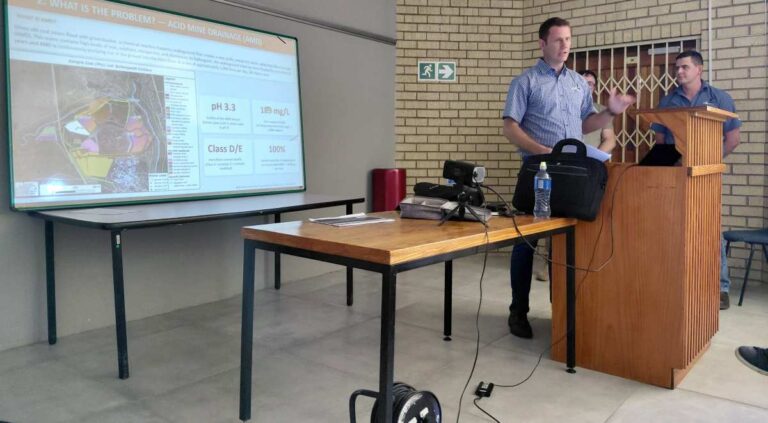
This follows a critical meeting on Friday, 17 January 2025, at the Vanderbijlpark Metal Works between Minister Meth and ArcelorMittal’s (AMSA) management, aimed at addressing the crisis head-on.
Minister Meth sought an in-depth discussion regarding the challenges the company faces, exploring ways in which her department could provide additional support alongside the initiatives led by the Department of Trade and Industry.
ArcelorMittal CEO, Kobus Verster, highlighted the prohibitive costs of transport and fuel as primary reasons for the financial strain the company has endured. He also noted a significant decline in steel consumption, stating, “I think demand won’t change overnight, but it doesn’t mean a company has to be making a loss in a low-demand scenario. So, we’re comfortable that you make fewer profits, and when the market returns, you go to a normalised business environment,” he said.
Verster further emphasised the need for a level playing field to foster an environment conducive to steel manufacturing.
“So those cost issues that were well publicised in terms of energy and rail, those need to be addressed. The unfairness in terms of the tax preferential price system and the export tax, those need to be addressed. We have complicated issues, but there are a lot of people willing and able to work at it hard, and sometimes we can find interim solutions to see how we address the issues longer term,” the CEO continued.
The company has entered the consultation phase with unions NUMSA and Solidarity, initiating the Section 189 retrenchment process. “The impact will be huge. We are looking at 2000 employees and a further 1500 subcontractors who will be impacted; resulting in a downstream impact of 80 – 100 000 jobs. ArcelorMittal also does not want to see job losses because we will be releasing people that we know, whom we have worked with for many years,” stressed Verster.
Minister Meth appealed to AMSA not to expedite any process, urging them to allow time for the implementation of the proposed intervention strategy which includes the Temporary Employer/Employee Relief Scheme (TERS), applied for by ArcelorMittal.
“As Minister of Employment and Labour, I am committed to utilizing all available resources—financial, advisory, and policy-related—to facilitate a positive outcome for ArcelorMittal. We respectfully request your cooperation in maintaining open and transparent lines of communication on any developments that might affect employment levels or operational viability,” said Minister Meth.
She has committed to ongoing engagements with ArcelorMittal to monitor the situation closely. While discussions were productive, no immediate solution has been reached. Meth underscored the shared interests, saying, “At the end of the day, the interests that we have in common, both us as government and ArcelorMittal as the business, is to ensure that the business continues and that there are no jobs that are lost,” highlighting the potential ripple effects on other industries, including the automotive manufacturing sector.
“Beyond that, there are also upstream and downstream jobs that will be affected if this plant finally closes down, and the number is scary,” the minister warned, noting that she was told there was approximately 16,000 jobs at risk at Toyota.
Additionally, National Association of Automotive Component and Allied Manufacturers (NAACAM) CEO Renai Moothilal explained that the announced closure of ArcelorMittal South Africa (AMSA), long steel production from the Newcastle blast furnace could significantly impact the South African automotive sector, a cornerstone of the country’s economy.
“A core supplier of speciality steel, AMSA has been central to automotive manufacturing, providing high-grade materials critical for components into vehicle production lines. This has been a vital contributor to the competitiveness of the domestic sector. Its exit from the market will create ripple effects throughout the automotive value chain, and other downstream industries,” explained Moothilal.
He further highlighted that according to InvestSA, every 1,000 tons of steel produced in South Africa adds R9.2 million to GDP.
“This production supports six jobs—three directly and three indirectly—and drives domestic procurement including at SMME level. Within the automotive sector, metal fabrication, forming, and pressing is one of the largest subsectors. This is not by coincidence. Local auto-grade steel from AMSA has been a catalyst for the development of this subsector. Beyond supply into domestic original equipment (OE) value chains, the ability to source local steel has become a competitive advantage for export supply of various metal components into global markets. Electric vehicles assembled in the US have components forged in the Eastern Cape using speciality steel coming out of the Newcastle blast furnace,” elaborated Moothilal.
Moreover, he highlighted that AMSA is the sole domestic supplier of roughly 70 kilotons per annum of speciality long steel grades to the automotive sector.
Taking this into consideration, Moothilal explained that AMSA’s short-notice announcement that the plant will close at the end of January risks supply chain disruptions and delocalisation in the short-term and overall sector competitiveness in the medium to long-term.
“With no other local suppliers of auto-grade long steel immediately available at OEM certified standards and volume, component suppliers will either need significant buffer stock or must import steel to keep plants operational this year. This will have a cascading effect on the manufacturing value chain. Steel importation can increase costs by up to 25% due to longer lead times, logistics, and forex exposure. Added to this is the loss of local content derived from local steel, reducing APDP incentives to vehicle and component manufacturers, and placing SA at risk of failing to meet export rules of origin (RoO) requirements,” elucidated the CEO of NAACAM.
He further stressed that South Africa’s automotive supply chains are intricately linked to local steel production. According to Moothilal, the closure of AMSA Newcastle will introduce volatility, with manufacturers facing longer lead times and potential delays in production schedules.
“This disruption will affect the timely delivery of vehicles to both domestic and international markets, possibly impacting the reputation of South Africa as a reliable automotive hub. For automakers operating under just-in-time production systems, precise timing of parts delivery is key. Disruptions stemming from the lack of specialty long steel or delays in import setups could result in production slowdowns or shutdowns, compounding the economic impact,” he noted.
Additionally, Moothilal explained that if indeed, SA is committed to a path of industrialisation, state intervention is required to find measures that ensure the autos value chain has access to local speciality steel.
That includes securing an AMSA commitment for required production from the Newcastle blast furnace for at least a full year’s buffer supply, buying time to transition local mini-mills into certified suppliers of auto-grade steels, or better yet, exploring sustainable ways to keep Newcastle open.

Reflecting on the above, what are your thoughts on the measures now being looked into to save AMSA’s Newcastle Works and Vereeniging Works?
Share your views in the comment section below.