



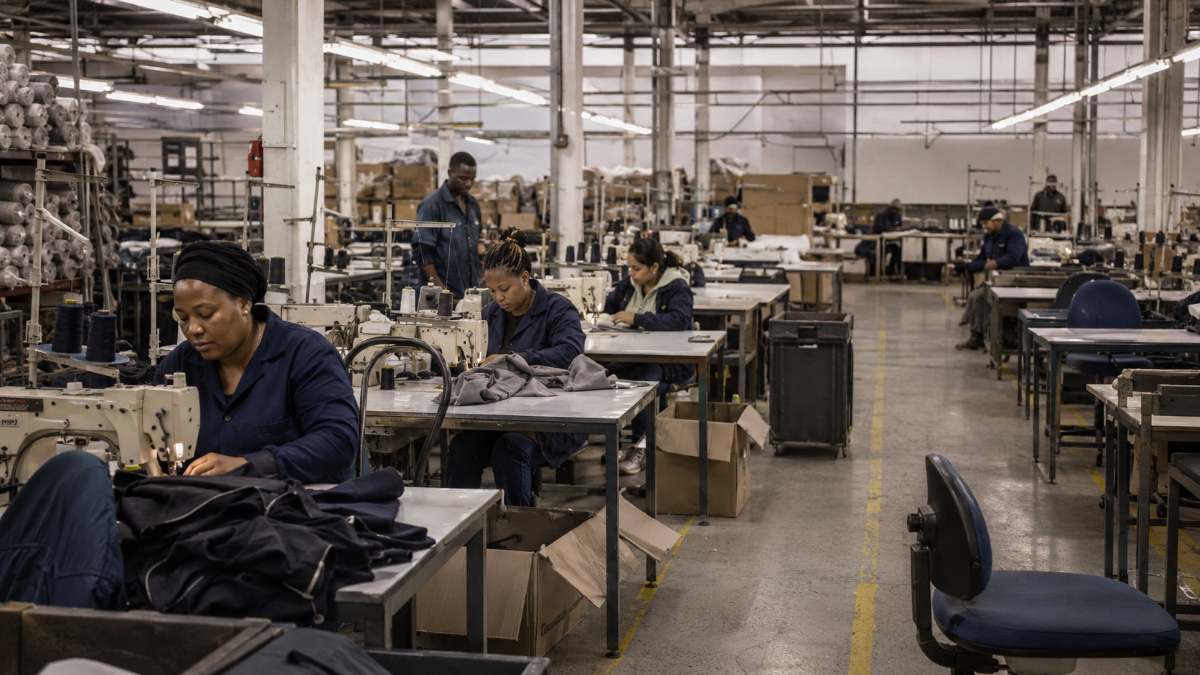
The community of Newcastle is still grappling with the aftermath of ArcelorMittal South Africa’s decision to wind down its long-steel operations at Newcastle Works, Vereeniging Works, and the rail and structural subsidiary, AMRAS. While the steel giant reported that 3,500 direct jobs were at risk, the situation is far graver than many community members might realise.

According to Elias Monage, President of the Steel and Engineering Industries Federation of Southern Africa (SEIFSA), the repercussions extend well beyond the initial figures.
Monage elaborated that SEIFSA has consistently cautioned about the socio-economic disaster that would ensue if ArcelorMittal were to close its plants. “Some of the most alarming estimates, beyond the reported 3,500 direct jobs at risk, suggest medium-term secondary effects impacting between 20,000 to 25,000 jobs, with long-term repercussions potentially multiplying this number. This development will have ripple effects across the economy and the continent, particularly affecting the automotive, construction, and mining sectors, and all those employed within them.”
Furthermore, Monage highlighted that this scenario represents a significant setback for the industrial sector’s foundation and the broader process of industrialisation. He noted, “The tragic reality is that the ambitious goals set by the Steel Master Plan (SMP) to invigorate the sector, expand production, increase demand across the steel and fabrication industry, and implement an industrialization program have failed spectacularly. The SMP was intended to provide a comprehensive industrial policy framework, promoting an inclusive industry perspective and enhancing complementarities across the value chain. Regrettably, we are witnessing the opposite, where policy implementation is fragmented, short-sighted, and pits different parts of the industry against each other.”
Monage also pointed out that ArcelorMittal’s year-long plea for government support has been in vain.
He stated, “The fact of the matter is that ArcelorMittal never stood a chance – sadly, we’ve seen this scenario unfold before with the closure and mothballing of Highveld Steel and Saldanha, both due to a government slow to react and offering too little too late. For South Africa’s economy, ArcelorMittal’s decision means there will be fewer entities producing long-steel products like fencing materials, reinforcing bars, beams, rails, and profiles, which are crucial for construction, mining, and manufacturing sectors.”
Monage emphasised that the downsizing at ArcelorMittal underscores three key industrial-policy principles. “Firstly, if the government lacks the capacity to do everything, it should concentrate on core functions – infrastructure, human and social capacity building, and security. Second, the government’s role in industrial policy is to create an enabling environment that aligns national and business interests, not to mediate short-term compromises between competing stakeholders. Finally, industrial policy should be leveraged to rescue struggling industries or companies, especially when the long-term socio-economic benefits outweigh the costs,” he explained.
SEIFSA believes the observed de-industrialization in the sector stems from the absence of a well-considered and comprehensive metals sector industrial policy.
The federation reiterated its commitment to working with the government to ensure policy decisions benefit both the industry and the nation. “A holistic approach that safeguards the diversity and sustainability of the entire steel value chain is vital for the future success of the South African steel industry,” Monage stressed.
Furthermore, SEIFSA, representing both the upstream and downstream value chains, now urges the government to prioritise a long-term, inclusive strategy for the steel industry. The federation believes a collaborative approach, considering all stakeholders, is crucial for securing the future of South Africa’s steel industry and its pivotal role in economic development.
“The closure of ArcelorMittal’s long steel business marks a profound policy failure. Nevertheless, steel still holds the potential to be at the core of South Africa’s re-industrialization program. What is urgently needed in the face of this crisis is leadership – with focus, character, and decisiveness – qualities that have been lacking thus far, and without which we are condemned to repeat the same outcomes, with dire consequences for the long-term sustainability of the metals and engineering sector,” concluded Monage.

As Newcastillians await government intervention to potentially save the steel giant, considering the thousands of jobs now in jeopardy, what are your thoughts on this matter? Share your views in the comment section below.








3 Responses
Government must interven and save jobs
Government is far too invested with other motivates to intervene they knew about this over a year ago and are still dragging their feet. Unfortunately it’s the end game now..
Thiz a result of having a leader that iz a business man we are nothing to him but a peace of transaction