



Time is of the utmost importance for emergency personnel when residents report a crisis within the town. However, what happens when emergency personnel are continuously contacted for an emergency, only for the personnel to discover the information was either misleading or grossly exaggerated?

This trend in Newcastle, where residents frequently report non-emergency incidents on social media groups, is causing significant issues.
These unnecessary reports not only waste valuable resources but also have financial repercussions for the emergency personnel who respond to them.
When looking at the situation on hand, the Newcastle Municipal Firefighters are among the local front-line responders who find themselves inundated with false reports. In fact, the Newcastle Municipality’s Communications Unit pointed out that the firefighters have received 24 false reports in the past six months, with 10 of these coming in during the course of June 2024.
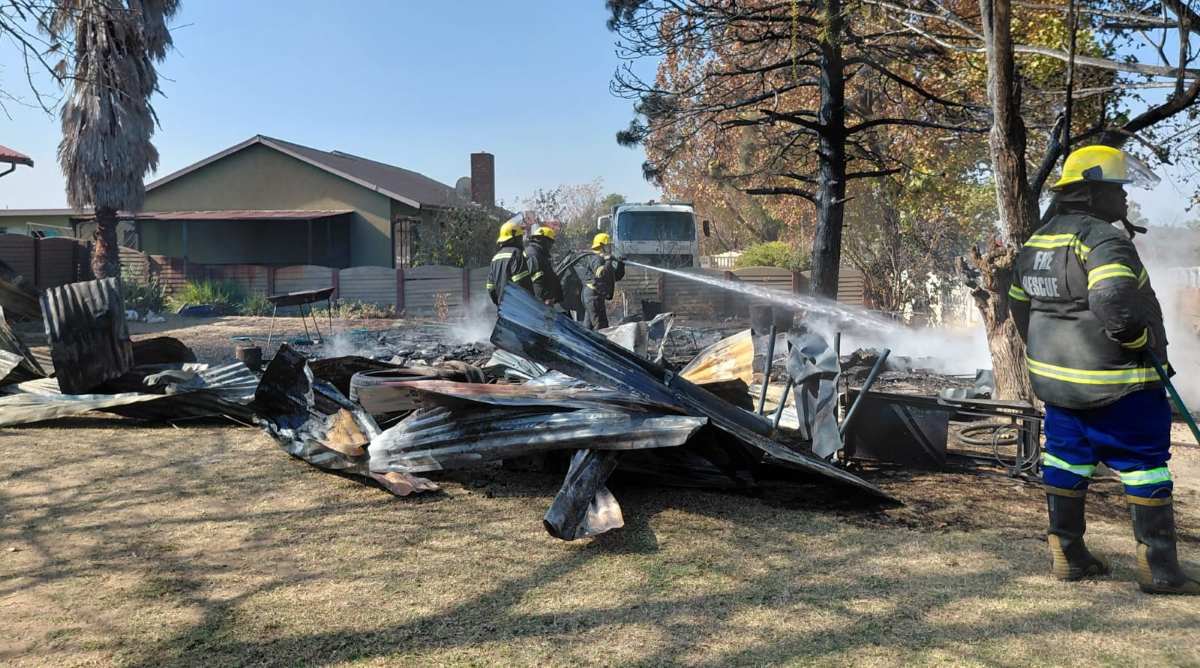
These false reports, as witnessed by journalists, include receiving reports of house fires in suburbs, only for firefighters to arrive on the scene and find that the homeowner was burning leaves on their property, with the calls for help coming from a neighbour who saw smoke emanating from the resident’s yard.
With this type of behaviour in mind, the Newcastle Municipality’s Communications Unit explained that false reports came with a massive cost.
Moreover, the Communications Unit stated that it was important to note that in terms of the Fire Brigade Services By-laws and tariff of charges, the services rendered to Newcastle ratepayers are free.
However, the breakdown of costs for non-ratepayers is as follows:
- Call out cost per fire engine – R880
- Cost for the use or availability of the fire engine – R437 per hour or part thereof.
- Additional cost for distance travelled is:
- 1 to 5km – R0
- 6 to 15km – R65
- 16 to 20km – R56
- 21 to 30km – R43
- 31 to 50km – R30
- More than 50km – R30
- Call out cost per fire fighter – R384
- Services rendered by fire fighter per hour- Hourly rate + 6%
Taking this into consideration, the Newcastle Municipality Communications Unit further said, “There are only three to four firefighters on duty at the Newcastle Fire Station to respond to incidents. Should a second call come in, the response will be either from one of the Fire substations or from staff on standby. The response will be delayed because of the travel distance from the Fire substations and in the case of standby staff, they respond from home to the fire station, and then respond to the incident. Should the first call out be a false call, then the resources are wasted, whereas they could have responded immediately to the second call, which could be life-threatening.”
Furthermore, due to the implications of reporting a false alarm, the Communications Unit explained that when a person reports a false incident, that person could be liable for payment of the service in terms of the Fire Brigade Services Bylaws as follows:
A Controlling Authority may, subject to any condition contemplated in section 11(2) of the Fire Brigade Services Act (Act 99 of 1987), determine the fees payable by a person on whose behalf the service of the controlling authority is applied:
- for the attendance of the Service.
- for the use of the service and equipment.
- for any material consumed.
The only exemptions from payment of charges, according to the Newcastle Municipality’s Communications Unit, are as follows:
- A false alarm has been given in good faith.
- The service was required as a result of civil commotion, riot or natural disaster.
- The service was rendered in the interest of public safety.
- The Chief Fire Officer is of the opinion that the services were of purely humanitarian nature or were rendered solely for saving life.
Additionally, the Communications Unit emphasised, “When a fire is reported, the community must please be sure what is burning, as the Fire Services have different vehicles for different applications. For example, when a grassfire is reported, the response will in most cases be a bakkie with a skid unit which carries 500 litres of water. When the firefighters reach the incident, and it turns out to be a building fire, they will struggle to extinguish the fire with the limited water carried on the bakkie. Similarly, when a building fire is reported, and it turns out to be a grass fire, it will make it difficult when the firefighters have responded with a Fire Engine which does not have off-road capabilities and the vehicle does not have the function to drive and pump simultaneously.”
Therefore, the Communications Unit pointed out that when reporting a fire, the operator at the Control Room will require the following information:
- What type of incident it is, for example, is it a grassfire, building fire, vehicle fire or rescue.
- The caller’s name and telephone number.
- The address e.g. Street/Road with the nearest cross street or road and the closest landmark.
- The premises number or name.
“We further wish to encourage the community to ensure that their premises are numbered as it is an offence in terms of the Fire Brigade Services Bylaws to fail to display your street number on the street boundary, and if it is not 75mm in size or if the street number is not legible and visible on the street boundary. In both cases, a fine of R250.00 can be imposed,” the Municipality’s Communications Unit noted.
While the fire services contend with misleading or false reports, the Newcastle Community Policing Forum’s (CPF) chairperson, Ismaeel Dhalech, noted that the organisation also dealt with regular false or misleading reports. “False or misleading reports waste the resources of not only the Newcastle CPF but also the resources of the Newcastle Police and local security companies, who could otherwise be focusing on crimes in town,” he said.
Some of the most popular false reports making their way to the CPF to be investigated, alongside the police and security companies, are barking dogs and ‘suspicious men’ walking down the streets. Both of these forms of reports, Dhalech pointed out, saw the CPF having to accommodate for extra fuel costs.
If an individual was seen walking down the street at odd hours, Dhalech noted that residents were requested to take note of their clothing and distinguishing features, while also seeing which direction the said person was heading. By doing this, if an actual crime did take place, law enforcement would be able to look into it.
Pet owners were also encouraged to determine why their dogs were barking, instead of calling for the CPF, the SAPS, and security companies to patrol, as this, alongside false reports, saw manpower and resources wasted in an area where no crime was potentially taking place.
While the Municipality urged residents to ensure their homes were numbered, or face a fine, Dhalech highlighted that an unnumbered house or business affected the response time of the emergency personnel. “There are several houses in Newcastle without numbers on them, which makes it difficult to respond to an emergency at night. People are urged to get their homes numbered, as to ensure emergency personnel can respond timeously. The CPF is currently in the process of having CPF-branded numbers made to help resolve this issue,” he noted.
Furthermore, Jan van Rensburg, chairperson of Magenta Security and Newcastle CPF Sector 4, highlighted an increase in false alarm reports. This surge has led to his fuel costs doubling, alongside the fuel expenses of CPF volunteers, who cover these costs out of their own pockets.
“Since the CPF has become more active, a lot of people don’t contact the SAPS anymore, and expect the CPF and security companies to respond. However, this does not impact the ambulance service as much,” he noted.
ER24 Emergency Medical Services’ Ziyaad Warasally noted that while there were calls for help that were at times exaggerated, the local emergency medical services have set up a WhatsApp group among themselves.
This group, he pointed out, saw emergency medical services workers communicate with each other to notify who would respond to a scene and then make the necessary call if additional backup was required. However, he noted, “When reporting an incident, it is important for residents to give a full description of the incident.”
This, he explained, is so paramedics can know what is required of them and to know if they are responding to a fender bender or a multi-vehicle collision.
With emergency personnel facing the challenge of responding to serious issues, while manoeuvring through false alarms or exaggerated incidents, the public is urged to remain vigilant and mindful of their surroundings, and to remember that a false alarm could result in the loss of a human life.

What are your thoughts on the above? Share your views in the comment section below.







One Response
Good idea false report’s should be paid for by the idiot that phones in