


With a mixbag of outlooks on the Minetek Resources Newcastle Coal Project, the deadline for the public to weigh in for comment on the proposed mine’s fate draws ever closer.

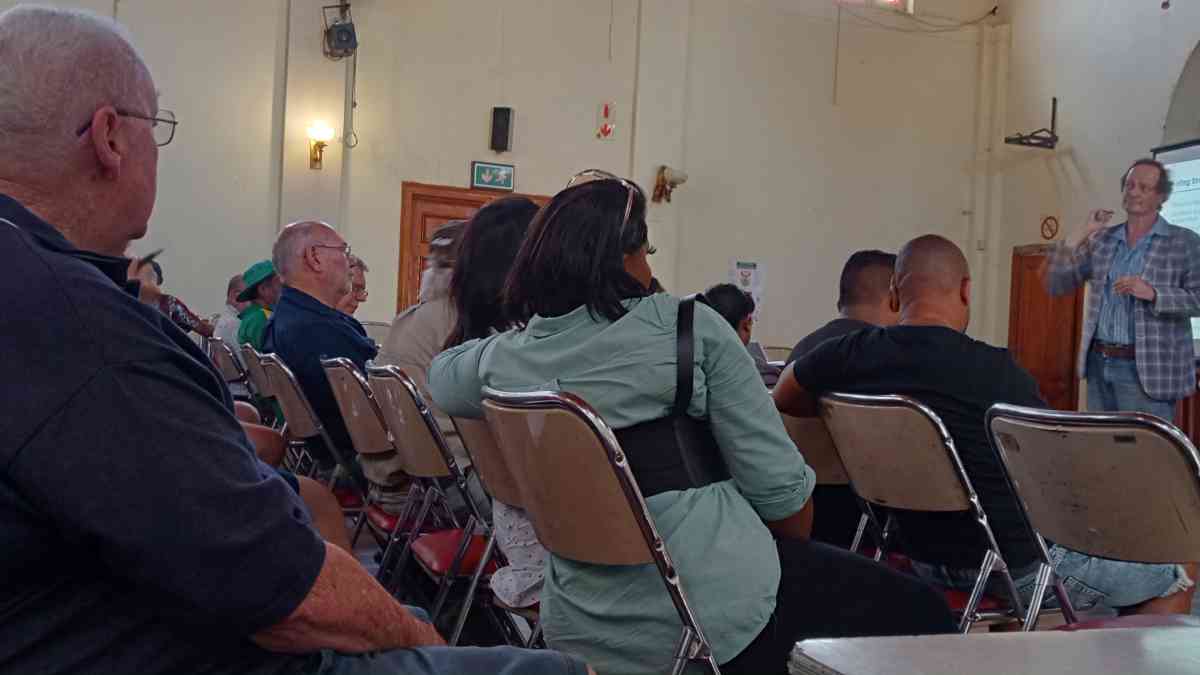
A public gathering unfolded at the Newcastle Town Hall on Saturday, 11 November 2023, drawing vocal community members expressing their concerns regarding the potential implications of the coal mine on the local area.
Representatives from Cabanga Environmental convened to address the mine’s anticipated impact, the environmental evaluations shaping the project, and the precautionary measures intended to mitigate potential risks. However, the meeting encountered a two hour delay as officials found themselves in debates with insistent residents, who lobbied for a vote to gauge community support or opposition towards the proposed mine.
Additionally, a fraction of attendees left the meeting, asserting familiarity with the implications of coal mining and indicating that the information presented did not offer new insights.
Looking at the mine’s proposal, the project outlines include open pit mining and possible future underground coal extraction over several farm sections west of Newcastle.
Cabanga Environmental’s studies suggest limited onsite processing involving crushing, screening, and coal sorting without washing.
Supporting infrastructure such as security, offices, workshops, roads, and water management facilities are also part of the proposal.
Moreover, the mining strategy incorporates rollover mining in the eastern section, potentially mining up to seven pits in succession. This method involves opening new cuts as prior ones are rehabilitated, with the requirement to remove all coal from a section before backfilling.
Moreover, Minetek Resources has earmarked a location 5 kilometres west of Newcastle, spanning 3,269 hectares. Surface activities are predominantly slated for the eastern half, while future underground mining is proposed for the western segment, impacting transportation routes like the D96, Allen Street, and the R34, commonly known as the Memel Road.
To read more about the mining project, click here.
Furthermore, the Social Economic Impact Assessment highlights the potential influence on settlements within the site boundary and immediate surroundings, encompassing various farms and urban areas like Fernwood, Sunset View, Lennoxton, and Newcastle CBD, among others.
However, the opposing view on the negative impacts is that the project holds economic and employment benefits for Newcastle, which is currently in dire need of corporate development due to a harshly strained local economy.
Nevertheless, the time has come for residents to make their voices heard.
Residents have until Friday, 17 November 2023, to submit their comments on the project. They can send opinions via email to Lelani Claassen at lelani@cabangaenvironmental.
Are you planning to submit your comment on the coal project? Share your thoughts in the comments below.









8 Responses
I support the opening of the mine it will create jobs and boost our town we need a new boost of money in this town cause mittal is not looking good.
The mining operation will bring Protest Action, damage to infatructure, blocked road etc… as happens with all mining operation in the country. Be ready for having our roads blocked by disgruntled mining staff and communities.
I am against the mine from a flora and fauna point of view apart from numerous other concerns.
Reasons: the D96 is an important birding route near our town. The terrestrial biodiversity assessment idetified 15 SCC bird species , 4 SCC mammal species and 2 SCC insect species in the target area.
The conclusion of the study was: “ The proposed mining activities will directly impact on sensitive habitat that is of conservation significance as well as on floral and faunal SCC, resulting in significant negative impacts to the receiving environment. “
“ The proposed project could result in a precedent for future mining within the neighbouring CBAs and threatened ecosystems to the west of Newcastle, which conflicts with national and provincial conservation targets—-“
This mine will destroy Newcastle. The pollution of air and water. The noise. The cracking of house walls and devaluation of property. The loss of tourism and beauty of city surrounds. This mine is too close to the city. The poor quality coal mined should rather be replaced by clean energy like solar panels or wind power Just for the profit of the farm owners and the mine owners….. notice the silence of the politicians…
The opening of the mine will create job opportunities in Newcastle and surrounding areas and would also help our economy to grow.
Lol.
Politicians are silent because the project the green light. It would be embarrassing to rescind their resolution which allowed other processes to unfold such as the various studies such as the EIA, public consultation etc which cost huge sums.
The consortium may have a claim against the Council as it initially approved of the mining despite the many reasons why it not have been approved in the first place. It’s more like shutting the stable doors when horses have bolted.
I have already dealt with Cabanga’s work of IEAs in Mpumalanga province. They seem to be a conglomerate now doing EIAs. Typically a product of the Chamber of Mines approach to mining in this country going back to 1902, post the defeat of the Boers. Cabanga like its predecessors formed by the Chamber of Mines, namely, the Witwatersrand Native Labour Hiring Agency (WENELA or WNLA) and later The Employment Burea of Africa Limited (TEBA) are now hiding the impact of mining in places like Newcastle today. All the previous ‘heayweights’ were private companies like Cabanga as we can remember. They all relied on the Chamber if Mines in Marshalltown for work in order to survive. They sold black communities to the mining industry over a period of 120 years. Complaints that fauna and flora will be destroyed are ignored by Cabanga, because no one knows even those latin names of those plant species mentioned. Environmental groups are hated everywhere! However, on a serious note, mining is an extractive industry, as everyone knows by now. Secondly, mining is risky, it works on what is called Life of Mine (LoM) considerations. This has to do with accessibility of the resource sought after. If the extraction field is difficult, the Rand per ton costs (Rpt) of extraction is higher. Then it works on the quality of the reserve. If the coal are of poor quality like too much sulphur or the coal are burnt or are mixed with stones or are too deep, you are cooked. Your LoM can run over a few years and you must start massive lay-offs whenever you cannot extract, because you will have to operate at cost equals revenue break-even point or face closure.
You can say you do not mind the above equation, it will determine how many you employ and for how long, but then the costs to the community are in the form of loose coal dust in the air all over. Sulphur-dioxide air pollution leading to permanent lung desease to those born in the area. Then you will have the contamination of all your ground water sources with red-algae making drinking water smell like rotten eggs. With opencast operations, you may loose the land permanently and with underground operations total pillar extraction will cause surface subsidence. With blasting, all houses in the area will crack and with insane truck transport in the area, all infrastructure will be cooked. All this in exchange for a paultry and miniscule number of unskilled jobs as truck drivers, laundry cleaners, cleaners, gardeners and a few skilled local mine machine operators while 90% of tue community are excluded from the mines. Mines will also appropriate for themselves exclusively all the Randwater water, Eskom power, while communities face water shedding and power outages. At the end of LoM whether in 5 years time or two short decades later, the Newcastle ghost town will appear from Cabanga’s wake. Cabanga will by then fall off the radar screen. Just like we saw with WENELA and TEBA “private enterprises” before. At that time mine decanting, acid mine drainage, unrehabilitated mines, a sick polluted air and joblessness will emerge and re-emerge to haunt the communities all at once, just like other mine ghost towns left behind by mining all over this country. Why did Cabanga not provide alternatives to mining Newcastle? That is the question. You can’t give us one choice. That is what propagandists do for a living. We have now been brainwashed to say mining will give us jobs in Newcastle. How many for how long and for who? Numbers, time, pay, skills, we must know these things in details and who will be employed? Soon we are going to find out the mine comes with its own operators from elsewhere. Drivers are from elsewhere. Local Newcastle people get nothing. Then as you know anyone can say they are a local person when they are just using an address. All these things including security services will make the community to benefit nothing. Mining companies also unfairly discriminate against skilled older local people. How many local older consultants will be employed by Cabanga? Suddenly gate keepers will appear and stop the community from talking with Cabanga. Cabanga itself has no community call centre and they have many mines that use them as a shield against community complaints in Mpumalabga province. Now Cabanga is making us to choose mining or if we refuse we will eat each other up, in the face of job shortage in Newcastle. What are the viable alternatives? Since 1884, we have been listening to Cabanga and them (Wenela and Teba) and the Chamber of Mines singing extraction. Any new news? What are the alternatives to mining Newcastle? My concerns must be addressed.