


As the novel coronavirus, Covid-19, spreads around the globe like wildfire, with more and more cases reported in South Africa, what measures is the South African government taking to safeguard us from further Covid-19 infections?
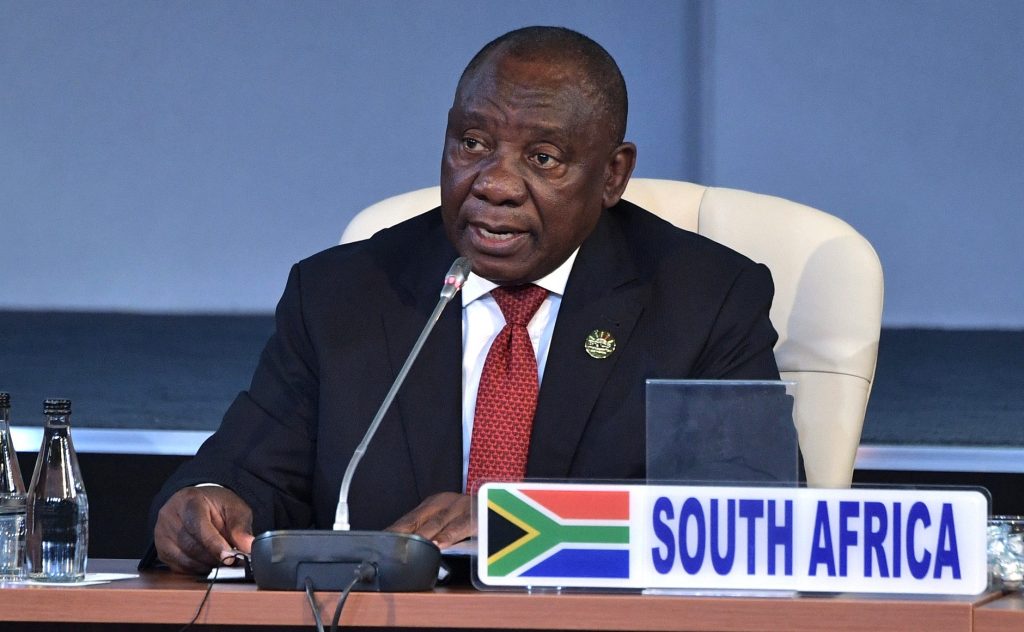
On Sunday evening, March 15, President Cyril Ramaphosa addressed the nation on the measure to combat the Covid-19 pandemic.
“Given the scale and the speed at which the virus is spreading, it is now clear that no country is immune from the disease or will be spared its severe impact. Never before in the history of our democracy, has our country been confronted with such a severe situation.”
From the start of the outbreak in China, President Ramaphosa says the South African government has put in place measures to screen visitors entering the country, to contain its spread and to treat those infected.
“As of now, South Africa has 61 confirmed cases of people infected with the virus, and this number is expected to rise in the coming days and weeks. Initially, it was people who had travelled out of the country, especially from Italy, who had positively tested for the virus. It is concerning that we are now dealing with internal transmission of the virus.”
Such is the extent of the matter, that Ramaphosa says the situation calls for an extraordinary response; where there can be no half measures.
Following a Cabinet meeting and consulting premiers, Ramaphosa said it was decided to take urgent and drastic measures to manage the disease, protect South Africans and reduce the impact of the virus on our society and on our economy.
“We have now declared a national state of disaster in terms of the Disaster Management Act. This will enable us to have an integrated and coordinated disaster management mechanism that will focus on preventing and reducing the outbreak of this virus.”
Ramaphosa says they will also be able to set up emergency, rapid and effective response systems to mitigate the severity of its impact.
The following measures will be implemented:
- To limit contact between persons who may be infected and South African citizens, the government is imposing a travel ban on foreign nationals from high-risk countries such as Italy, Iran, South Korea, Spain, Germany, the United States, the United Kingdom and China as from March 18.
- South African citizens are advised to refrain from all forms of travel to or through the European Union, United States, United Kingdom and other identified high-risk countries such as China, Iran and South Korea. This is effective immediately.
- The government will continue to regularly issue travel alerts referring to specific cities, countries or regions as the situation evolves based on the risk level.
- Any foreign national who has visited high-risk countries in the past 20 days will be denied a visa.
- South African citizens returning from high-risk countries will be subject to testing and self-isolation or quarantine on return to South Africa.
- South Africa has 72 ports of entry in the country which are land, sea and airports. Of the 53 land ports, 35 will be shut down with effect from Monday, 16 March. Two of the eight seaports will be closed for passengers and crew changes.
- Effective immediately, all non-essential travel for all spheres of government outside of the Republic is prohibited.
- The government further discourages all non-essential domestic travel, particularly by air, rail, taxis and bus.
- Gatherings of more than 100 people will be prohibited.
- Mass celebrations of upcoming national days such as Human Rights Day and other large government events will be cancelled.
- Where small gatherings are unavoidable, organisers will need to put in place stringent measures of prevention and control.
- Schools will close from Wednesday, 18 March, and will remain so until after the Easter Weekend. To compensate, the mid-year school holidays will be shortened by a week.
To strengthen the country’s health response, the government is taking the following steps:
- Government is strengthening its surveillance and testing systems. They are in the process of identifying isolation and quarantine sites in each district and metro.
- Capacity is being increased at designated hospitals in all provinces.
- They are also increasing the capacity of existing contact tracing processes.
- They are also partnering with the private sector to set up a national tracking, tracing and monitoring system of all people infected with the coronavirus and those they have been in contact with.
As the government takes measures to safeguard the country against further infections, Ramaphosa explains Covid-19 has already had a negative impact on the country.
“In the last few weeks, we have seen a dramatic decline in economic activity in our major trading partners, a sudden drop in international tourism and severe instability across all global markets.”
He adds that the anticipated effects of the decline in exports and tourist arrivals will be exacerbated by both an increase in infections and the measures we are required to take to contain the spread of the disease.
“This will have a potentially severe impact on production, the viability of businesses, job retention and job creation. Cabinet is therefore in the process of finalising a comprehensive package of interventions to mitigate the expected impact of COVID-19 on our economy.”
This package, which will apparently consist of various fiscal and other measures, will be concluded following consultation with business, labour and other relevant institutions.
“It is clear that this disease will be extremely disruptive. Our priority must be to safeguard the health and well-being of all South Africans, to minimise the number of infections and to ensure all those infected get proper treatment,” says the president.
Addressing the matter head-on, Ramaphosa urges people not to panic and avoid sharing fake news.
“Fellow South Africans, this epidemic will pass. But it is up to us to determine how long it will last, how damaging it will be, and how long it will take our economy and our country to recover. It is true that we are facing a grave emergency. But if we act together; if we act now, and if we act decisively, we will overcome it,” he concluded.
What are your thoughts on President Ramaphosa’s address? Share your views and thoughts with us in the comment section below.