

The current economic situation sees South Africans tightening their financial belts at every corner, especially with the fluctuating fuel prices and the ever-rising cost of living.
However, it seems there are governmental organisations which are adding immensely to the financial burden we as citizens are having to deal with and carry.
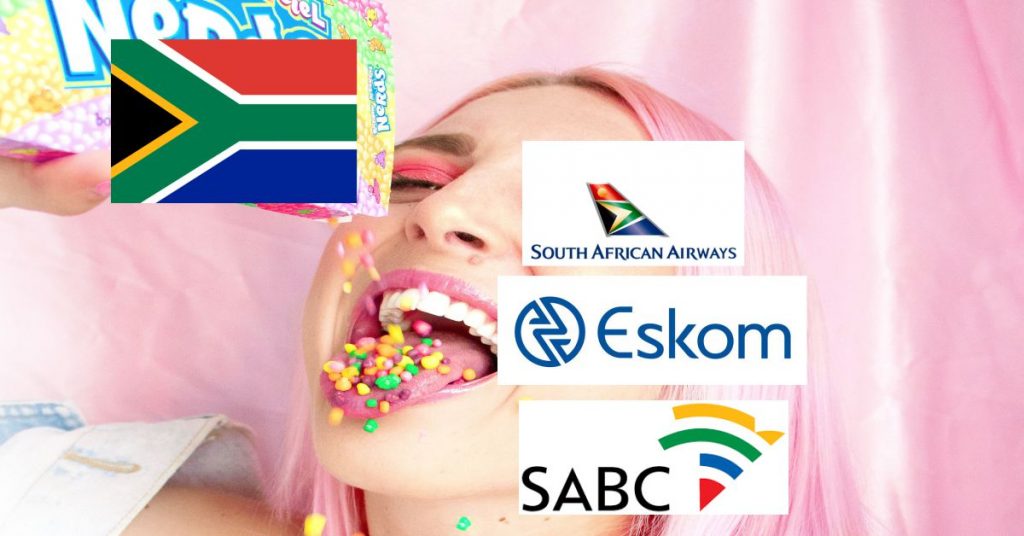
When it comes to institutes which are nothing short of endless black holes, sucking in billions of taxpayers hard-earned money, one can only think of SOE’s such as Eskom, South African Airways and of course the SABC.
Such is the calibre of monies being pumped into these State-Owned Enterprises (SOE), that in February of this year, Finance Minister Tito Mboweni said SOEs posed a serious risk to the fiscus.
So far, the government has already revised contingency reserves to the staggering figure of R13 billion for the 2019/2020 fiscal year. Merely to respond to possible requests for financial support by the companies.
Over the past year, the government guarantee use has increased by a nauseating R51.5bn. As of February, the government had already dished out a mind-blowing, R50bn to Eskom and a further R6.2bn to SAA.
The question which should be rolling off all our lips is, why? Why are these money pits which are not being remedied nor corrected year on year, with management positions changing hands from one person to another without any improvement still trading?
The Newcastillian looks at just how much money is being pumped into these three institutes which you are paying for. Not just through TAX but VAT as well.
SABC
With SABC owing millions to an array of companies, including SuperSport at R317 million, as well as a further R208 million to Sentech, while struggling to remain afloat and pay its staff salaries. The government bailed the company out in July this year with a breath-taking R3.2 billion.
SAA
Over the years, SAA has cost the government billions in bailouts and the SOE has not seen a profit since 2011.
In 2018, the SOE received a R5 billion bailout and a further R3.5billion earlier this year to keep the company afloat until June. With more money being pumped into SAA, to help keep planes in the air, SAA officials are looking at only breaking even in the 2020/2021 financial year. The only question that remains to be asked is why is this SOE still in existence?
If SAA was sold or liquidated South African citizens and our country would benefit immensely. As the prospect of SAA being a profit-generating entity for the Government looks slim to nothing based on their track record, so why keep pumping Billions into it?
Eskom
In July this year, Finance Minister Tito Mboweni confirmed another (hold onto your hats) R59 billion bailout would be given to the utility company. The same SOE who dramatically increased candle sales in South Africa, due to their inability to keep the lights on.
At the time, Moboweni tabled the Special Appropriations Bill in Parliament, which provides R26 billion for Eskom for the rest of this financial year and R33 billion over the next year.
With Billions of Rands being pumped into these three SOEs, how are South African taxpayers affected?
In February, Mboweni highlighted that the deteriorating financial position of several large SOEs poses a risk to the SA economy and public finances.
Looking further into the situation, one needs to remember income tax makes up approximately 34% of the fiscus, VAT, company tax and other levies effectively all come out of the pockets of the South African public and business owners. In other words, we are all footing the bill.
In 2017, finance expert Jayson Coomer, known as the Rolling Alpha, updated his breakdown of South Africa’s tax trends.
According to his data, only 13% of the South African population out of 56 million people, pay income tax, with the other 87% not contributing anything, except VAT.
Looking at personal income tax, the top 1% or so of taxpayers (the 480,000 people earning more than R750,000 per year) pay a ridiculous 61% of the total income tax bill.
In terms of revenue sources, personal income tax accounts for 38% of revenue, with value-added tax making up 25%. Companies tax accounts bring in 18%, followed by the fuel levy at 6%, customs 4%, other sources 4%, excise duties 3% and dividend withholding tax (2%).
The biggest portion of the budget goes to the public wage bill (36%) and social grants (17%). (Just an FYI, Finance Minister, Tito Mboweni, stated during his budget speech to parliament, that the public wage bill is unsustainable, let that swirl around in your head for a moment.)
This means that a small percentage of the South African population is not only paying for service delivery and grants, but are also contributing to failing SOEs such as Eskom, SAA and the SABC. And once again, the only question to ask is…why?
The government is constantly bailing them out, despite the cost to the average, hard-working South African on the street.
Share your thoughts and comments with us on the topic