

Social media allows us instant access to scores of information. People sharing various links, from news to celebrity gossip.
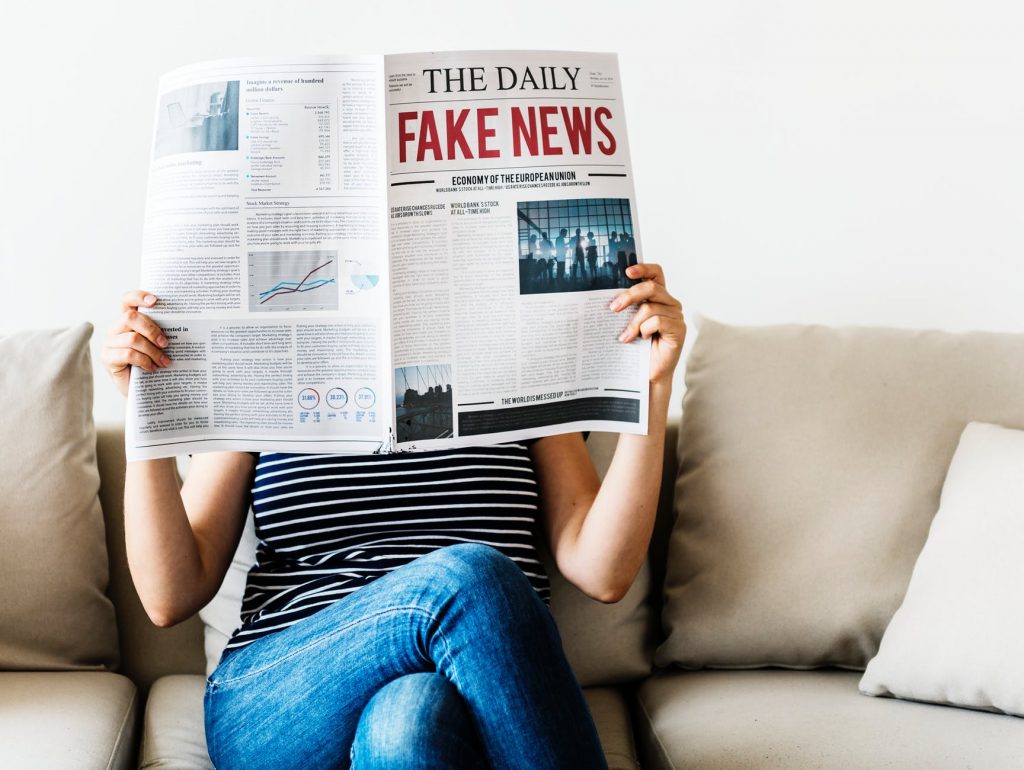
However, when it comes to sharing news links, few people consider if what they are sharing is true or not. Fake news is usually written and published with the intent to mislead people in order to damage an agency, entity, or person, and/or gain financially or politically.
Fake news seriously undermines serious media coverage, making it difficult for journalists to cover significant news stories.
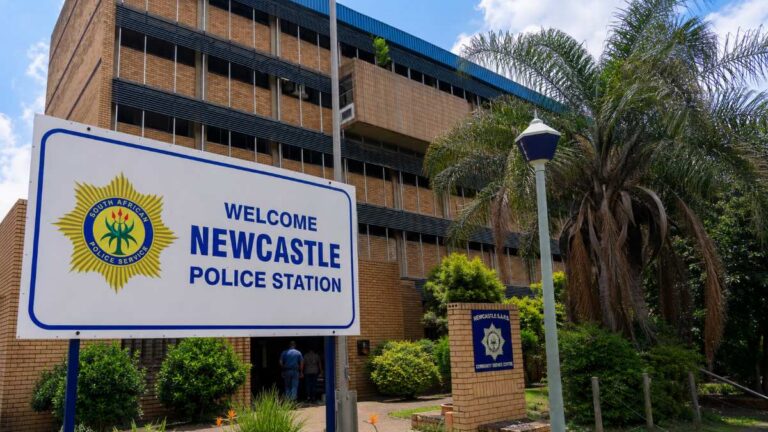
Newcastle residents recently experienced a touch of fake news following the protests and the shutdown of the town.
Following the total shutdown on Friday, September 6, an array of voice clips was shared via social media such as WhatsApp. The voice clips claiming the protest action would continue this week and would be possibly more aggressive.
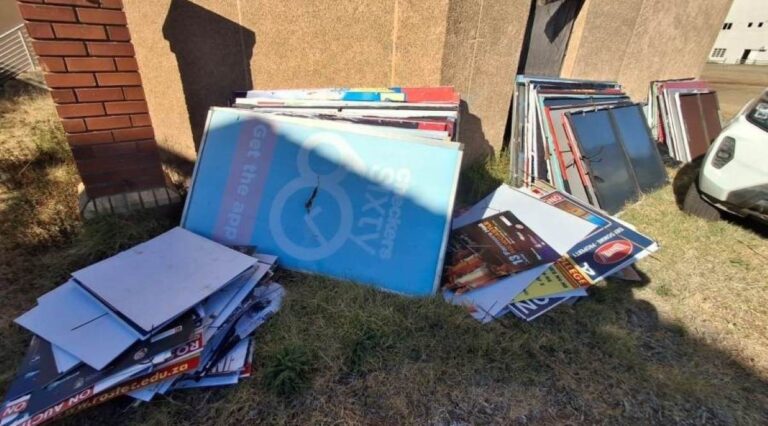
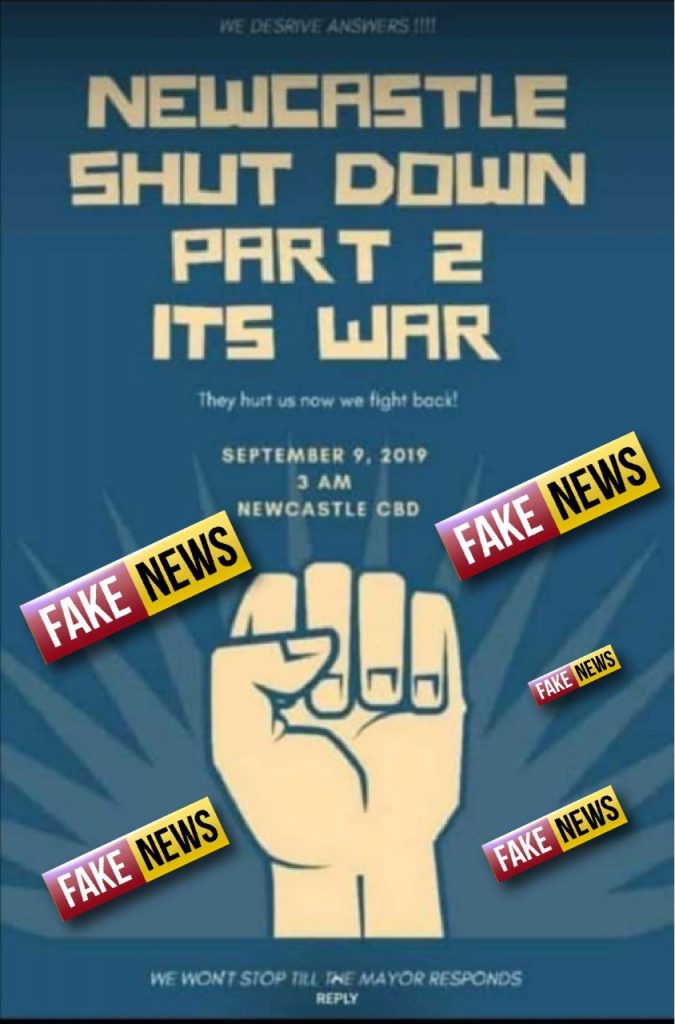
Then there were the posters which also claimed the protest action would continue Monday, September 9.
A photograph was also circulated, where a local store’s windows were allegedly smashed by protestors. An image which proved to be fake and stemming from another town.
All this fuelled panic, the fake news proving to be a tool causing unnecessary fear and resentment among residents.
With fake news creating a distorted view on happenings in and around town, South Africa and the globe, whether it is posters or news articles, how can you safeguard yourself from sharing fake news or believing it?
The International Federation of Library Associations and Institutions (IFLA) published a summary to assist people in recognising fake news. The IFLA is the leading international body representing the interests of people who rely on libraries and information professionals.
Its main points in spotting fake news are:
- Consider the source (to understand its mission and purpose)
- Read beyond the headline (to understand the whole story)
- Check the authors (to see if they are real and credible)
- Assess the supporting sources (to ensure they support the claims)
- Check the date of publication (to see if the story is relevant and up to date)
- Ask if it is a joke (to determine if it is meant to be satire)
- Review your own biases (to see if they are affecting your judgment)
- Ask experts (to get confirmation from independent people with knowledge).
There are also dedicated fact check sites which you can visit to determine if the news is true and accurate or false and misleading. These sites are:
- Africa Check at https://africacheck.org/
- RealClear Politics at https://www.realclearpolitics.com/fact_check_review/
- Politicsweb at https://www.politicsweb.co.za/home
- Snopes at https://www.snopes.com/fact-check/
Be sure you do not fall victim to fake news and see misleading information going viral.
Let us work towards practising safe, intelligent social media habits.