


Estimated reading time: 4 minutes
History enthusiasts travelled back into time on Saturday, June 30, to learn more about Newcastle’s illustrious history.
Hosted by Fort Amiel Museum, the Anglo-Boer-Zulu War Commemoration, saw avid history buffs make their way to Haggards on Hilldrop. But why there? What does a guest house have to do with Newcastle’s history?
This is where things get interesting, Haggards on Hilldrop is a historical monument. In fact, it was once owned by the famous author of King Solomon’s Mines, Sir Henry Rider Haggard. At the event, Fort Amiel Museum curator, Louis Eksteen gave a talk on both the house and the role Sir Haggard played in Newcastle.
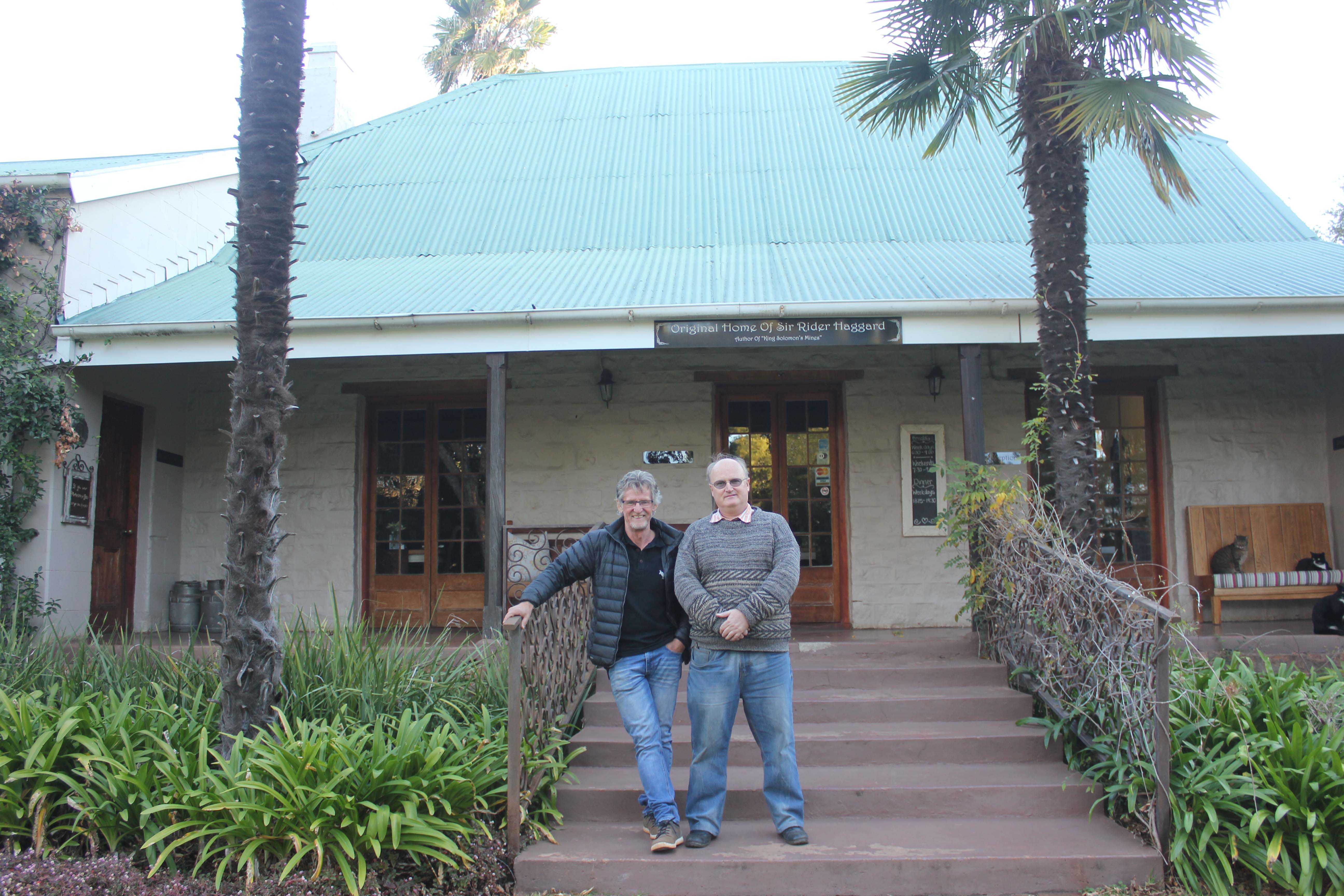
“The house is probably one of the oldest colonial structures left in Newcastle, being built in 1875, only a decade and one year after the proclamation of Newcastle as a town. It was inhabited by a well-known Victorian/Edwardian British author for a mere couple of months. It was the gathering place of a small group of well-known and not so well-known colonial politicians and military officers, for some weeks during peace negotiations after a rather small and short war. Thereafter, it fell into obscurity but managed to survive a total of 143 years,” explains Eksteen.
Sir Haggard came to South Africa in 1875, after his parents arranged for him to join the staff of Sir Henry Bulwer, Lieutenant-Governor of Natal. During his time in South Africa, he met many influential people and was appointed Master and Registrar of the High Court in 1877.
While in Pretoria, Haggard met Arthur Cochrane and the two resigned from their work, buying a farm just outside of Newcastle in 1879. The farm which was then known as Rooipoint was changed to Hilldrop and the two decided to farm ostriches. A venture which did not prove to be successful.
Eksteen explained how during this time, Haggard went to visit England and was married Louisa Margitson in 1880. The couple returned to South Africa in 1881 just as the First Anglo-Boer War broke out. Much to the English empire’s horror, the British were defeated in three battles fought close to Newcastle: Laing’s Nek, Ingogo and Majuba.
Hilldrop was rented by the authorities to negotiate the peace terms. While the negotiations were underway, Haggard camped on the land and even had the opportunity to hoist the British Flag.
Following the talk on Sir Haggard and his time in Newcastle, the Dundee Diehards put on a mock battle. The group selected the Battle of Schuinshoogte, also known as the Battle of Ingogo. This battle took place on 8 February 1881, during the First Boer War.

Guests were enthralled with the mock battle. The highly entertaining reenactment allowed guests to see how the battle unfolded and why the British did not win.
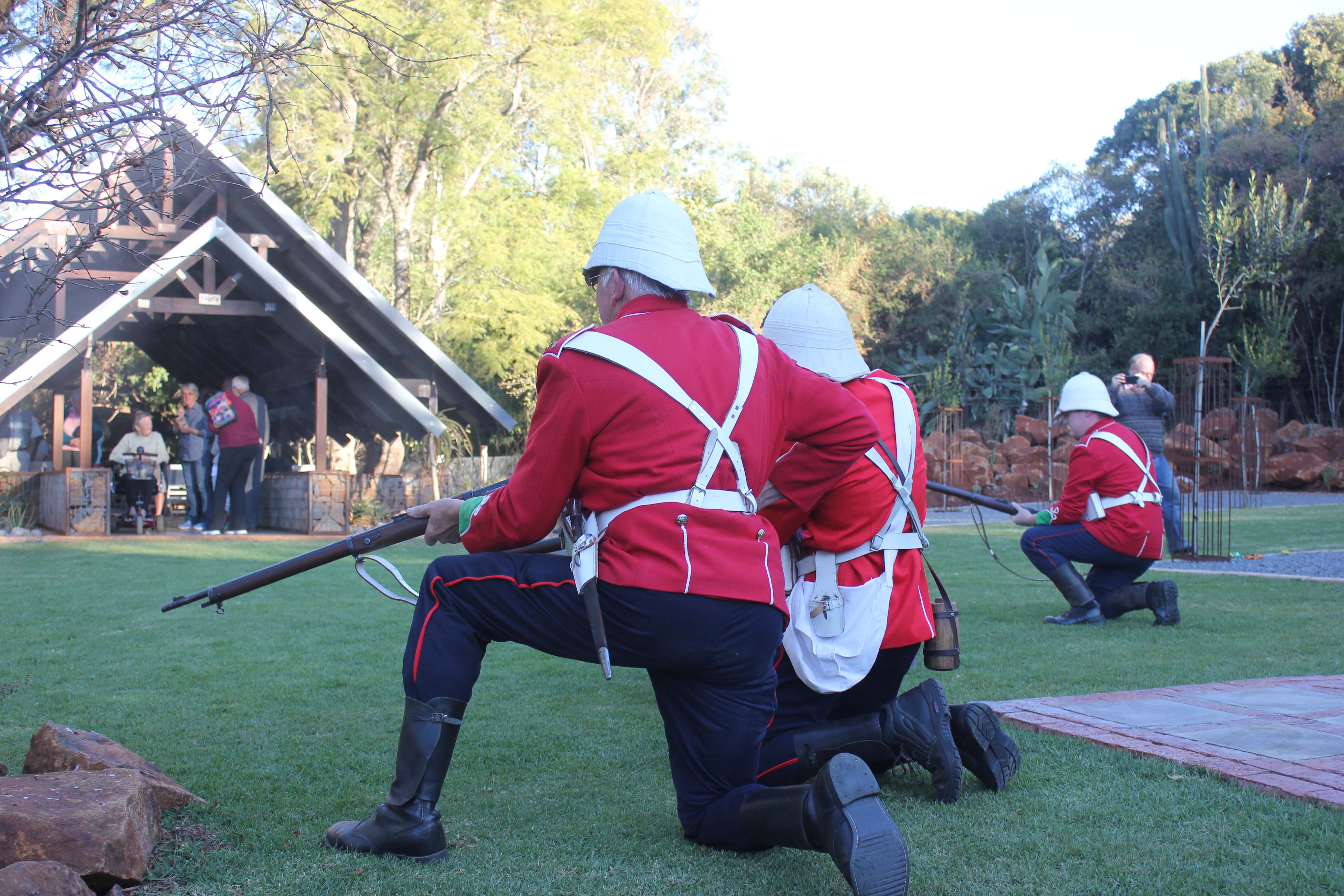
Following the display, guests were able to enjoy taking in the beauty of the historical monument and its surroundings.
Always celebrate our history as SA is built on a ton of it!













One Response
Thanks for this great write-up. How interesting. An annual Haggard lecture will place this history on the map again. There are various specialists who can give lectures on his writings, live story, involvement in farming, land issues and politics. Besides that the house has had the most interesting architecture and also many owners over the 143 years.