

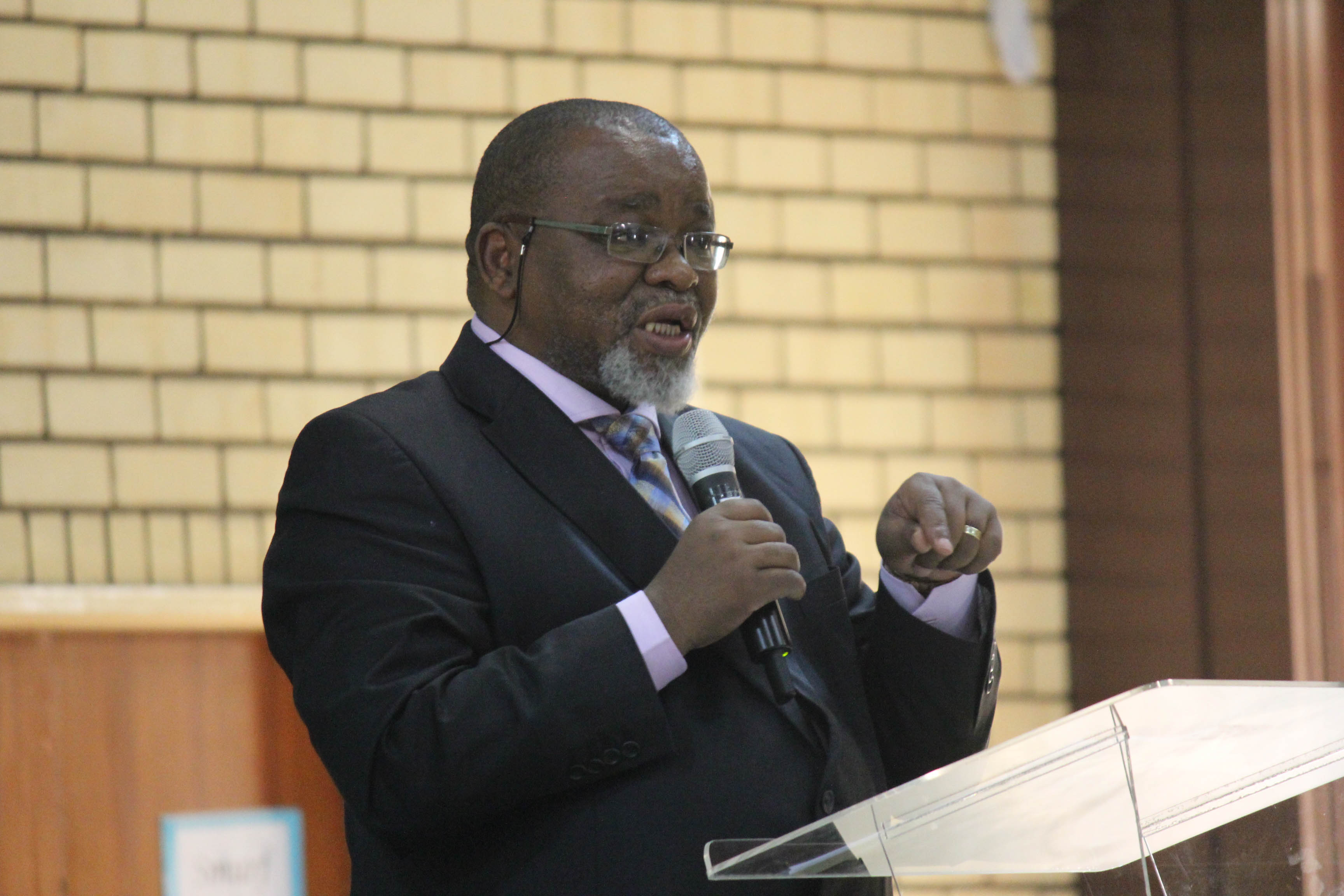
Newcastle Municipality played host to Minister of Mineral Resources Gwede Mantashe on Thursday, May 31.
Far from being a social visit, Minister Mantashe formed part of a delegation for a Mining Charter Consultation Meeting, held at Arbor Park Recreational Centre.
Currently, the Minerals and Petroleum Resources Development Act (MPRDA) of 2002 recognises the state as the custodian of the country’s mineral and petroleum resources. Furthermore, the Mining Charter is provided for by Section 100 (2) (a) of the MPRDA to facilitate the transformation of the mining industry. The section empowers the minister to develop the Charter with targets and timelines to ensure compliance.
The Mining Charter was introduced in 2004 and asses in 2009 and 2015. While the Mining Charter 2017 was gazetted for implementation on 15 June 2017, it was put on hold to allow stakeholders to engage further on the charter, as per the directives from the president.
But what are the elements of the Mining Charter, 2017?
In terms of ownership, the charter says new holders of prospecting rights must have 50 per cent black person shareholding.
Regarding new mining rights, some of the following must be adhered to:
- All new mining rights must have a minimum of 30 per cent black ownership per mining right or in the company which holds the mining rights,
- The BEE empowerment transaction must include eight per cent in the employee stock ownership plan (ESOP). Eight per cent at the mine communities in the form of a community trust to be established and managed by a Mining Transformation and Development Agency. Black entrepreneurs must stand at 14 per cent,
- The charter further requires a black person’s shareholding must vest within a maximum of 10 years. Or at least three per cent annually.
- A mining right holder is further required to contribute to a minimum one per cent of its annual turnover to black shareholders, prior to and over and above any distribution to the shareholders.
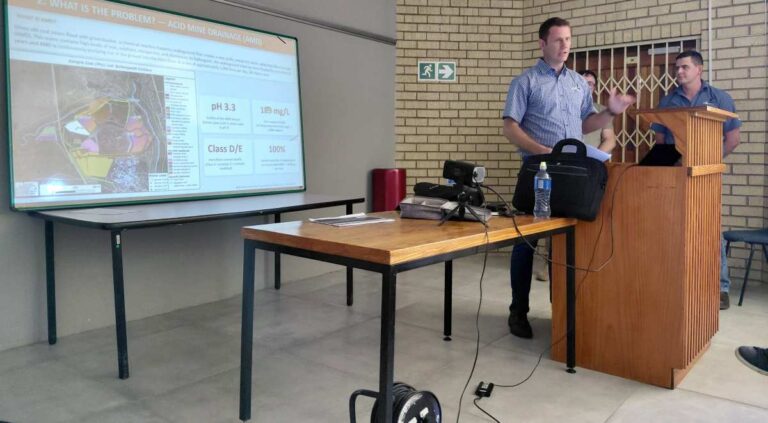
Following Mantashe’s address, guests were given a presentation of the Mining Charter principles, as well as the way forward.
“We want black people to participate economically,” Mantashe said during the day’s proceedings. This was to ensure the black community could move forward and help boost the country’s economy.
However, Mantashe emphasised the importance of not expecting financial handouts from government. This is, he says, is to ensure ownership is taken more seriously by respective parties and they work towards success.
The event proved to be an educational one for guests, as they now prepare themselves for upcoming changes.