

Communities across KwaZulu-Natal have been urged to prepare for a period of disruptive weather over the next two days, with the South African Weather Service (SAWS) warning that adverse conditions are set to affect a wide swathe of the province from Monday, 23 March 2026, through to Tuesday, 24 March 2026.
This alert stems from the development of a surface trough over the western interior, coupled with upper-air perturbations and pronounced ridging over the eastern parts of the country.

As a result, widespread showers and thunderstorms have already taken hold across much of KwaZulu-Natal on Monday. Moreover, SAWS has indicated that some of these systems are expected to intensify, particularly over the northern regions, increasing the likelihood of severe thunderstorms.
SAWS has cautioned that these storms may be accompanied by heavy downpours, damaging winds, intense lightning, and hail. Together, these factors are expected to heighten the risk of disruption and potential damage across affected areas.
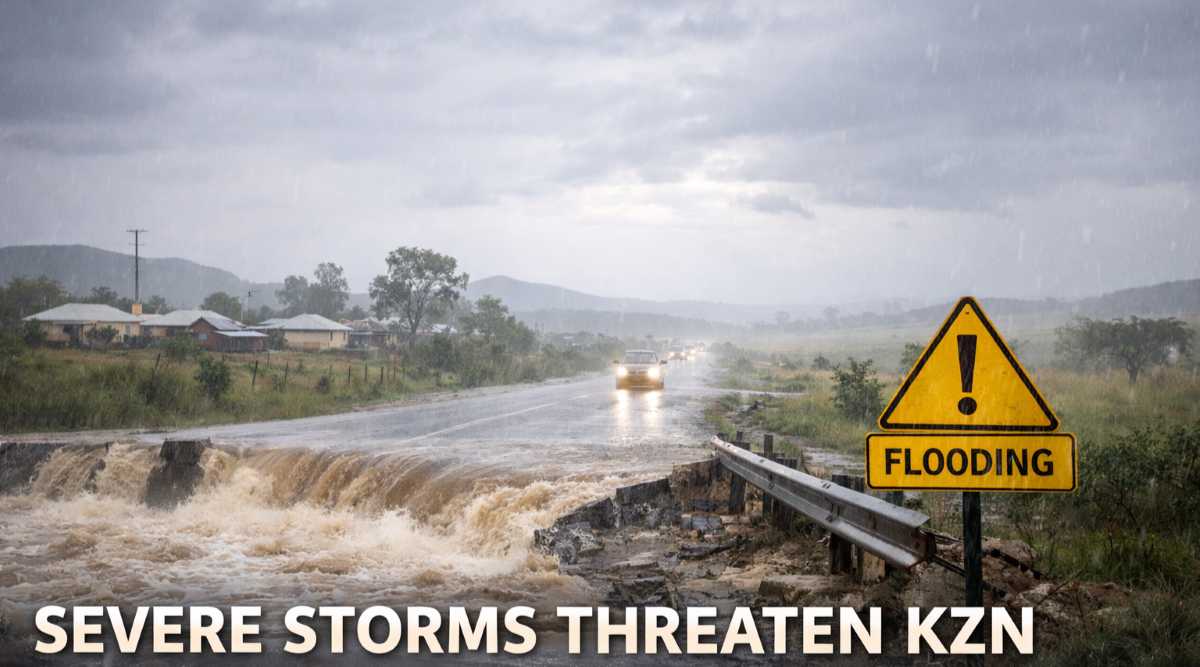
In outlining the possible impacts, SAWS warned that localised flooding of roads and bridges remains a significant concern, with both formal and informal settlements also vulnerable.
Hail may furthermore lead to damage to infrastructure and contribute to travel disruptions and related incidents, while lightning strikes pose a further hazard with the potential to ignite fires.
As the system is expected to move across the province from Monday afternoon and persist into Tuesday night, SAWS has identified several towns likely to bear the brunt of the conditions. These include:
- Newcastle
- Vryheid
- Hlabisa
- Dannhauser
- Hluhluwe
- Utrecht
- Dundee
- eDumbe
- Msinga
- Pongola
Against this backdrop, SAWS has urged residents to exercise caution. Members of the public are advised to remain indoors where possible, limit non-essential travel, and avoid crossing rivers or low-lying water crossings, as fast-flowing currents may pose a serious danger.
With the adverse weather system moving across KwaZulu-Natal, the focus remains on public safety and preparedness, particularly in areas identified as high risk.
The SAWS warning highlights the potential for rapidly changing conditions, underscoring the importance of adhering to official guidance and exercising caution.
Residents in affected areas are therefore advised to remain alert to developments and to take practical steps to reduce exposure to potential hazards as the situation continues to evolve.
Be sure to read: