


This sponsored article supports KwaZulu-Natal organisations in need of assistance. If you know of an organisation that is struggling and in need of publicity, email [email protected].
In an era increasingly dominated by screens, social media and rapidly shifting digital habits, opportunities for children to spend structured time outdoors, build resilience and develop meaningful peer relationships are becoming harder to find.
Yet in Newcastle, one long-standing community organisation continues to offer young people something many modern environments no longer do — practical life skills, mentorship and personal development beyond the classroom.
The 3rd Newcastle Scouts Group has formed part of the town’s social fabric for decades. The troop began leasing the land it still occupies in 1971, establishing a permanent base for Scouting activities in the area. Its local roots, however, trace back to a global movement that began more than a century ago.
The Scout movement was founded in 1907 and 1908 by Lieutenant-General Robert Baden-Powell of the British Army, with the aim of developing character, leadership and self-reliance in young people. From the first experimental camp on Brownsea Island in August 1907, Scouting quickly grew into an organised youth movement after the publication of Scouting for Boys in 1908.
By 1910, Scouting had reached South Africa, and in 1920 the first World Scout Jamboree marked the formation of the World Organization of the Scout Movement.
Today, Scouting operates in almost every country and remains the world’s largest youth development movement, with more than 60 million members worldwide.
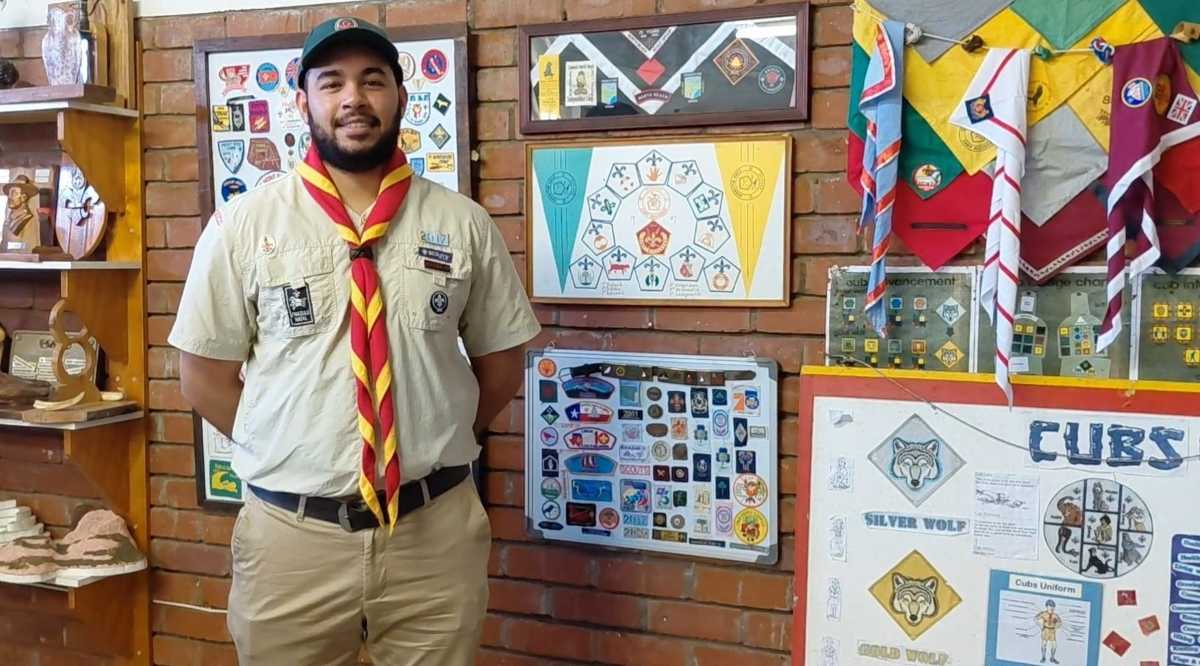
For Newcastle resident Trenton Govender, Scouting was not simply a childhood activity, but a defining influence.
“My story with the 3rd Newcastle Scout Group began when I was just a young Cub. I joined with excitement, not knowing that Scouting would shape my values, my confidence and eventually my purpose. From learning knots and lighting my first fire to earning badges and going on camps that pushed my limits, the movement became more than just an activity — it became home. I learned discipline, leadership, teamwork and resilience. Scouting teaches young people to rely on themselves while lifting others up, and I saw this firsthand through every hike, camp and challenge we faced together,” he said.
After matriculating in 2016 and entering the workforce, Govender returned — this time as an adult leader.
“Becoming an adult leader wasn’t something I planned. It happened naturally because I wanted the next generation to experience what I did. I wanted young people in Newcastle to have the same opportunities to grow, learn, build friendships, discover nature and develop into responsible, confident adults. For almost a decade, I’ve dedicated my time to making sure our Scouts have that chance,” he explained.
Leadership in Scouting, he says, extends far beyond organising weekly activities.
“I’ve watched shy children grow into outspoken teenagers, and I’ve seen young leaders take charge with pride. The rewards are endless, and every year is filled with moments that remind me why I continue to serve.”
Despite its long-standing presence, the troop now faces a serious challenge.
Govender confirmed that he is currently the only active adult leader remaining.
“For the troop to survive and continue making an impact, we urgently need volunteers — adults willing to be trained and supported to eventually take over the role. Scouting cannot run without adult leadership, and the future of the group depends on people who believe in guiding and uplifting the youth in our community. I don’t know where I’ll be next year, and I want to ensure the troop does not close or leave local children without a structured, safe programme. We need someone with heart who wants to make a difference and carry forward a legacy that has shaped so many,” he said.
He further emphasised that Scouting should not be viewed simply as camping or uniforms, but as a structured platform for youth development rooted in character-building, confidence and practical life skills.
Through Scouts South Africa, programmes focus on leadership, teamwork, citizenship, environmental responsibility, communication skills and physical engagement.
The movement caters for the following age groups:
- 5–7: Meerkats
- 7–11: Cubs
- 11–18: Scouts
- 18–30: Rovers
Currently, Newcastle offers Cubs and Scouts, with meetings held weekly.
Community members interested in volunteering as adult leaders, or parents wishing to enrol their children, can contact Trenton Govender on 084 561 9574 for further information.
As community organisations across Newcastle face mounting pressure and dwindling support, the situation highlights a broader issue: how communities invest in structured spaces that contribute to social cohesion, personal development and positive outcomes for young people.
What are your thoughts on this? Let us know below.
Be sure to read, Estcourt KwaZulu-Natal: A Midlands Town Shaped by History, Heritage, and Renewal, if you missed it.
FAQs
A long-standing youth development group in Newcastle offering structured programmes that build leadership, resilience and practical life skills.
The group currently has only one active adult leader and requires volunteers to ensure the programme continues.
Newcastle currently offers programmes for Cubs (7–11) and Scouts (11–18).
Interested community members can contact Trenton Govender directly on 084 561 9574.