

This article forms part of a paid educational collaboration with Dr Luvuyo Dyasi.
South Africa’s surgical landscape has been forged through a century of resilience, ingenuity, and a deep sense of responsibility toward patients. From the early days of academic development at institutions like the University of Cape Town to the historic 1967 heart transplant led by Dr Christiaan Barnard, the country’s contributions to global surgical advancement remain profoundly influential.
Yet the evolution of surgery in South Africa has never been solely about technology or technique, it has always been shaped equally by people, pressures, and the realities of the health system itself.
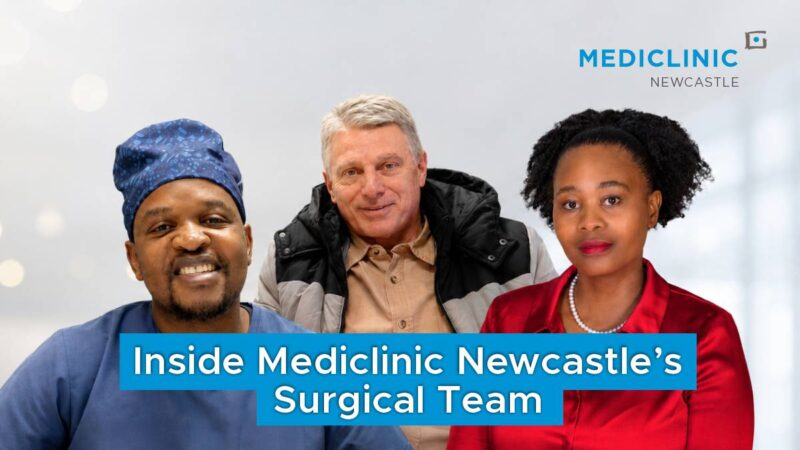
General surgeon Dr Luvuyo Dyasi, practising in Newcastle and serving patients across surrounding towns including Ladysmith, reflects thoughtfully on these themes. Drawing on his experience in both resource-limited environments and fast-paced private healthcare, his insights offer a nuanced understanding of where surgery in South Africa stands today, and where it is heading.
The identity of South African surgery today: A profession balancing innovation and systemic strain
When asked how he would define the identity of modern South African surgery, Dr Dyasi highlights the duality that shapes much of the country’s healthcare landscape.
“It’s an interesting question,” he begins. “And it’s difficult, because you have to think for both the private and public sectors, as well as state patients.”
In private healthcare, he notes a shift that concerns him deeply. “What I have found is that a lot of surgeons now are not worried about the patient, but are worried about their pockets, especially the ones in private.”
It’s a candid reflection, one born from observing how financial incentives can place pressure on clinical decision-making.
For him, this trend risks eroding the patient-first ethos that earlier generations of surgeons embodied.
Yet the public sector faces a different but equally daunting challenge. “In the public sector, we don’t have anything to work with,” he explains. “We don’t have equipment, we don’t have stock, so it becomes difficult to do what you love, because you don’t have resources.”
Thus, the lack of adequate surgical infrastructure affects clinicians and patients alike. More importantly, it threatens the integrity of surgical training and the scope of care that can be safely offered.
In his view, both extremes, financial pressure in private practice and resource scarcity in the public system, create an identity crisis for the profession. And the way forward, he believes, lies in returning to the foundational principles of patient-enrichment, not self-enrichment. “That is something we need to change,” he says. “We need to bring back the focus on the patient.”
Influence of early pioneers: The surgeons who shaped him, and the lessons they leave behind
For Dr Dyasi, the principles that should guide modern surgery were modelled by earlier generations; clinicians who combined technical mastery with discipline, humility, and deep respect for patients.
His own surgical journey began under the influence of one such figure: the late Professor Ntlhe.
“I was fortunate to love and want to do surgery as early as my third year of undergraduate studies,” he recalls. “I knew I wanted to be a surgeon simply because of the inspiration from this late professor.”
He vividly remembers a defining moment, rooted in discipline and presence: “This man was a brilliant surgeon, and I remember he chased me out of the class one time because I did not have my belt on,” he laughs. “I was amazed by this surgeon who was wearing a shirt and tie when others weren’t.”
But the admiration went far deeper than appearance. “It was the work he put in, his dedication to patients. The surgeons of old were a different breed. They knew how to treat a patient. They knew their work.”
These early influences shaped his philosophy profoundly. In his view, today’s surgeons can learn essential lessons from these predecessors:
• Be disciplined in your craft
• Communicate honestly and compassionately
• Treat patients and families with respect
• Strive to be a good doctor first, a technician second
“A patient’s family always appreciates it when you talk to them,” he says. “To basically be a good doctor — never mind a surgeon — is enough for them. That is what we need to come back to and learn again.”
The evolution of minimally invasive surgery — and the gap between training and access
South Africa has made significant strides in adopting minimally invasive surgical approaches such as laparoscopy, which has been mainstream for decades. Robotics-assisted surgery, while increasingly advanced globally, remains limited in South Africa due to cost.
“Laparoscopy has been around for probably 25 to 30 years, if not longer, and it is the way to go now. Across the world, surgeries are performed laparoscopically.”
He further points out that robotics has matured significantly. “Robotics has been around for 20 years now. It is just that it is very expensive — the Da Vinci system is one such example — and I think in South Africa, there are only a couple of centres that have such robotics. But that is where the world is going.”
His own training included extensive laparoscopic experience on emergencies and complex colorectal oncology work. “If you want to work internationally, you have to be competent in laparoscopic work — from doing laparoscopic emergencies to removing cancers from the colon.”
Despite being fully trained, he cannot apply his full skill set routinely due to infrastructure limitations.
“It is a pity that my current setting does not allow us that opportunity,” he notes. “But I am trained in that, and that is the way to go.”
Surgical challenges in Northern KwaZulu-Natal
Practising in Newcastle has given Dr Dyasi a clear view of the region’s surgical challenges; issues affecting access, outcomes, and continuity of care.
“The biggest challenge is having a single private hospital,” he explains. “We need to diversify, because not everything works well with our current hospital.”
Specialists in the region are highly skilled, but limited by local facilities, equipment and a lack of super-specialists.
“If we were able to have a second private hospital in Newcastle, it would make things much better for the patients and for the staff.”
“Being the only private hospital in town, we do not have other specialties — super specialities, I mean. For instance, vascular surgeons. We don’t even have a cath lab.”
As per the doctor, this forces some patients to travel to Durban or Gauteng for services that could otherwise be provided locally. “Our patients don’t always have enough money to go out of town,” he notes. “If they can get a service in town, it would be appreciated.”
Ultimately, he adds; “The specialists we have here are competent, but we don’t have the equipment to help the patients all the time.”
Teamwork yields better results
In Dr Dyasi’s approach, successful surgery depends on coordinated teamwork rather than individual effort.
“When you work as a team, it always works better,” he says. “Having a multidisciplinary team — where you have a physician, a surgeon, working with the radiologist — ensures better outcomes.”
Actively engaging with radiologists and collaborating closely with physicians, he believes, improves decision-making and reduces risk. “It is better than saying, ‘I will take this patient and do it myself’ and then there are adverse effects.”
While collaboration is strong, he feels there is always room for improvement in strengthening interdepartmental integration.
Understanding recovery: A balance of patient, clinician and environment
For Dr Dyasi, recovery is shaped by multiple factors — and begins long before the procedure itself. “It is a combination of factors,” he says. “If there is a complication, we must look at whether it is a patient factor, a doctor factor, or an environmental factor.”
He further explains that clear preoperative communication is essential. “You need to have adequate information for the patient prior to taking them to theatre,” he says. “They need to know what to expect and what to do afterwards.”
Therefore, as per the doctor, follow-up care is equally vital. “Whether you are following up on the patient once or following up on them ten times, it is important, because that is when you pick up complications or when something is going wrong.”
He also supports the proactive use of High Care or ICU when clinically appropriate. “Sending a patient to ICU post-operatively doesn’t mean they are sick or that you have done something wrong. It means you want better care for the patient.”
What the future of South African surgery should look like
Looking ahead, Dr Dyasi believes the country must prioritise training in modern surgical techniques and improve accessibility for patients.
“I think we need more training in laparoscopy and robotics from the moment you are trained,” he says. “We were geared — because of high pressures and long queues — to go to open surgery. But that should not be the default.”
He also highlights affordability as a barrier to care. “Accessibility to private healthcare is important. Even for patients who are not necessarily on medical aid, things are expensive. Improving accessibility would improve outcomes and make surgery better overall.”
Looking at the sector, his vision is clear: improved training, expanded access, modernised technology, and a continued commitment to patient-centred care.
With this philosophy in mind, Dr Dyasi encourages individuals to seek clarity, ask questions, and take the time to understand their surgical options.
Patients wishing to discuss their concerns or explore an appropriate pathway forward may consult with him through his independent practice. His rooms can be contacted using the details below for verified appointment information.
- Dr Luvuyo Dyasi, MBChB (UL), FCS (SA)
- 72 Sutherland St, Newcastle Central, Newcastle, 2940
- Tel: 034 285 0973
What are your thoughts on this? Let us know below.
Do not forget to read, Precision Oncology In Northern KZN: Personalised, World-Class Cancer Care, if you missed it.