

The term top fishing gear refers to the equipment that professionals, serious anglers, and manufacturers recognise as the current benchmark in performance and reliability.
In 2025 and 2026, rapid advancements in materials science, electronics, and corrosion-resistant engineering are reshaping what rods, reels, lines, and fish finders can deliver. This overview distils the most credible, well-documented products on the market, explaining their technical strengths and what differentiates them from the rest.
Evolution and the technology driving today’s top gear
The progression of high-end fishing equipment has been steady rather than sudden, fuelled by improvements in metallurgy, composite construction, electronic imaging, and sealing technology. The latest generation of gear reflects a strong industry-wide push toward lighter yet stronger rod blanks, more stable drag systems, and fully sealed reel bodies that resist sand, salt spray, and long-term corrosion.
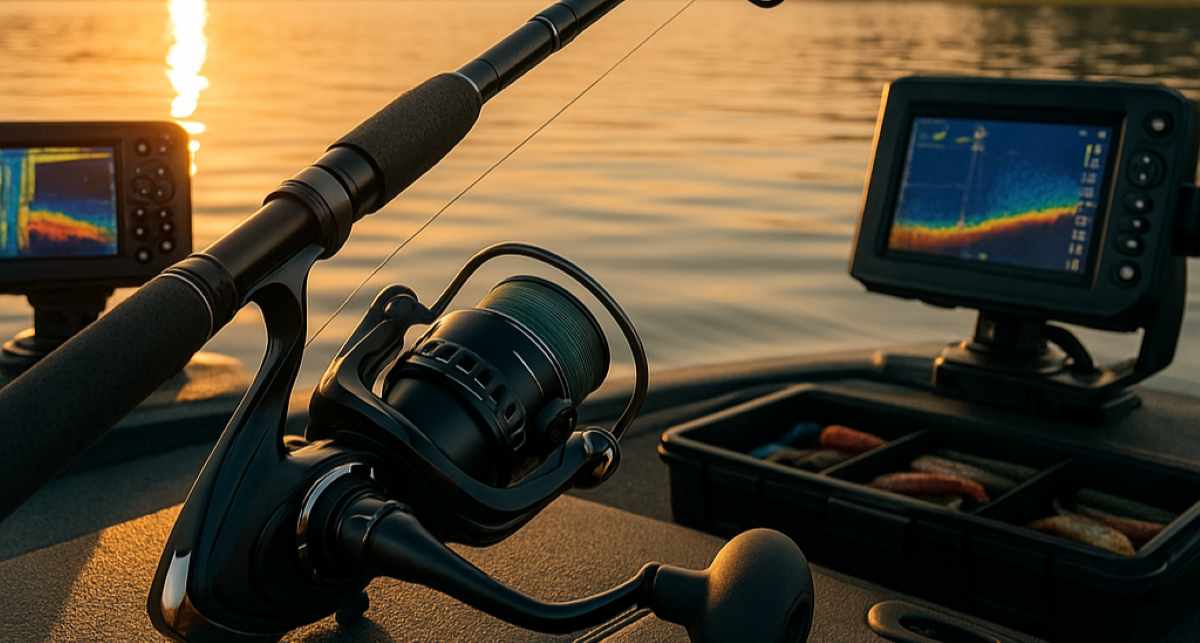
Electronic gear — particularly fish finders — has undergone an equally significant leap. Forward-facing sonar, high-resolution mapping, and enhanced target separation now allow anglers to read structure, track fish movements in real time, and identify activity beneath overhangs or ahead of the vessel with remarkable precision.
Manufacturers such as Van Staal, Daiwa, Shimano, Garmin, Lowrance, and Humminbird lead the charge by integrating these innovations. Their flagship models often set the benchmark that mid-range gear aspires to replicate.

Rods: lightweight, responsive, and corrosion-resilient
Modern premium fishing rods increasingly use high-modulus carbon fibre or graphite composites with elevated “tonnage” ratings. These blanks deliver superior sensitivity—allowing the angler to detect subtle bites—and improved energy transfer for tighter hook-sets and better control of large fish. The increased blank stiffness also supports longer, more accurate casts.
Guide (ring) technology has advanced significantly. Ceramic and silicon-carbide inserts are now standard in many high-end models, reducing friction and abrasion when used with braided lines, and maintaining smooth line flow under load. The guide frames themselves are frequently built from stainless steel, titanium or similarly robust alloys—especially in saltwater models—to resist corrosion and deformation under heavy use.
Brand-specific highlights:
- Daiwa offers multiple rod lines featuring high-modulus blanks paired with robust, corrosion-sealed guides and reel seats, designed for both salt- and freshwater challenges.
- Shimano rods are renowned for combining durability, refined balance, and excellent dealer-and-after-sales support—a factor often overlooked by serious anglers investing in premium gear.
- In South Africa, local distributors such as Blue Water Gear have significantly expanded their inventory of these top-tier models, making them more accessible in 2025–2026.
For saltwater applications, manufacturers also integrate specially sealed reel seats and corrosion-resistant hardware (e.g., titanium reel-seat hoods or sealed hood fasteners) as standard. These features protect internal components from salt spray, sand intrusion and prolonged exposure to harsh marine environments—extending the life of the rod and maintaining performance under demanding conditions.
Reels: sealed systems, precision, and high drag capacity
The reel remains the mechanical centrepiece of any high-performance fishing setup, and the 2025–2026 generation reflects major advances in sealing, material engineering, and drag technology. Modern premium reels prioritise durability in harsh environments, smooth operation under load, and long-term serviceability.
Key characteristics seen in top-tier reels include:
• Fully sealed body and rotor systems
To prevent water, salt, sand and fine sediment from entering the internal gearing. Full sealing is now a defining feature of premium saltwater reels, ensuring consistent performance and dramatically extending service life.
• High-torque drag systems
Carbon-fibre or ceramic drag washers are common, providing smooth, consistent drag pressure without overheating or warping under prolonged strain. This is essential when targeting powerful species or fishing in surf and offshore conditions.
• One-piece machined aluminium or magnesium-alloy bodies
These materials offer the ideal balance of rigidity and low weight. A rigid body prevents flex under heavy load, maintaining gear alignment and enhancing cranking power. Magnesium remains popular in freshwater performance reels, while aluminium dominates saltwater environments due to better corrosion resistance.
• Modular spool and rotor assemblies
Many modern reels are designed with interchangeable components, allowing anglers to swap spools, replace rotors, or conduct maintenance without specialist tools. This reduces downtime and keeps the reel serviceable for longer periods.
Leading examples in the current market:
- Van Staal X2 series – Fully sealed, engineered specifically for extreme saltwater exposure and surf fishing, with a reputation for reliability under harsh conditions.
- Shimano premium spinning and baitcasting reels – Noted for precision machining, smooth drag stacks, and excellent factory support.
- Daiwa’s high-end platforms – Strong competitors in line management, spool design, and long-term durability, particularly popular among anglers using braided lines.
Local considerations for South African anglers:
When purchasing reels in South Africa, it is important to check the availability of essential spare parts—such as drag washers, bearings, and replacement spools—either through local suppliers or authorised import channels. Ensuring that the reel is supported by a valid warranty and accessible parts network can significantly reduce long-term maintenance costs.
Fish finders and electronics
Sonar and mapping technologies have become some of the most transformative components in modern fishing gear. The leading electronics for 2025–2026 are defined by advanced imaging, high-speed processing and improved integration with onboard and mobile systems.
Top-tier units now offer:
• Forward-facing sonar
Allows anglers to see fish, structure and movement ahead of the vessel in real time.
• CHIRP, side and down imaging
Provides superior clarity at multiple depths and angles, improving target separation and structural detail.
• High-resolution mapping and charting
Regular map and chart updates enable more accurate navigation and structure identification.
• Connectivity and networked systems
Many devices sync with smartphones, route plans, waypoints and even other sonar units, creating a unified onboard network.
Manufacturers such as Garmin, Lowrance and Humminbird lead this field, with their devices frequently updated through firmware and downloadable map enhancements. In South Africa, anglers must also ensure that units support regional mapping formats and are compatible with local voltage requirements.
Line and terminal tackle
High-end fishing gear is only as effective as the line and terminal components that deliver the final presentation. Advances in material science continue to elevate performance, durability and sensitivity:
• Braided line (8- to 12-strand)
Ultra-high molecular weight polyethylene (UHMWPE) fibres now dominate premium braided lines, offering superior tensile strength, thin diameter and enhanced sensitivity.
• Fluorocarbon leaders
Still preferred in clear-water and high-visibility environments due to low light refraction and abrasion resistance.
• Soft plastics, jigs and hardbaits
Soft bait manufacturers are moving toward biodegradable plastics, while hardbaits benefit from high-precision injection moulding that improves balance and lifelike action.
• Hooks, swivels, snaps and rings
Modern terminal hardware increasingly uses corrosion-resistant alloys — such as stainless steel, titanium blends and vanadium steel — to withstand harsh marine conditions and maintain strength under pressure.
Together, these components complete the system that determines how effectively rods, reels and electronics translate into real-world fishing performance.
South Africa’s fishing environments, from rugged surf zones to estuary systems and deep offshore waters, demand equipment that matches both global standards and local realities.
Key considerations include:
• Salt corrosion and sand exposure
Coastal conditions along both the East and West Coasts require gear engineered for maximum sealing and corrosion resistance.
• Spare-part availability
A premium reel or rod loses value if replacement spools, drag washers or bearings are not stocked locally.
• Import duties, VAT and warranty coverage
International purchases often carry additional costs and may invalidate warranties if not bought through authorised channels.
• Species requirements and fishing style
Some heavy-duty offshore equipment is unnecessary for estuary or river species. Gear must align with regional targets to remain cost-effective and practical.
• Local distribution and support networks
Brands represented by established distributors — including Blue Water Gear, KingFisher and Basil Manning — offer more reliable service, repairs and part replacements.
Therefore, “top fishing gear” in South Africa must balance global technical excellence with durability, accessibility and long-term support.
In 2025–2026, the phrase top fishing gear goes beyond a search on Google, showing Temu’s gear at extremely low prices.
It reflects the fusion of advanced materials, sealing technology, precision electronics and real-world durability. For South African anglers in particular — where corrosive saltwater, import logistics and diverse fishing environments present unique challenges — only equipment that combines high technical standards with reliable local support truly meets the benchmark.
For best results, anglers should verify local spare-part availability, choose gear suited to their target species and conditions, and prioritise brands with proven service and distribution networks. This ensures performance on the water and sustainability of the equipment over the long term.
Please feel free to comment and share this article. Do not forget to read, Latest Hunting Rifles on the Market in South Africa, if you missed it.
Just for intrest sake, check out the video below:
FAQs-For Top Fishing Gear
Top fishing gear in 2025 is defined by advances such as fully sealed reel systems, high-modulus composite rod blanks, forward-facing sonar, modular parts, and premium line materials.
Both matter, but many professionals advise prioritising the reel (drag, durability, sealing), as it is more difficult to upgrade in the field; then match a rod that fits the reel and species.
Yes, many major brands (Van Staal, Daiwa, Shimano, Garmin, Lowrance) are distributed in South Africa via local importers and tackle shops; availability varies by model and region.
Very important — modern fish finders, especially with forward sonar, side/down imaging, and mapping, offer advantages in locating fish and structure that were previously unavailable.