

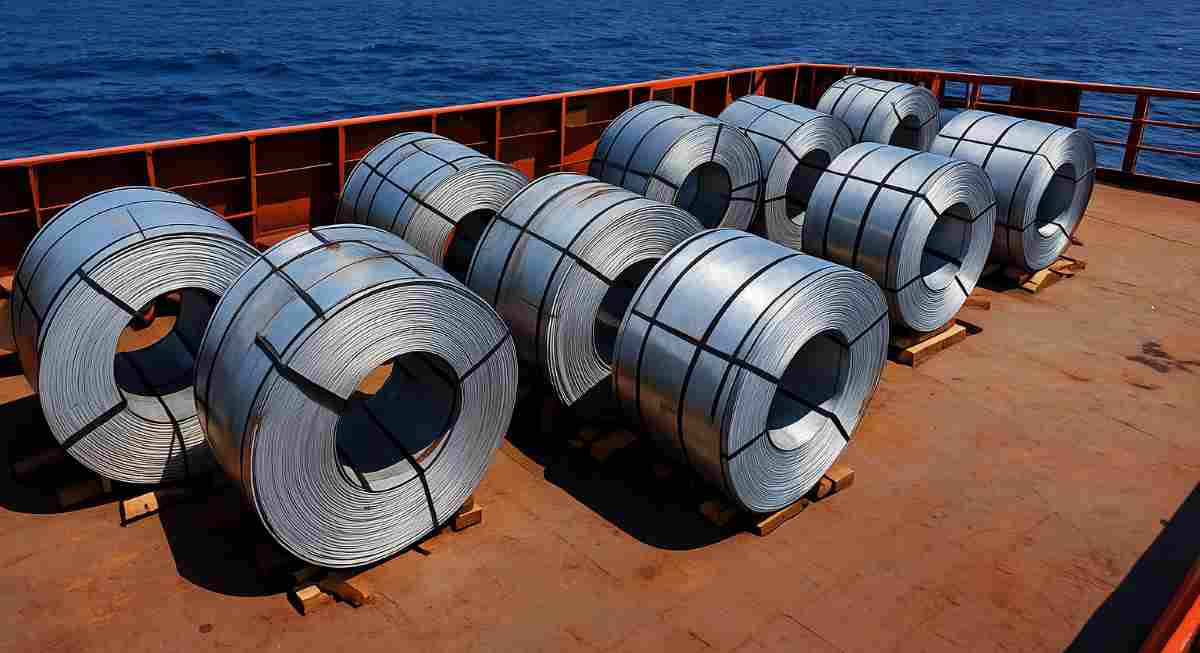
In a move to shield its domestic steel sector from global overcapacity and unfair trade practices, the European Union has unveiled a bold proposal to tighten import rules on steel. Announced earlier this month by EU Trade Commissioner Maroš Šefčovič, the measures include slashing tariff-free quotas by nearly 50% and slapping a hefty 50% tariff on excess imports starting in June 2026.
While primarily targeting major exporters like China, India, and Turkey, these changes carry significant implications for South Africa — one of Africa’s largest steel producers and a key player in the global supply chain.
The EU’s steel industry has been under siege.
Soaring energy costs, exacerbated by geopolitical tensions, have eroded competitiveness, leading to a capacity utilisation rate dipping to just 67% and the loss of 18,000 jobs in 2024 alone. This vulnerability has been compounded by a surge in cheap imports, fuelled by overproduction in Asia.
Therefore, the new proposal replaces expiring safeguard measures from 2018, which were initially a counter to U.S. tariffs under the first Trump administration.
Under the plan, the EU aims to cap duty-free steel imports at 18.3 million metric tonnes annually — down from 34.5 million tonnes in 2024 — reflecting pre-overcapacity levels from 2013.
Any shipments beyond this quota will face the doubled 50% ad valorem duty, up from the current 25%.
A new “melt and pour” origin rule will also be introduced to curb circumvention through semi-finished products, ensuring tariffs apply based on where raw steel is first processed.
The timing is no coincidence: the proposals were tabled just ahead of the Global Forum on Steel Excess Capacity (GFSEC) meeting in Johannesburg on 10 October, where global stakeholders, including South African officials, gathered to discuss overcapacity woes.
Furthermore, South Africa, home to giants like ArcelorMittal South Africa and Columbus Stainless, stands at a crossroads. The EU is the country’s second-largest steel export market, valued at R20.3 billion (about €1.1 billion) in 2024, trailing only China.
Fortunately for Pretoria, WTO safeguards exempt developing countries whose exports fall below 3% of the EU’s total steel imports — and the collective share of all such nations doesn’t exceed 9%.
African suppliers, including South Africa, Egypt, Morocco, Nigeria, Algeria, and Tunisia, shipped under 3 million tonnes to the EU last year, comfortably under the threshold.
This exemption preserves unrestricted access for South African stainless steel and other products, potentially opening doors as quotas tighten on rivals.
“It’s a potential open door for Africa,” notes one analysis, highlighting how least-developed nations like Ethiopia and Tanzania could ramp up exports without barriers.
Yet, the relief is tempered by indirect fallout. As Asian powerhouses redirect their surplus — estimated at tens of millions of tonnes — to untariffed markets, Africa risks a flood of low-cost steel. This could undercut local producers, stifle industrialisation efforts under the African Continental Free Trade Area (AfCFTA), and exacerbate price volatility amid booming infrastructure demand.
For South Africa, already grappling with domestic challenges like high production costs, this influx threatens to erode market share in regional hubs like Nigeria and Kenya, where new steel mills are sprouting.
Industry voices in Johannesburg have sounded alarms.
“While we’re exempt, the ripple effects could hit us hard at home,” a Steel and Engineering Industries Federation of Southern Africa (SEIFSA) spokesperson warned, calling for coordinated African policies to shield nascent industries.
Moreover, the EU’s gambit isn’t isolated. It’s partly a negotiating ploy ahead of renewed U.S.-EU steel talks under the second Trump administration, which has hiked its own tariffs to 50%.
Meanwhile, South Africa faces a separate 30% U.S. levy on its exports, prompting retaliatory measures from Pretoria. These cross-Atlantic salvos underscore a fragmenting global trade landscape, where protectionism clashes with calls for fair play.
For Africa, the tariffs present a mixed bag. On one hand, exemptions could boost intra-African trade and value-added processing, aligning with the continent’s minerals-to-manufacturing ambitions. The EU’s parallel €11.5 billion investment pledge in South African clean energy and infrastructure signals partnership potential.
On the other, without vigilant safeguards, redirected steel could derail progress, echoing past “dumping” episodes that hollowed out local capacities.
As the EU Parliament and Council review the proposal — potentially approving it by July 2026 — South Africa has an opportunity to engage. Diplomatic channels, including bilateral EU-SADC talks, could secure tailored quotas or tech-transfer deals.
At the GFSEC, African delegates pushed for multilateral solutions to overcapacity, emphasising sustainable production over punitive tariffs.
In the end, the EU’s steel shield may fortify Europe but test Africa’s resolve. For South Africa, navigating this storm demands agility: leveraging exemptions for export growth while fortifying home markets against the incoming tide.
Get your brand in front of thousands of readers with Newcastillian News visibility packages. Email [email protected] for placement options and rates.
As global steel flows realign, the real winners will be those who trade not just metal, but strategy.
What are your thoughts on this? Be sure to let us know below and do not forget to read, Recyclers call for probe into scrap cartel as IDC downplays R8.5bn AMSA bid, if you misssed it.
FAQS:
The EU plans to reduce tariff-free import quotas from 34.5 million tonnes in 2024 to 18.3 million tonnes annually, while increasing the tariff on excess imports to 50% from the current 25%. These measures, effective June 2026, aim to protect Europe’s steel sector from global overcapacity, with a new “melt and pour” rule to prevent circumvention.
No, South Africa is exempt due to its status as a developing country. Its exports, along with other African nations, represent less than 3% of the EU’s total steel imports, falling under WTO safeguard exceptions that allow unrestricted access.
While exempt, South Africa could see a surge of redirected cheap steel from Asia flooding African markets, undercutting local producers, increasing price volatility, and hindering AfCFTA industrialization goals amid domestic challenges like high energy costs.
Yes, the exemptions could enable South Africa to increase exports to the EU as quotas tighten on competitors like China. This aligns with broader EU investments in African clean energy and infrastructure, potentially fostering value-added processing and intra-African trade growth.