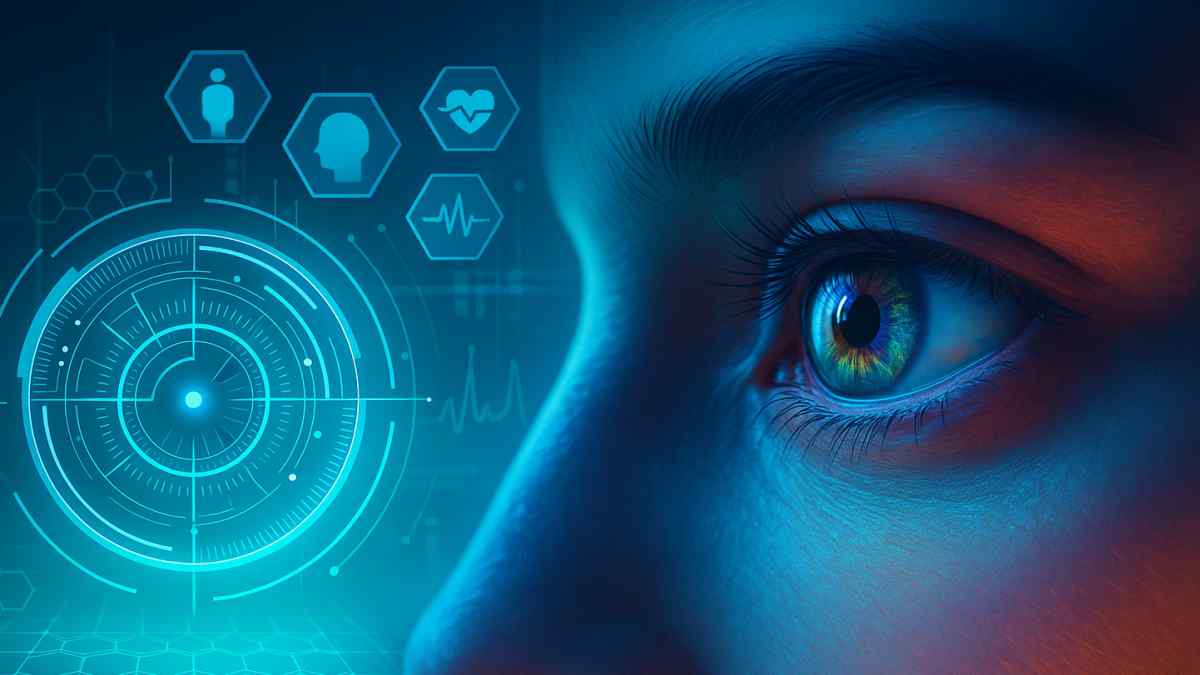
Across South Africa and the world, ophthalmology and optometry innovations in 2025 are transforming how we understand, diagnose, and treat eye conditions. From artificial intelligence (AI) that detects disease before symptoms appear to contact lenses that can monitor eye pressure in real time, the field of eye care is evolving faster than ever.
For South Africans — where diabetes, glaucoma, and cataracts remain leading causes of vision loss — these developments aren’t just exciting; they’re potentially life-changing.
Clinical insight: Rapid advances in ophthalmic imaging, multimodal AI interpretation, and precision therapy have created a convergence between clinical medicine, data science, and biotechnology. Foundation models such as EyeFound (Zhou et al., 2024) and Fundus2Globe (Zhang et al., 2025) illustrate the expanding role of AI in diagnostic workflows.
AI in ophthalmology: spotting disease before humans can
Imagine an eye scan that doesn’t just show what’s wrong, but what will go wrong. AI systems can now analyse thousands of patient scans, detecting subtle changes invisible to the human eye — months or even years before symptoms appear.
By learning patterns from millions of retinal images, AI can predict the early stages of diabetic retinopathy, glaucoma, and age-related macular degeneration with incredible precision. For South African clinics, this technology could reduce pressure on overburdened ophthalmologists and help rural patients access early screening remotely.
Clinical insight: AI-driven systems such as those validated in Nature Medicine (De Fauw et al., 2018) demonstrate clinically applicable deep learning for retinal triage. Multimodal models combining OCT, fundus photography, and angiography show improved sensitivity for subclinical pathology detection.
These breakthroughs represent just a glimpse into the ophthalmology and optometry innovations of 2025, where technology and medicine are merging to improve outcomes globally.
Seeing beneath the surface: the rise of OCT-A
Optical Coherence Tomography Angiography (OCT-A) is one of the most powerful diagnostic tools available today. It’s a completely non-invasive scan that maps the tiniest blood vessels at the back of your eye — without using dyes or injections. This means doctors can detect diabetic or age-related damage at microscopic levels long before it affects vision.
Ultra-widefield (UWF) imaging is another advancement, capturing a panoramic view of the retina and revealing peripheral damage often missed by traditional cameras. For patients, it means faster, more accurate diagnoses — and for practitioners, a better view of what’s really happening.
Clinical insight: OCT-A enables microvascular visualisation of the retinal and choroidal plexus without fluorescein dye. Studies (Spaide et al., 2023; Javed et al., 2023) confirm its value for DR, AMD, and glaucoma. Combined with UWF imaging (Optos, Clarus), it supports comprehensive retinal mapping for early-stage intervention.
Home monitoring and smart lenses
Imagine monitoring your own eye health from home — and being alerted when something changes. Devices like ForeseeHOME allow patients with macular degeneration to test their vision daily, catching warning signs of disease progression before irreversible damage occurs.
Smart contact lenses, still in development, will soon track intraocular pressure and tear composition — ideal for glaucoma and diabetes management. These innovations bring care closer to patients, especially valuable in South African towns where specialist appointments can take months to secure.
Clinical insight: The AREDS2-HOME trial (Chew et al., 2014) validated remote monitoring for AMD. Follow-up studies (Yu et al., 2021; Mathai et al., 2022) demonstrated real-world reliability. Next-generation biosensing lenses from Sensimed and Mojo Vision measure IOP fluctuations continuously, aiding early glaucoma detection.
Gene therapy and regenerative medicine: restoring sight
One of the most inspiring frontiers is gene therapy — literally repairing the faulty genes that cause blindness. Treatments like voretigene neparvovec have already restored functional vision in patients with inherited retinal disease (IRD). Meanwhile, scientists are exploring CRISPR-based editing and stem-cell retinal transplants that could one day reverse vision loss entirely.
For now, these are largely available through international trials, but South African researchers are watching closely as costs drop and accessibility expands.
Clinical insight: Long-term efficacy of voretigene neparvovec (Maguire et al., 2019; Fischer et al., 2024) is well-established. Preclinical development of EDIT-101 for CEP290-LCA10 (Maeder et al., 2019) and pluripotent stem-cell retinal sheets (Iwama et al., 2024; Sakai et al., 2025) indicate translational feasibility. Ongoing iPSC trials show promising functional recovery.
Surgery that adjusts itself
Cataract surgery — one of the most common procedures in the world — has just taken a leap forward. The Light Adjustable Lens (LAL) lets surgeons fine-tune a patient’s vision after surgery using UV light. Patients can adjust for perfect clarity without needing glasses or a lens replacement.
At the same time, sustained-release drug implants are reducing the need for repeated eye injections, improving safety and patient comfort.
Clinical insight: The RxSight Light Adjustable Lens demonstrates significant post-operative refractive precision (Schojai et al., 2020, JCRS). Sustained intravitreal implants such as fluocinolone acetonide (Boyd et al., 2024, Retina) extend drug delivery intervals, reducing procedure burden in chronic DME management.
The eye as a window to whole-body health
Perhaps the most surprising revelation is that your eyes don’t just reflect your vision — they reflect your entire health. AI systems can now read retinal scans to predict the likelihood of heart disease, kidney failure, or even dementia.
By analysing blood vessel patterns, nerve layers, and colour changes, the eye is becoming a powerful early-warning system for systemic disease. For many South Africans who don’t see a doctor until symptoms appear, this could be the ultimate lifesaver.
Clinical insight: Retinal biomarkers correlate strongly with systemic pathology. AI models (Poplin et al., 2018) predict cardiovascular risk from fundus imaging. Retinal microstructure and vascular density changes are emerging indicators for Alzheimer’s and Parkinson’s disease (Hao et al., 2024; Murueta-Goyena et al., 2024).
The South African opportunity in ophthalmology and optometry innovations
For South African eye-care providers, these innovations offer both challenge and promise. With smart adoption — from AI-based triage in public clinics to shared OCT-A imaging hubs — local practitioners can narrow the gap with world-class standards.
As technology becomes more affordable, partnerships between private practices, universities, and provincial health systems could turn these global breakthroughs into local success stories.
Clinical insight: Implementation priorities include AI-assisted DR screening, tele-ophthalmology for follow-ups, and targeted investment in imaging infrastructure. Continuous CPD on genetics, imaging analytics, and minimally invasive therapeutics will sustain progress in resource-variable settings.
Looking ahead
From early detection to sight restoration, ophthalmology and optometry innovations in 2025 are ensuring that doctors can save sight sooner and give patients hope for the future. And for South Africans, that future is closer than ever.
References
Zhou et al. (2024). EyeFound: Multimodal Foundation Models for Ophthalmic Imaging. arXiv:2405.11338 — https://arxiv.org/abs/2405.11338
Zhang et al. (2025). Fundus2Globe: Generative 3D Eye Reconstruction from Fundus Images. arXiv:2502.13182 — https://arxiv.org/abs/2502.13182
Newcastillian News invites your input. We ask that you keep your remarks courteous and on-topic. We do not allow any form of hate speech, such as racist or sexist comments. All comments are subject to moderation in line with our User Rules and Commenting Policy.