

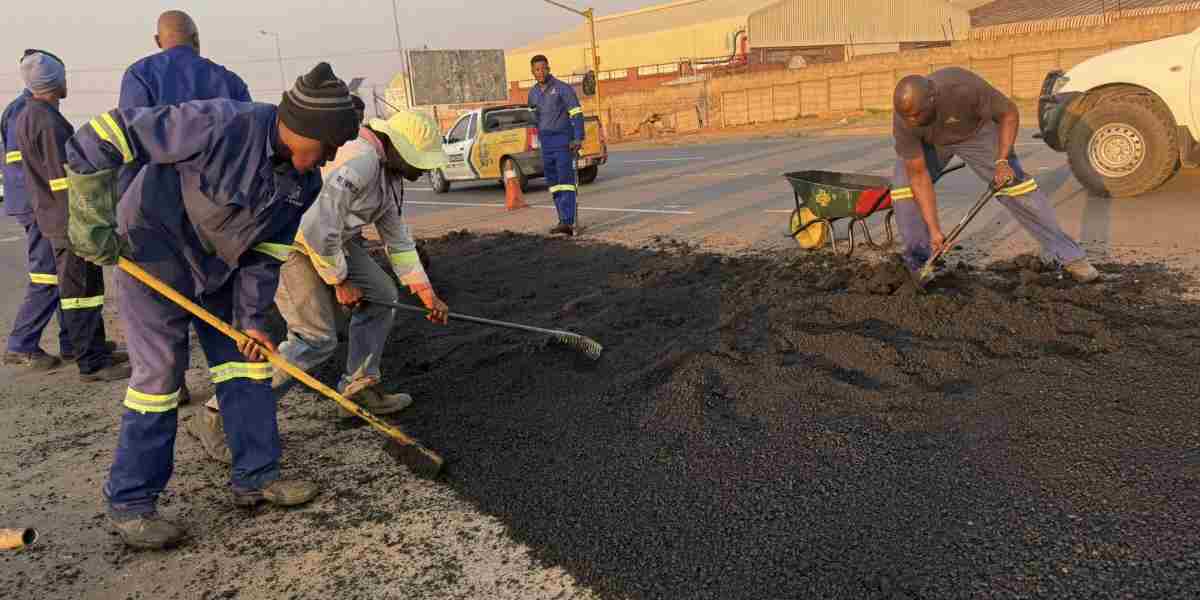
After years of neglect and frustration, Newcastle Municipality may finally be making meaningful progress in tackling its crumbling road infrastructure. The Northern KwaZulu-Natal municipality has resumed implementation of its asphalt pothole repair programme, an initiative aligned with its constitutional obligation to deliver quality basic services and improve the well-being of its residents.

For over a decade, Newcastle’s road network has suffered from chronic underfunding and erratic maintenance, leading to widespread potholes and degraded surfaces, particularly in high-traffic zones such as Madadeni and the Industrial Area.
According to the municipality’s Integrated Development Plan (IDP) 2024–2025, these conditions have increased the risk of accidents, damaged vehicles, and disrupted daily commutes. Local businesses, especially in the logistics and manufacturing sectors, have reported rising operational costs due to delays and frequent vehicle repairs, as highlighted in the Amajuba District Municipality’s Economic Development Strategy 2024.
Past attempts to fix the roads, including temporary patching campaigns in 2022 and 2023, were short-lived due to limited budgets and unsustainable planning. This time, however, the municipality insists its latest efforts—launched in May 2025—are more strategic and designed for long-term impact.
In a recent statement issued on Friday, 25 July 2025, the Newcastle Municipality confirmed ongoing patching operations in Madadeni, Faraday Street, Arbor Park, and the Industrial Area.
“These efforts demonstrate the municipality’s proactive approach to infrastructure development and its dedication to creating an enabling environment for economic growth,” it stated.
Still, progress has not come without challenges. As previously reported by Newcastillian News in June 2025, the project faced delays due to a breakdown at the asphalt production plant, causing a pause in asphalt deliveries. Nevertheless, the municipality managed to secure over 2,000 bags of asphalt and expects further deliveries soon to continue the repair work. To help the public understand the scale: one bag of cold asphalt typically covers just under 1 square metre, depending on the depth—meaning continued supply will be crucial to covering large areas.
Mayor Councillor Xolani Dube emphasised the programme’s dual purpose: preventing further deterioration while building a more reliable transport network. “We are committed to improving daily mobility for our people and supporting local economic growth through resilient infrastructure,” he stated.
The potential economic payoff could be significant.
According to the Amajuba District Municipality’s Economic Development Strategy 2024, improved road networks can reduce transport costs and increase delivery efficiency—benefitting key employers like ArcelorMittal Newcastle Works and Natal Portland Cement. Enhanced infrastructure is also likely to attract more visitors to local attractions such as the Carnegie Art Gallery and Fort Amiel Museum, thereby supporting tourism growth.
Job creation is another anticipated benefit. The municipality and provincial government are reportedly employing local workers for construction and maintenance roles, as indicated in the KwaZulu-Natal Department of Transport’s 2025/26 Budget Speech.
Coinciding with these developments, the KwaZulu-Natal Department of Transport re-tabled its 2025/2026 budget on 25 July 2025 after the national VAT hike was withdrawn. Despite the adjustment, the Department maintained its R13 billion budget.
Newcastle’s efforts mirror similar initiatives in larger municipalities. By June 2025, eThekwini had already completed over 60% of its road repairs, according to its 2025 Infrastructure Report, while uMlalazi remains behind due to restricted funding, as outlined in its IDP 2024–2025. Newcastle’s inclusion in the province’s Black Top Patching programme could accelerate progress, offering an edge over smaller municipalities.
Furthermore, the provincial Department of Transport has allocated over R216 million this financial year for pothole repairs, and plans to procure 25 more pothole repair trucks in addition to the 55 acquired in 2023/24.
Over 100 road worker aids and foremen have also been appointed, and a centralised approach now places project oversight at the Department’s head office.
Most notably, a specialist automated road rehabilitation service provider is expected to be appointed soon, further boosting turnaround times for critical repairs across the province. Newcastle is anticipated to be among the municipalities that will benefit.
Still, the road to recovery is not without scepticism. Over the years, multiple large-scale repair initiatives have been launched with great public fanfare—only to fall short due to poor planning, unreliable contractors, and inconsistent follow-through. Many roads were left partially completed or even worse off than before.
This time, though, there are signs of a shift. Defined budgets, tighter coordination between local and provincial authorities, and a structured roll-out strategy are fostering cautious optimism among residents and the business sector. If sustained, this programme could break Newcastle’s long-standing cycle of crumbling roads and deliver lasting change.
Will this effort finally succeed where so many others have failed? Or is it another well-meant initiative that will stumble under pressure?

Share your thoughts in the comment section below.
Be sure to read, R89m Utrecht Wastewater Project: Promises of Sustainability Amid Procurement Disputes, if you missed it.
According to the Newcastle Municipality’s Integrated Development Plan (IDP) 2024–2025, chronic underfunding and inconsistent maintenance over the past decade have led to widespread potholes and degraded road surfaces. High-traffic areas like Madadeni and the Industrial Area have been particularly affected, causing vehicle damage, increased accident risks, and disruptions for commuters and businesses.
As reported by Newcastillian News in June 2025, the programme has encountered delays due to a breakdown at the asphalt production plant, which disrupted material deliveries. Despite this, the municipality has secured over 2,000 bags of asphalt and expects further deliveries to sustain progress, demonstrating its commitment to overcoming logistical setbacks.
Improved roads are expected to reduce transport costs and delivery times for industries like manufacturing, mining, and logistics, as outlined in the Amajuba District Municipality’s Economic Development Strategy 2024. Major employers such as ArcelorMittal Newcastle Works and Natal Portland Cement may see operational efficiencies. Additionally, better road access to attractions like the Carnegie Art Gallery and Fort Amiel Museum could boost tourism and support local businesses.
Compared to larger municipalities like eThekwini, which completed over 60% of its road repairs by June 2025, Newcastle’s programme, started in May 2025, has faced delays but is progressing. Smaller municipalities like uMlalazi lag behind due to limited budgets, as per the uMlalazi Municipality’s IDP 2024–2025. Newcastle’s potential inclusion in the provincial Black Top Patching programme could accelerate its efforts.
Historical initiatives, such as those in 2022 and 2023, were hindered by logistical setbacks, insufficient budgets, inconsistent contractor performance, and lack of follow-through, as noted in the Newcastle Municipality’s IDP 2024–2025. These challenges often left projects incomplete, eroding public confidence. The current programme’s structured approach and provincial support aim to address these issues for more sustainable outcomes.