

Water tariffs are climbing across South Africa, turning smart water use from a good habit into a financial necessity. As costs for water and sanitation keep rising, many households are already feeling the strain. So how do you take control of your water use and keep your bill manageable?

With this in mind, Newcastillian News took a closer look at the issue to help South Africans find ways to save money during these challenging economic times.
Households across the country are grappling with steep hikes. In Johannesburg, for instance, water and sanitation charges are up by 7.9% for the 2025/2026 financial year. The same trend is visible in other major cities. These increases are largely due to higher bulk water prices, maintenance costs, and losses from leaks and theft, as highlighted by the South African Reserve Bank.
To make matters more complex, AgriSA points out that from 2026, a revised national pricing strategy will further encourage efficient water use, but it may mean even higher bills for heavy users.
Therefore, with this all in mind, clearly, now is the time for South Africans to get proactive.
That’s why we’ve put together this guide to help you better understand your water bill, spot leaks early, and take steps to cut down on your monthly costs.
It all starts with understanding what you’re paying for. Your municipal bill typically lists your account details, the billing period, past balances, payments, and new charges for services like water and sanitation.
Most municipalities use an increasing block tariff system. This means the more water you use, the more you pay per kilolitre. For example, in Cape Town, households get 6,000 litres free under the Free Basic Water policy. But use more than 35,000 litres a month, and you’ll pay as much as R820.50 per 1,000 litres in the coming year.
Sanitation fees, meanwhile, are usually tied to how much water you consume, to cover wastewater treatment. To avoid paying more than you should, always double-check your bill against your own meter readings. Look for your meter number, reading dates, and ensure the consumption matches the published rates on your city’s website.
If anything looks wrong, take dated photos of your meter and contact your local municipality’s billing office to dispute it.
Learn how to read your meter
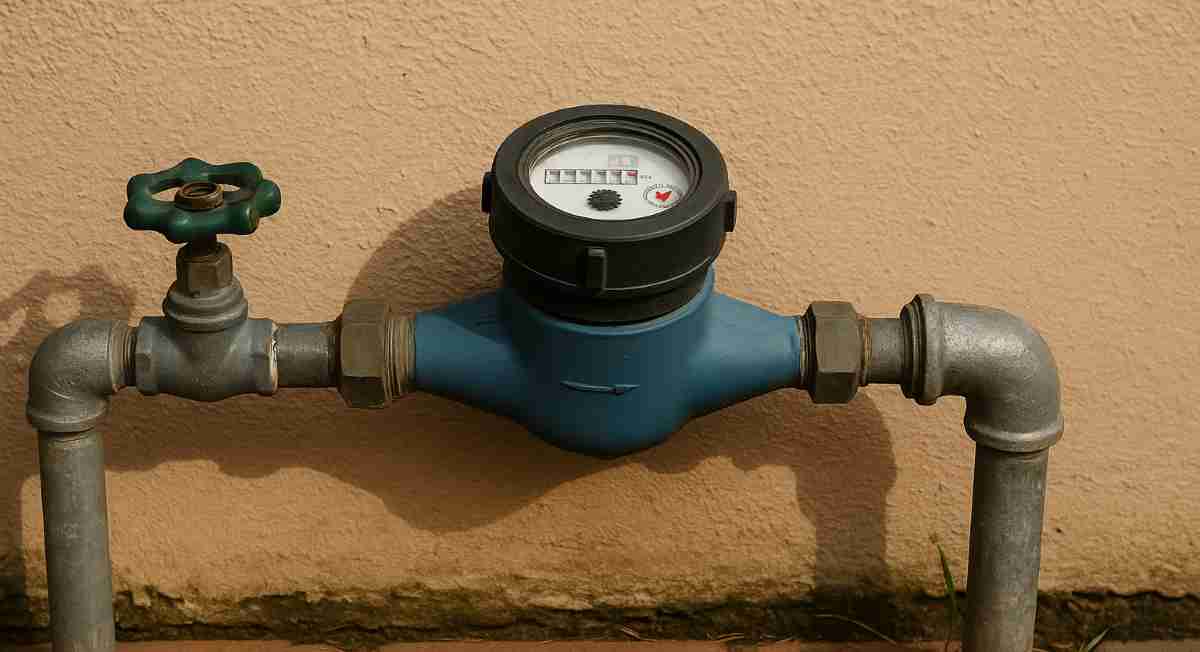
Reading your meter monthly is one of the simplest ways to stay on top of your usage and pick up leaks early. Water meters generally show kilolitres in black and white numbers and litres in red. So, a reading of 0117 6991 means you’ve used 117 kilolitres in total. Just subtract last month’s reading to see how much you’ve used this month.
Municipalities like Johannesburg recommend taking a clear photo of your meter every month, with the meter number visible, so you have proof in case of billing issues.
Want to be sure you’re looking at the right meter? Close your main stopcock and wait 15–20 minutes. If the dial stops moving, it’s your meter. If it keeps ticking, you may have a leak or be reading the wrong one.
Watch out for sudden spikes
An unexpectedly high water bill is often the first clue that something’s wrong. It could be more guests in your home, or increased garden watering. But often, it’s a hidden leak.
Experts like Absolute Plumbing advise checking your bill each month and comparing it to previous months. If it’s shot up, do a simple test: close the stopcock and see if the meter still moves after 15–20 minutes. If it does, you probably have a leak. In complexes with individual meters, this becomes much easier to catch early.
Suspect a billing mistake? Get evidence like meter photos, contact your municipality, and if needed, send a formal letter to escalate the matter.
How to check for leaks
Even small leaks can waste thousands of litres and add hundreds to your bill. The Water Research Commission says nearly half of South Africa’s water losses come from leaks and similar issues.
To check your property:
- Turn off all taps and water-using appliances.
- Shut the stopcock and watch the meter for 30 minutes.
- If the dial moves, there’s likely a leak.
Look for signs inside your home too: damp spots, mould, warped floors. For toilets, drop some food colouring into the cistern, if colour seeps into the bowl without flushing after 15–30 minutes, the cistern or flush valve is leaking. You can also press dry toilet paper against the back of the bowl to see if it gets wet.
For stubborn leaks or underground problems, it’s best to call in professionals who can use hydrogen gas or acoustic tools to locate the issue. Some cities, like eThekwini, will even allow for a 60-day hold on your account while you sort out leak-related insurance claims.
Why tariffs work the way they do
South Africa’s tariff structures are designed to encourage water conservation. Under the increasing block tariff, low use is relatively cheap to help poorer households, but costs rise sharply with higher consumption.
For example, Cape Town charges around R42.50 per 1,000 litres for basic use, but jumps to R135.20 for heavy use. These structures also help fund critical maintenance and new water infrastructure.
Many municipalities also have indigent support policies, offering free basic water to qualifying households. If you think you might be eligible, check your local municipality’s website.
Practical ways to cut your water bill
Beyond monitoring your meter and fixing leaks, adopting simple habits can lead to big savings.
- Install low-flow showerheads and dual-flush toilets.
- Collect rainwater for your garden or look into greywater systems.
- Keep showers short and turn off the tap while brushing your teeth.
- Fix dripping taps promptly — even a slow drip can waste up to 30 litres a day.
- If you live in a complex, consider pushing for prepaid meters to encourage everyone to be more mindful of use.
Report leaks in the street to your local council, and encourage your neighbours to do the same. Every bit helps.

Rising water costs in South Africa mean that managing your water use is no longer optional, it’s essential. By regularly reading your meter, fixing leaks quickly, understanding how tariffs work, and making a few lifestyle tweaks, you can protect your pocket and help safeguard this vital resource for everyone.
Have thoughts or tips of your own? Drop them in the comments below.