

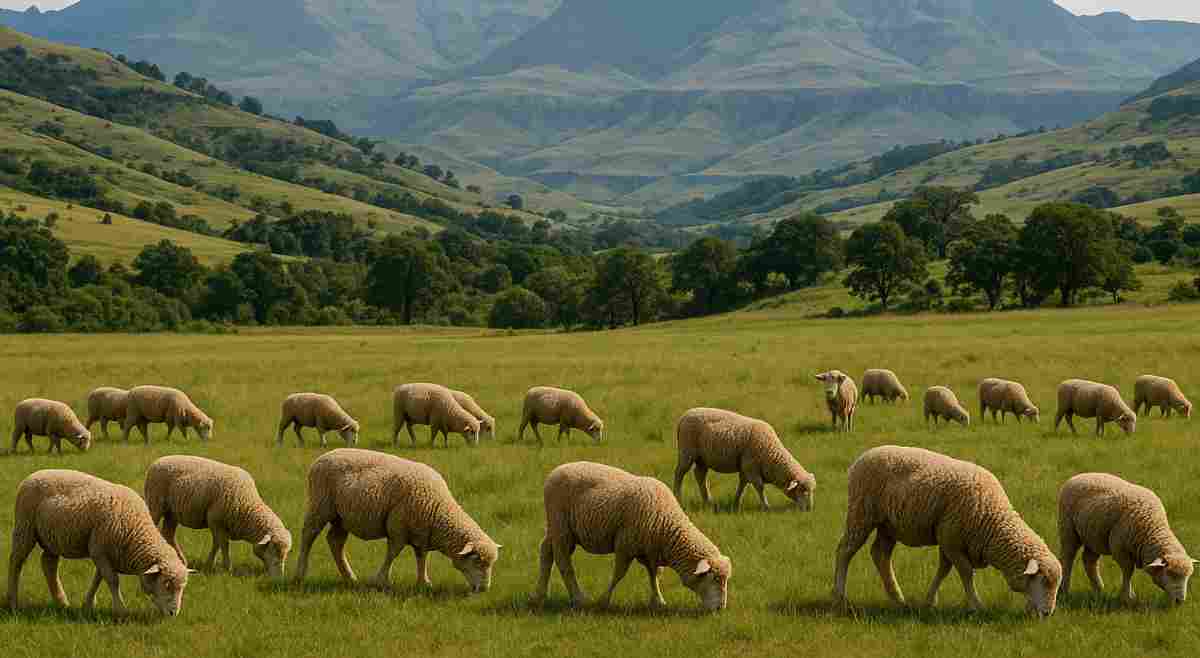
Livestock commodity groups in KwaZulu-Natal have made an urgent appeal to the government, urging them to formally declare Foot and Mouth Disease (FMD) a provincial disaster. This comes as the province faces a rapidly escalating outbreak, with the 2025 resurgence spreading aggressively beyond previously designated Disease Management Areas (DMAs).

Uncontrolled livestock movements, particularly from communal herds, have been identified as a primary driver of the continued spread, with the Animal Diseases Act, 1984 (Act No. 35 of 1984) mandating strict biosecurity measures to curb transmission.
This week, key representatives from KwaZulu-Natal’s pork, dairy, beef, sheep, and game industries met under the auspices of Kwanalu (the KwaZulu-Natal Agricultural Union), with the shared goal of addressing the escalating FMD crisis.
Operating within the framework of the Animal Diseases Act (1984) and relevant gazette notices, stakeholders are coordinating a cohesive response, including working with Veterinary Services to enforce isolation and movement controls.
As reported to the World Organisation for Animal Health (WOAH) on 30 April 2025, KwaZulu-Natal has experienced 167 FMD outbreaks, with 149 still active. By 31 March 2025, the outbreak number had risen to 165, with 147 remaining active, and a new outbreak confirmed in Bergville outside the DMA, linked to an earlier auction in Utrecht.
The economic impact is severe, affecting every aspect of the livestock value chain and threatening the sustainability of both commercial and emerging farming operations.
Producers within DMAs face movement restrictions, financial strain, and restricted market access, with relief measures introduced for compliant farmers, such as single pasteurisation for milk from FMD-negative herds.
The delegation, which includes senior representatives from the South African Pork Producers Organisation (SAPPO), Milk Producers Organisation (MPO), KZN Red Meat Producers Organisation (KZNRPO), Wildlife Ranching SA (WRSA), and The National Wool Growers Association (NWGA), is urgently petitioning the Minister of Agriculture to support a request to CoGTA (Department of Cooperative Governance and Traditional Affairs) for a provincial disaster declaration.
This declaration is seen as crucial for unlocking vital funding, resources, and enforcement capacity needed for effective control measures, thus preventing a broader national agricultural and economic crisis. Furthermore, Minister John Steenhuisen has acknowledged the crisis, ordering R72 million in vaccines for delivery by mid-June 2025, with an estimated R1.2 billion required for 2025/2026.
Sandy La Marque, CEO of Kwanalu, stated, “Small to mid-sized agricultural businesses face closure. The situation has eroded confidence in veterinary protocols and exposed systemic enforcement, administrative, and management deficiencies. A significant population of rural and commercial livestock farmers depend on local and international markets for survival. Failure to control Foot and Mouth Disease will lead to business failures, increased unemployment, and poverty for many families reliant on this industry.”
While the crisis is currently concentrated in KwaZulu-Natal, industry leaders warn of a nationwide threat.
Angus Williamson, Kwanalu Vice President and Red Meat Producers Organisation Chairman, remarked, “The economics of doing business are severely affected as farms enter quarantine. Without effective control strategies, this will become a nationwide issue.”
International markets have already taken action. China, South Africa’s largest red meat export market by volume, suspended all imports of beef and other products from cloven-hoofed animals as of May 12, 2025. Fanie Ferreira, CEO of the Milk Producers Organisation, emphasised, “A disaster declaration is essential to access the necessary funding and resources for a rapid containment plan, and producers must be allowed to implement precautionary vaccination without penalty.”
Despite the enormity of the challenge, the livestock sector has mobilised. Williamson noted, “Organised agriculture is committed to supporting permit offices, appealing for SAPS and RTI assistance, and securing other relevant resources. However, greater government support is imperative.”
Immediate needs include strengthened enforcement of movement controls, comprehensive vaccination programmes covering all SAT strains, robust traceability systems, and coordinated communication strategies.
La Marque confirmed, “Much more is required, which is why we have convened livestock industry leaders to pool resources and formulate a comprehensive plan to halt FMD spread in KZN.” Stephen Butt, Chairman of the South African Pork Producers Organisation, added, “The world has evolved; we need to design an animal health protection system that works.”
Moreover, the delegation’s message is clear: business as usual is no longer viable.
PJ Hassard, President of Kwanalu, concluded, “We have met as the KZN livestock industry to identify collaborative solutions. We are committed to finding resolutions swiftly. Our thoughts are with the farmers, workers, and rural families already impacted by this crisis.”
It is important to note that, as reported by Newcastillian News on 5 March 2025, Foot and Mouth Disease has already affected the Newcastle area of KwaZulu-Natal, leading to warnings from the Red Meat Producers Organisation regarding potential fluctuations in beef prices.
At that time, the Department of Agriculture confirmed FMD presence in KZN, with cases near Mtubatuba, Vryheid, and Newcastle, directly impacting producers’ ability to market livestock.
To read more, click here.
Additionally, Newcastillian News reported on 12 May 2025, that China has suspended beef imports from South Africa. This decision followed a confirmed FMD outbreak in Mpumalanga, as disclosed by the South African Department of Agriculture, Land Reform and Rural Development, triggering immediate trade restrictions from a significant market and impacting South Africa’s livestock export sector.
To read more, click here.
The escalating FMD crisis in KwaZulu-Natal poses a serious threat to South Africa’s agricultural landscape and broader economy. Without immediate and decisive government intervention, supported by a formal disaster declaration, the disease’s uncontrolled spread risks destabilising a vital national industry.

The unified stance of the livestock commodity groups underscores the urgency of the situation and their readiness to collaborate in finding solutions. Unlocking the necessary funding, resources, and enforcement mechanisms now is not just a matter of agricultural policy, but a crucial imperative for national economic stability and food security.
What are your thoughts on the above? Share your views in the comment section below.