



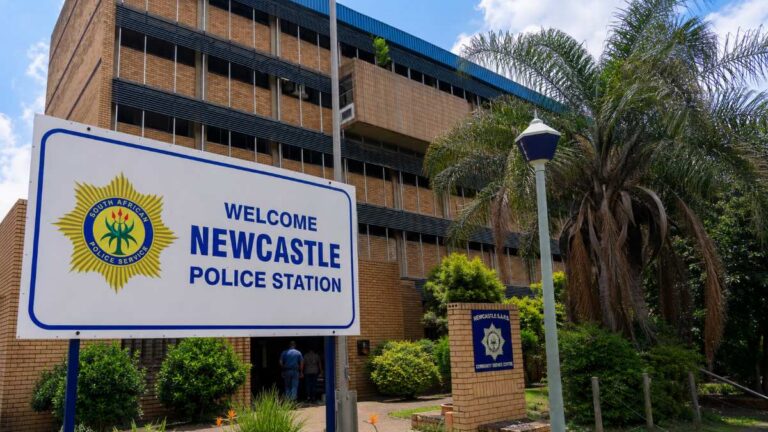
Frustrations regarding service delivery, local infrastructure, municipal bylaws, and development are topics that South Africans are all too familiar with. However, these challenges seem to stem from a serious underlying issue within the local government sphere, and Newcastle appears to be a part of this growing concern.

Out of South Africa’s 257 municipalities, 66 have been classified as distressed, and the Newcastle Municipality is one of them.
This alarming revelation comes from a recent parliamentary response delivered by Minister of Cooperative Governance and Traditional Affairs (CoGTA), Velenkosini Hlabisa, to a question raised by the Democratic Alliance’s Anna Maria van Zyl.
For context, a distressed municipality in South Africa refers to a local government entity facing significant financial, operational, or administrative challenges. Such circumstances often result in the municipality being unable to fulfil its most basic service delivery obligations to residents, leading to frustration among the public.
According to Minister Hlabisa, the number of distressed municipalities in each province is as follows:
- KwaZulu-Natal: 12
- Eastern Cape: 11
- Free State: 11
- Gauteng: 2
- Limpopo: 3
- Mpumalanga: 6
- Northern Cape: 9
- North West: 10
- Western Cape: 2
In his response, Hlabisa explained that municipalities classified as distressed typically fail across several pillars of sustainability. These municipalities are often plagued by political instability, budgets that are not sufficiently funded, inadequate allocation of resources for repairs and maintenance, the misuse of grants for operational expenses, increasing indigence leading to widespread non-payment for services, low revenue collection, poor planning, and maladministration.
It is important to note that the information provided by the Minister in September 2024 reflects data from the 2022 financial year. The eagerly awaited 2023 State of Local Government (SoLG) Report is expected to be presented to the Cabinet later in October 2024.
The outcome of this report is crucial, as it will reveal whether distressed municipalities, like Newcastle, have made any tangible progress in addressing the deep-rooted issues that have left them in such a precarious position.
Looking at the 12 municipalities classified as distressed within KwaZulu-Natal, Newcastle Local Municipality, and Amajuba District Municipality find themselves on this troubling list. Unfortunately, they are not alone, as neighbouring municipalities also share their plight. These municipalities include:
- ·eMadlangeni (Utrecht) Local Municipality
- uThukela District Municipality
- uMzinyathi District Municipality
- Inkosi Langalibalele Local (Estcourt) Municipality
The 2021/22 SoLG report, which laid the groundwork for municipalities being deemed distressed, highlighted several critical issues that need to be addressed to set the pace for recovery.
With the release of the new report just around the corner, the pressing question remains: will Newcastle Municipality be able to show improvements or are the same problems that led to its distress still in play?
The 2021/22 SoLG report outlined several pressing concerns, particularly in terms of financial management. It was noted that Newcastle Municipality had adopted an unfunded budget for three consecutive years, a clear indicator of its financial instability. Furthermore, the report stressed that revenue collection remained poor across all distressed municipalities. Contributing factors such as high interest rates, inflation, unemployment, and a generally weak economy were highlighted as major challenges hindering the ability to collect revenue efficiently.
Despite these difficulties, there has been a glimmer of hope for Newcastle.
In July 2024, the Municipality managed to secure a funded budget, a significant milestone that indicated some progress in addressing its financial woes. At the time, Newcastle’s Mayor, Councillor Xolani Dube, credited this achievement to a series of interventions implemented by the Municipality to improve its financial standing. These measures included prioritising expenditure, closely monitoring high-cost drivers, and introducing revenue enhancement strategies to help bolster the Municipality’s financial position.
To read more, click here.
Additionally, as reported by Newcastillian News, securing a funded budget for the 2024/2025 financial year was a major achievement for the Municipality.
However, it was by no means the end of Newcastle’s problems. In August 2024, the Auditor-General of South Africa released her Consolidated General Report on Local Government Audit Outcomes for 2022-2023. This report revealed that while there had been some improvement in the Municipality’s financial position, serious concerns remained about its long-term viability.
The report disclosed that 59% of municipal debt could not be recovered, a concerning figure that raised serious doubts about Newcastle’s ability to sustain itself financially.
To read more, click here.
While Newcastle Municipality managed to overcome one hurdle by securing a funded budget, the 2021/22 SoLG report also raised several other critical issues. According to the report, “There is a culture of non-payment and illegal connections. Improved strategies need to be applied to enhance revenue collection. District Municipalities must partner with Local Municipalities to explore options for improving revenue collection strategies. There are persistent cash flow challenges, and while some cost containment measures have been implemented, municipalities are not enforcing their Credit Control Policies.”
It is also important to recall that in January 2024, Newcastillian News reported that Newcastle Municipality was experiencing significant challenges with revenue collection.
At that time, Newcastle West owed the Municipality R178,816,647.14, while Newcastle East owed R1,568,960,777.60.
To read more, click here.
The problems do not stop at finances. The report also highlighted a severe backlog in water and sanitation provision within the Newcastle Municipality. A surge in illegal connections and substantial water losses have further compounded the issue. The Auditor-General raised this concern in August 2024, noting that the Municipality disclosed water losses amounting to R58.9 million in its annual financial statements. This figure represents 37% of all water flowing through municipal pipelines.
As Newcastle remains classified as a distressed municipality, and with the new SoLG report soon to be released, residents are left to wonder whether the Municipality has managed to climb out from under the shadow of uncertainty.
Minister Hlabisa, in his response to Anna Maria van Zyl, reiterated that CoGTA is committed to addressing the issue of distressed municipalities and has implemented several interventions to tackle the matter.
These interventions aim to strengthen governance and institutional capacity, improve financial viability, and accelerate service delivery and economic development. They cover a broad spectrum of the challenges faced by distressed municipalities, including Newcastle. The national government is working closely with these municipalities, assisting them in developing comprehensive plans to address their unique problems.

With Newcastle Municipality, alongside 65 other distressed municipalities, now looking to these interventions for guidance, the residents of Newcastle and numerous other municipalities are left waiting to see if the upcoming report will reveal a positive change.
Has Newcastle truly begun to turn things around, or is the Municipality still heading down a perilous path? We invite you to share your thoughts on the matter in the comments section below.






One Response
The municipality is in trouble. According to the municipalities own generated financial statements the current liabilities was R931 million on 30 June 2021 and is now at R1271 million as at 30 June 2024. Thus over the last 3 years the currant liabilities have increased by R340 million. The municipality has all these plans for a turnaround but it appears as it is only plans. Just looking at the CBD and the suburbs in Newcastle west the situation with roads, drains, street lights etc is really bad.