



As South Africa enters level 3 of the nationwide lockdown, South Africans can now enjoy certain freedoms that were denied to us over the past two months.
However, the Justice Crime Prevention and Security (JCPS) Cluster has announced measures to enforce the regulations under level 3. This is to ensure the public adheres to the respective regulations.
Permits for movement
Movements of persons between provinces, metropolitan areas and districts and hotspots is still prohibited. Except for those who have the necessary permits and are traveling for work, attending a funeral, transporting mortal remains, obtaining medical treatment.
The SAPS and other law enforcement agencies will continue to monitor local and inter-provincial movements. They will do so by holding roadblocks on national highways and rotating in suburbs, cities and towns.
Gatherings
All gatherings remain prohibited, except for a gathering at faith-based institution. However, these are limited to 50 persons or less, depending on the size of the place of worship.
As President Cyril Ramaphosa has announced, there are hotspots around the country where the infection rate is increasing rapidly. The JCPS Cluster will now conduct patrols, roadblocks, and Vehicle Check Points at the respective hotspot areas.
The law enforcement officials will also enhance relationships with Community Policing Forums (CPFs). They will provide expert advice and support to various environments, cordon off identified health hotspots, conducting zero-tolerance operations to ensure compliance, utilise the Public Order Police and conduct high-density crime prevention duties.
Deployment of the SANDF during COVID-19 in support of the people.
In cooperation with other State Departments in the fight against COVID-19, the South African National Defence Force has deployed regular, reserve and auxiliary services throughout the country.
The main tasks of the deployed forces include health care services, engineering capabilities and lockdown enforcement elements.
Furthermore, the force levels will escalate in accordance with the growing numbers of COVID-19 cases within the force level availability of 73 000.
Health care professionals have been deployed to provide health care services to deployed members of the SANDF.
These include doctors, nurses, psychologists, social workers, pharmacist and many other medical disciplines. They have been deployed to provide health care services to the defence force and support the National Department of Health
An additional number of health care professionals from volunteers and members of the Reserve Forces has been added to support the NDoH.
Scanning teams have also been deployed with the SANDF units in all provinces. These Military Health Care Practitioners are performing thermal scans on the population during patrols at vehicle control points and roadblocks. These will assist with early detection of people who might be infected with the COVID-19 virus and in doing so mitigate the spread of the virus.
Primary Health Care Teams have been deployed to all nine provinces to support the NDoH with mass screening and testing initiative.
These teams are being deployed in both urban and rural areas and to areas where no infrastructures exists.
Furthermore, mass quarantine sites from military facilities have been identified throughout the province.
These facilities can accommodate a total of 2 481 beds are in the following provinces:
- Kwa-Zulu Natal
- Western Cape
- Gauteng
- Limpopo
Decontamination teams are placed on standby in Pretoria to conduct industrial-scale decontamination and will be deployed to areas as the need arises.
Engineers from the South African National Defence Force have also been deployed (a team in each province) and are operational in five provinces, which are:
- Thabazimbi, in Limpopo
- Hartswater in the Northern Cape
- Vrede in the Free State, Legonyane
- Fafung Village in the North West
- Nkodide area in Kwa-Zulu Natal.
Their purpose is to focus on water purification and the distribution thereof to areas where there is a dire need for drinking water.
Four teams of the Defence Force Engineers are deployed in rural areas of the Eastern Cape and Kwa-Zulu Natal to build bridges in order to assist the population to access services.
One bridge in the Eastern Cape has been completed and another is underway in Fini in Queenstown.
The JCPS adds South African borders will remain closed for travel, except for evacuation of stranded and distressed RSA citizens, evacuation of foreign nationals by respective foreign missions and movement of medical-ill treatment cases and transportation of goods to and from neighbouring states.
Daily commuters from neighbouring countries who attend school will be allowed to enter our borders with a special permit subject to all COVID-19 regulations on transport and health.
In terms of the administration of justice, the Department of Justice and Constitutional Development will issue directives for operations of the courts during level 3.
The Department will prioritize urgent cases relating to corruption, sexual offences, Gender-Based Violence and Femicide (GBVF), serious violent crimes, robbery, murder and assault. As well as cases involving the violation of COVID-19 Regulations for speedy resolution.
Where appropriate, the courts will use audio-visual communication, such as teleconferencing and videoconferencing to conclude urgent cases. All cases which are not urgent will be postponed.
Access to courts will be limited to immediate complainants and judicial officers. All those entering the premises will be subjected to temperature screening and will be required to sanitize their hands and wear masks.
During the disaster period, the JCPS Cluster has received several allegations related to the corruption of COVID-19 relief efforts earmarked for poor communities.
In response to these allegations, the Cluster has developed a collaboration framework which will ensure prevention, detection, investigation, prosecution and recovery of stolen assets and funds.
Law enforcement officials have established an interim structure that will address all allegations of corruption and will ensure that those who are charged, face prosecution.
There is a specific focus on COVID-19 related corruption matters in the courts for efficient resolution and these are listed as a priority in the Directions issued by the Minister of Justice and Correctional Services, along with urgent cases including domestic violence and others that the courts may consider to be in the interest of justice to address speedily.
In conclusion, the JCPS Cluster appeals to the public to report any misconduct displayed by law enforcement officials during this time.
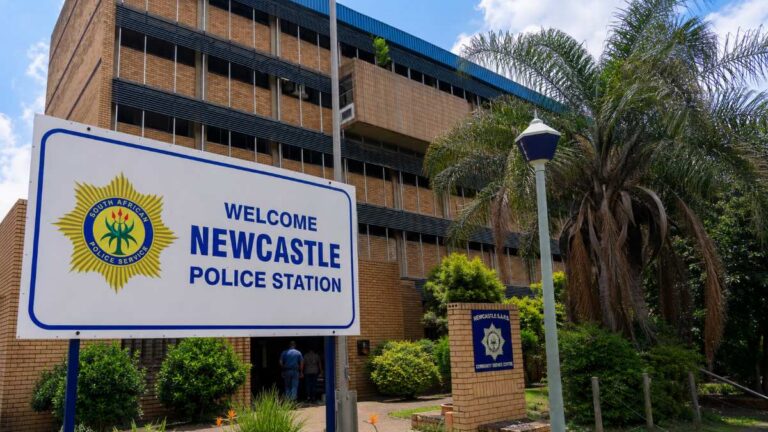
Should the public witness or experience any form of torture, cruelty, inhumane and/or degrading treatment and/or punishment, committed by law enforcement members including poor service delivery regarding police response, investigations and police negligence, to report such at the nearest police station or at the National Service Complaints Centre on the toll-free number 0800 333 177 or the following email addresses:
[email protected] or [email protected].