

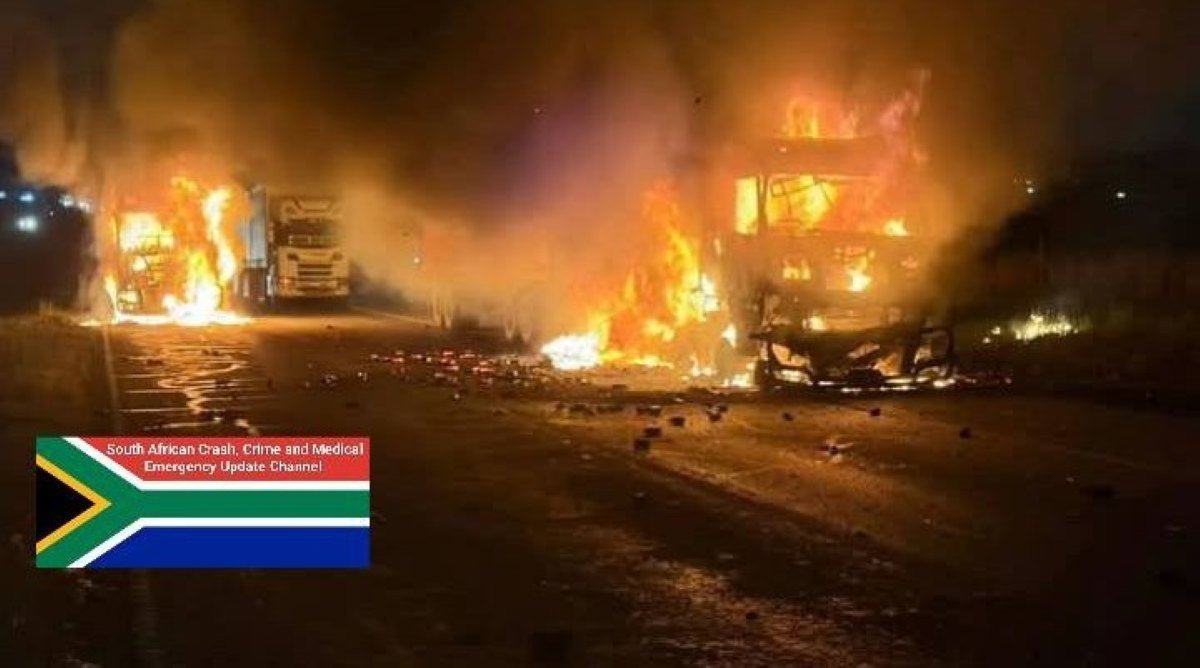
Chaos erupted between Heidelberg and Vosloorus along the N3 Freight Corridor on Wednesday night, 29 April 2026, with the instability extending into the early hours of Thursday, 30 April 2026.
The unrest saw multiple heavy vehicles targeted by gunfire while others were set ablaze, ultimately necessitating the total closure of one of South Africa’s most critical logistics arteries until order could be restored.

This surge of violence began shortly after 10:00 pm on Wednesday, near the Overkruin–Spaarwater stretch, concentrated between the R23 and R550 interchanges. According to initial reports, the roadway was deliberately obstructed to create a bottleneck, effectively forcing oncoming truck drivers to a dead halt.
Once the convoy was stationary, the situation escalated rapidly as armed individuals allegedly emerged from the surrounding bushveld. These assailants reportedly discharged firearms into the air to intimidate the motorists before systematically setting three of the vehicles alight.
Whilst no injuries were sustained—as the drivers fortunately managed to escape the scene unharmed—the dual-carriageway remained strictly cordoned off until after 07:00 on Thursday morning.
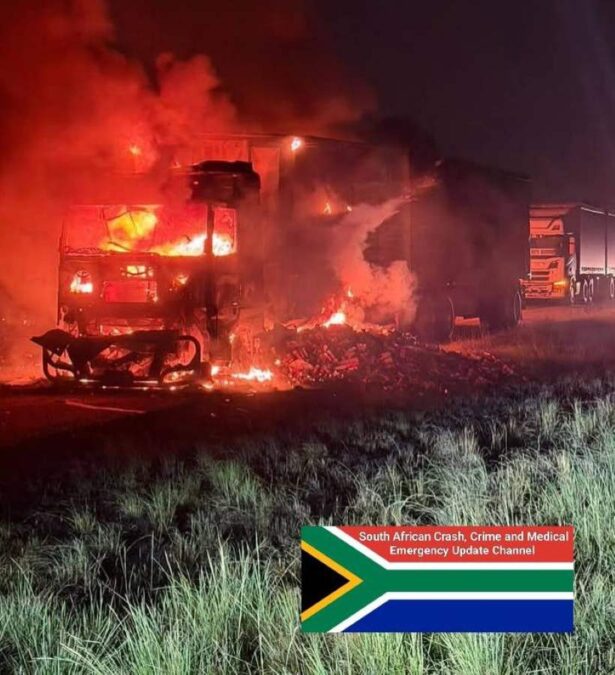
Police spokesperson Lieutenant-Colonel Mavela Masondo confirmed that the South African Police Service (SAPS) responded to the site where three trucks were found incinerated.
In light of the severity of the attack, Masondo noted that “cases of attempted murder and malicious damage to property have been opened.”
As authorities now initiate a formal investigation into the motives behind the strike, speculation suggests the coordinated assault is linked to long-standing grievances regarding the employment of foreign nationals within the freight industry.
Historically, this contentious issue has served as a recurring catalyst for violent disruptions across South Africa’s primary transport corridors.
Although law enforcement has yet to release an exhaustive statement on the suspects involved, confirmation was received at approximately 06:40 on Thursday that the N3 had been reopened in both directions and was deemed safe for transit.
While specialised clean-up operations persist at the scene of the fires, they are not currently impeding the general flow of traffic.
Nevertheless, motorists are advised to exercise heightened caution when traversing the area, as residual debris and the aftermath of the unrest may still pose intermittent safety risks.
Furthermore, haulage operators travelling the route are being urged to remain inside their cabs whenever possible, avoid potential confrontations, and maintain a high state of alertness. Given the underlying tensions along this essential artery, the security situation remains both volatile and unpredictable.
The recent volatility underscores a heightened risk for the upcoming long weekend, a period typically defined by a significant surge in both commercial haulage and holiday traffic.
With the N3 serving as the primary artery for the region, the potential for further flashpoints necessitates a proactive approach to road safety.
Authorities are expected to maintain a presence to deter further opportunism.
Given the unpredictable nature of these disruptions, staying alert will be critical to ensuring that the long weekend concludes safely and without further compromise to this essential freight corridor.
What are your thoughts on this? Let us know below.
Be sure to read: Father Pushing Toddlers in Pram Struck by Vehicle on Allen Street in Newcastle