



Newcastle finds itself among the top five towns and cities across KwaZulu-Natal where fraud has become the most prevalent crime, surpassing contact crimes, including assault.

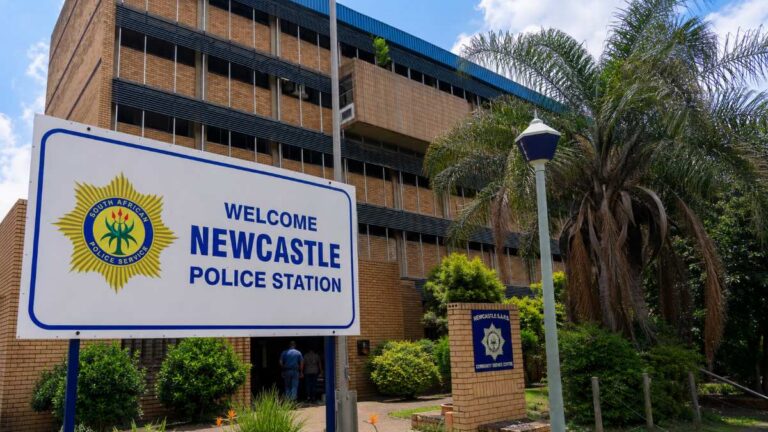
This stems from a media briefing held by Newcastle SAPS on Wednesday morning, 3 September 2025, where spokesperson Lizzy Arumugam revealed that, out of 184 police stations in KwaZulu-Natal, Newcastle now ranks among the top five hotspots for fraud cases.
This places it alongside major cities such as Durban and Pietermaritzburg as incidents continue to escalate.
Discussing the issue, Arumugam noted that over recent months, fraud has risen drastically in Newcastle, with the station’s economic crimes unit becoming inundated with cases. “On average, the detectives are obtaining 16 to 20 cases a week. There are times, where we will even see up to 16 cases a day,” she emphasised.
Taking this into consideration, Arumugam elaborated on the matter, which she described as reaching levels of immense concern.
“Looking at the fraud in Newcastle, community members are being targeted on a daily basis, with residents falling victim to fraud crimes which involve unsuspecting people sharing their One-Time-Pin (OTP) numbers for their bank accounts, having their cards cloned at ATMs, and being defrauded on market pages on various social media platforms, investment schemes, and romance fraud,” she began.
Furthermore, Arumugam explained that residents are particularly susceptible to scams conducted via telephone. “It is important to remember that this kind of crime is the scammer’s job, it is what they do every day, with it being seen as a low-risk crime with high rewards, as it is harder for law enforcement to prove that they actually committed the crime, as compared to crimes such as robberies, where there are witnesses, a weapon, CCTV footage and other evidence such as fingerprints.”
With this in mind, Arumugam noted that scammers have developed new levels of expertise, making it increasingly difficult for law enforcement to monitor them.
She highlighted that, with telephonic calls, scammers can now reroute calls using evolving technology to catch victims off guard when they attempt to verify the call. “While the suspects are on the phone with their victims, the suspects will use their technology to hack their victim’s phone, so when the victim attempts to phone their respective bank’s helpline to confirm the caller’s credentials, the suspect is able to reroute the call back to themselves. The victim, thinking they are speaking to their bank, then follows the instructions given and they are then scammed out of money,” said Arumugam, who noted that if a person was suspicious about the call, they should cut the call immediately and wait 10 to 15 minutes before calling their respective banks to ensure the scam artists are no longer able to divert their victim’s calls.
Furthermore, she added that community members using cash send apps via retailers are just as susceptible as of late in Newcastle. She explained that residents using cash send services are finding the cash withdrawn before the recipient can access the funds.
Taking this into account, she explained that officers have two working theories: either staff are colluding with suspects, or scam artists are observing people at banks and retailers offering cash send services, memorising their details and PINs before passing them to accomplices at another location to withdraw the funds.
Reflecting on this, and considering how many more people are being conned via telephonic scams, Arumugam added that a lot of suspects use SIM cards which have not gone through the legal South African Regulation of Interception of Communications and Provision of Communication-Related Information Act (RICA), or the SIM card has been RICA’d under multiple individuals’ names, making it difficult for law enforcement to track the perpetrators down. “Also, when it comes to the banks and OTP numbers, people must understand that if you give your OTP number to the individual on the phone, banks are less likely to refund your monies back, as you gave the number out.”
Furthermore, investment schemes are also becoming more prevalent in Newcastle, with Arumugam pointing to a recent incident where a 74-year-old man and his 47-year-old son, both from Roodepoort, conned Newcastle businessmen out of R16 million.
As reported by Newcastillian News at the time, the suspects allegedly enticed their victims by promising substantial returns through Bitcoin and cryptocurrency investments.
According to authorities at the time, the duo convinced the victims to deposit large sums of money into specified bank accounts, under the impression they were purchasing Bitcoin. After multiple payments were made, the victims received no returns, and the suspects cut off all communication when demands for refunds were raised.
Following formal complaints, Newcastle SAPS opened cases and launched a comprehensive investigation. Financial records revealed that the victims’ funds were traced to the suspects’ accounts across three different banks, with assistance from the South African Banking Risk Information Centre (SABRIC).
At Wednesday’s media briefing, Arumugam confirmed that the two Roodepoort men remain in custody awaiting their bail application, adding that they are under full investigation for scamming two local businessmen out of R16 million.
On top of this, Newcastle SAPS have also noted romance schemes are becoming more problematic, with Arumugam noting that during August 2025, a woman was scammed out of R1.8 million by a man who she thought she was starting a romantic relationship with.
“This is usually where older women meet younger men online, looking for romance, and these people then ask for small amounts of money, pushing and pushing until they get the money they were after and cut all contact with the woman,” said Arumugam.
Moreover, she highlighted that card cloning at ATMs in Newcastle had also reached epic proportions, with the elderly yet again being the most targeted victims, with Arumugam noting that fraudsters often target older people due to their vulnerability and issues with understanding technology.
While acknowledging that police are still determining why fraud has escalated so sharply in Newcastle, Arumugam stressed that officers are working through the growing number of cases and engaging with local banks and other institutions to help clamp down on the trend.
While many may struggle to understand how victims fall for these scams, Arumugam emphasised that suspects are highly convincing, especially with their use of new technology.
She warned that fraud is no longer just an individual problem but one that is beginning to affect businesses and Newcastle’s wider economy.
“The rise of fraud could lead to job losses, as it impacts business growth if the owner of a business falls victim to a scam, a loss of livelihood for those who are already facing financial struggles and see them becoming dependent on their families, who will then have to use their financial resources to assist their loved ones, seeing a knock-on effect in town,” she said, something which Newcastle residents cannot afford, especially with the imminent wind-down at ArcelorMittal South Africa’s Newcastle Works.
As fraud cases continue to rise in Newcastle, Arumugam urged residents to remain vigilant when handling personal and financial information, particularly during calls from unknown numbers or transactions in public spaces where scammers may be watching. She advised acting immediately if something feels suspicious—ending the call and waiting before contacting official channels—to prevent criminals from diverting communications and accessing funds.

She further warned that the surge in fraud cases in Newcastle mirrors a wider trend across KwaZulu-Natal, where increasingly sophisticated scams are targeting both individuals and businesses.
Arumugam stressed that staying vigilant and questioning unusual requests is vital not only to protect personal finances but also to safeguard the local economy, noting that community awareness and caution remain the strongest defences against these evolving threats.
Reflecting on the above, what are your thoughts on the rising fraud in Newcastle? Share your views in the comment section below.
Frequently Asked Questions About Fraud in Newcastle
According to SAPS, Newcastle has seen a sharp rise in fraud reports, with up to 20 new cases a week. This surge places the town alongside major cities like Durban and Pietermaritzburg in KwaZulu-Natal’s top five fraud hotspots.
The most reported cases involve OTP scams, ATM card cloning, investment schemes, romance scams, and cash send fraud. Many of these target vulnerable individuals, particularly the elderly.
Scammers often impersonate bank officials over the phone, reroute calls using technology, and pressure victims into giving away OTP numbers. Others use fake investment offers, social media scams, or collusion at cash send retailers.
Police advise cutting the call immediately, waiting 10–15 minutes, and then contacting your bank or service provider directly. This helps prevent criminals from diverting communications.
Fraud doesn’t just impact individuals—it also harms businesses and the wider economy. Losses can lead to job cuts, stalled growth, and increased financial pressure on families and the community.
Be sure to read, Murray & Roberts Secures R80m Business Rescue Funding Lifeline, if you missed it.












2 Responses
These criminals should be locked up for life the devastation they cause is terrible
There was an incident at work where a customer paid R10 000 apparently into the companies account and showed a proof of payment, the verification code checked out and stated the payment was made. But company policies the money has to reflect in the account before any goods are supplied. The transaction was done on a Thursday after 3pm and as off Monday didn’t show and when the customer came in for the item, we told them it hasn’t reflected then they said they wanted a refund, as instructed to the customer again the money has to reflect then a refund will be made. As of today which is two weeks later no money has reflected and the customer never asked again.